


Sunflower Planting Areas in Erzincan Increase by 50 Percent
· AA Tarım & Ekonomi
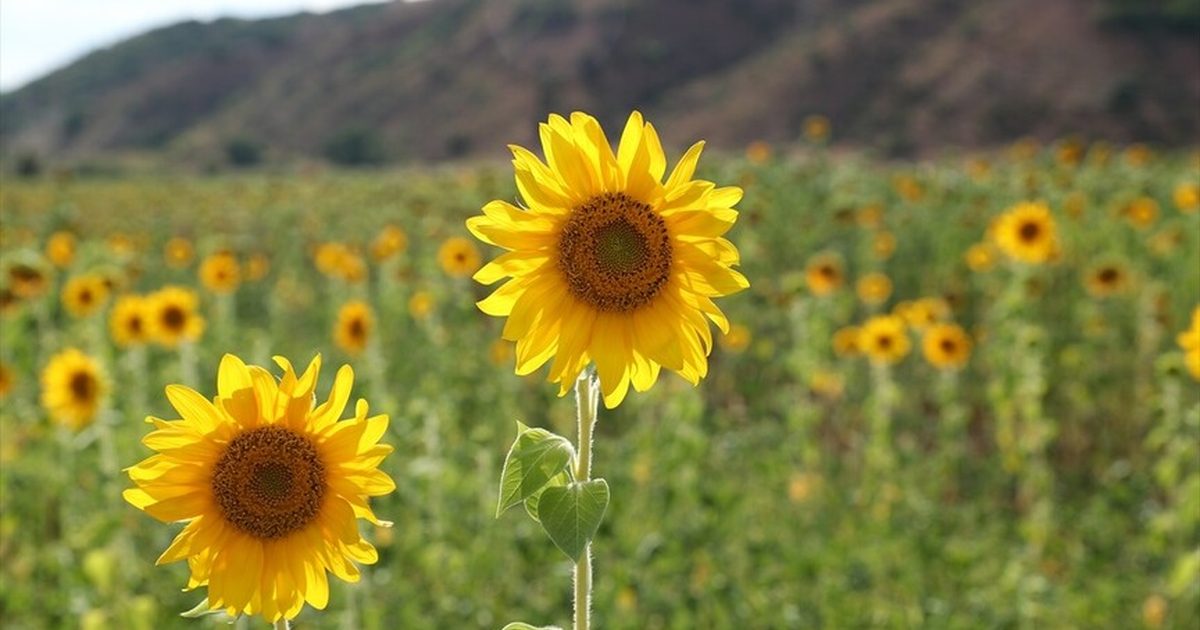
Sunflower planting areas in Erzincan, expanding with alternative crop policies and irrigation infrastructure, have surpassed 33,000 decares, with a yield of 12,000 tons expected.
50 Percent Increase in Planting Areas
A remarkable transformation is being recorded in sunflower production in Erzincan, thanks to the alternative crop policies implemented in recent years. According to data from the Provincial Directorate of Agriculture and Forestry, the planting area across the province, which was 22,000 decares in 2023, has increased by 50 percent to over 33,000 decares within two years. With the rapid spread of oilseed and confectionery sunflower cultivation throughout the province, there has been a significant rise in the income levels farmers derive from agricultural production.
Yield Expected to Reach 12,000 Tons
With the positive impact of seasonal rainfall and expanding agricultural lands, a roughly 30 percent increase in this year's sunflower yield is anticipated. Erzincan Provincial Director of Agriculture and Forestry, Alper Koçaker, shared data on the expansion of planting areas and production targets, stating:
"Sunflower, which was planted on approximately 22,000 decares of land across the province in 2023, has now exceeded 33,000 decares. Last year, we harvested around 9,000 tons. This year, God willing, we expect a harvest of around 11,000-12,000 tons. Therefore, we recommend sunflower production to our farmers on irrigated land in our province. While sunflower production is concentrated in our Tercan and Çayırlı regions, production has been steadily increasing in recent years, especially in our central district and Kemah district."
Ministry's Production Planning Was Effective
The production planning implemented by the Ministry of Agriculture and Forestry has been decisive in guiding producers in the region towards strategic and correct crop patterns. Erzincan Provincial Director of Agriculture and Forestry, Alper Koçaker, stated that farmers are preferring high-value-added products such as sugar beet, corn, and sunflower on irrigated agricultural lands:
"In our province, farmers' preferences on irrigated land are generally for crops that require irrigation, such as sugar beet, corn, and sunflower. Of course, on the one hand, to develop our farmers' production patterns and to produce sufficient quantities of products needed by our country within the scope of the production planning determined by our ministry, we want our farmers to choose varieties suitable for their irrigation-based production and infrastructure."
Double Contribution to Beekeeping Activities
In addition to providing direct economic income, sunflower production stands out in Erzincan for the nectar and pollen support it offers to the widespread beekeeping sector. The expanding planting areas constitute a critical food source for beekeepers, directly increasing honey productivity in the region. The diversification of the production pattern provides additional income to farmers while strengthening the province's agricultural ecosystem.
Irrigation Advantage in the Eastern Anatolia Region
Erzincan ranks among the most advantageous agricultural centers in Eastern Anatolia with its water resources and suitable climate conditions. Drawing attention to the importance of water and the city's infrastructural strength, Erzincan Provincial Director of Agriculture and Forestry, Alper Koçaker, concluded his remarks:
"Sunflower is a product suitable for production in our province in terms of climate, irrigation, and soil structure, and our farmers' interest and experience in sunflower production are increasing year by year. Consequently, this provides a positive contribution to our province's sunflower production, especially oilseed sunflower production. It also makes a significant contribution to our province's economy. Sunflower, by its nature, is a product that can be produced in a large part of our country. However, it is a product that requires water. Therefore, when we look at the Eastern Anatolia Region as a whole, we are one of the provinces with the highest irrigation possibilities in terms of water resources and irrigation infrastructure, and we are one of the leading provinces in this regard in our region."