


Historic Drought in New Mexico Halts Irrigation Water
· Dünya Gazetesi
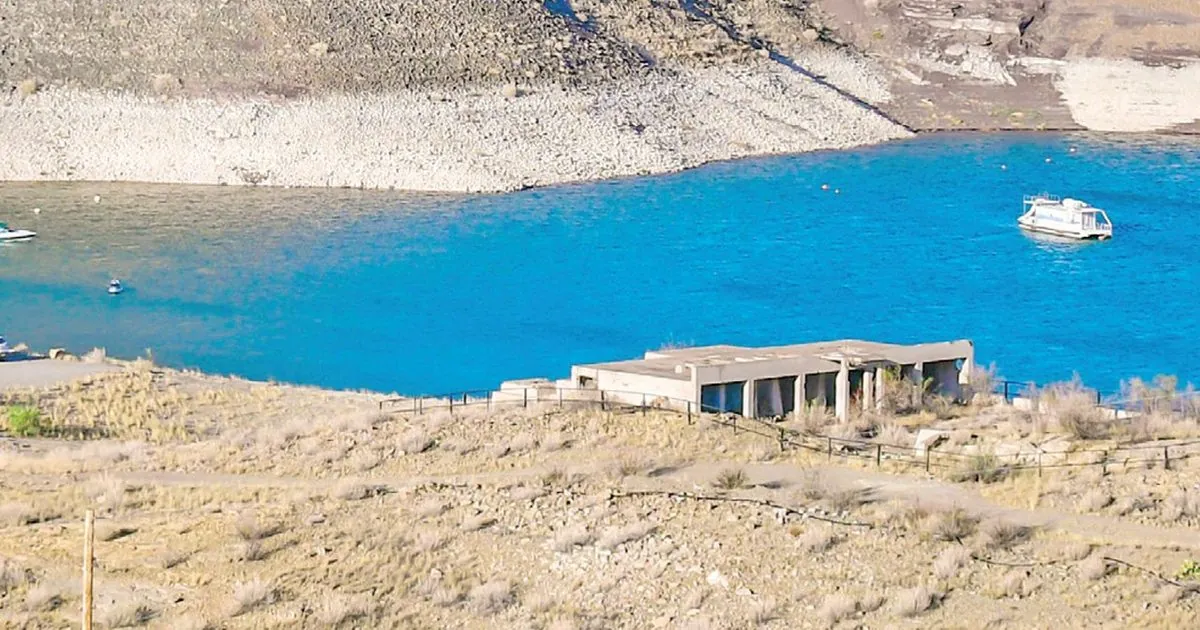
Agricultural irrigation has been completely stopped as the occupancy rate of Elephant Butte Reservoir, New Mexico's largest water source, fell to 1.4%, posing a risk of millions of dollars in crop losses.
Drought Alert in the Rio Grande Basin
The intensifying drought dimension of the global climate crisis continues to threaten agricultural production chains and water economies on an unprecedented scale. The valley, where alfalfa, cotton, onions, pecans, and the famous Hatch green chilies are grown thanks to dams and irrigation canals built by human hands over the years in the Rio Grande basin, was known as an agricultural center in the middle of the desert. However, early snowmelt in the southern Rocky Mountains and extreme evaporation have completely disrupted the water balance in the basin, bringing agricultural production to a standstill.
Historic Low Level in the Reservoir
Elephant Butte Reservoir, New Mexico's largest water source, has fallen to its lowest level recorded since 1971. According to satellite measurements, as of July 27, 2026, the occupancy capacity of the massive reservoir dropped to just 1.4%. In contrast, the same reservoir was nearly full on June 2, 1994, and remained at extremely high levels between 1985 and 2000. Even during the previous historic drought peak in the region, the lake managed to maintain a 2.9% occupancy rate on July 8, 2013.
Agricultural Irrigation Completely Halted
With the withdrawal of water from the reservoir, the flow of water to irrigation canals was cut off, leaving the region's farmers facing a major crisis. Dr. Arthur Vance, a New Mexico State Water Resources Expert, provided the following statement regarding the halt in water flow:
'We were forced to stop agricultural water diversions as of July 28. The annual record low level of 1.4% shows us that the climate crisis is no longer a 'future risk' but has become today's most concrete source of economic crisis. Cutting off irrigation flow was our only option for the reservoir to slowly recover, but this means millions of dollars in crop losses for the regional agricultural economy.'
Severe Global Impact
The crisis in the region has once again highlighted the devastating effects of drought on macroeconomics and food security on a global scale. According to data from the United Nations and the World Bank, approximately 10 million hectares of arable land lose their quality due to drought every year. Projections from the same organizations indicate that the direct cost of water stress on global gross domestic product will exceed $500 billion annually by 2030. Water risk is now becoming a critical financial dilemma not only for agricultural producers but also for national economies.
Precision Irrigation with NASA Technology
Advanced technology and satellite analytics have been deployed as traditional water management methods proved insufficient. Research projects funded by NASA's Western Water Action Office (WWAO) have integrated soil moisture, evapotranspiration rates, and surface temperature parameters into a dynamic model. Dr. Elena Rostova, NASA Project Manager, made the following assessment of the project:
'This near real-time modeling we have created for the Elephant Butte Irrigation District enables water managers to distribute limited resources with millimeter precision. Our soil moisture analyses, obtained through satellite measurements, help ensure that not a single drop of water is wasted and is directly converted into yield.'
Data-Driven Water Management
NASA-supported high-resolution water monitoring models play a critical role in preserving the balance of groundwater and surface water in agricultural basins under drought conditions. Officials from the Elephant Butte Irrigation District are attempting to optimize current water reserves thanks to near-instantaneous data transmitted from satellites. These high-tech early warning and distribution systems aim to minimize the damage of extreme climate events on agricultural yields and deliver limited resources directly to plant roots.
| Value | Period | Measure |
|---|---|---|
| 10 million hectares/year | Annual | Arable land lost globally due to drought |
| 500 billion dollars | 2030 | Direct annual cost of water stress on global GDP |
| 1.4% | 27 July 2026 | Elephant Butte Reservoir occupancy rate |
| 2.9% | 8 July 2013 | Previous historical drought period lowest occupancy rate |