


Small Ruminant Flocks Quadruple at Solar Power Plant Grazing Site
· AA Tarım & Ekonomi
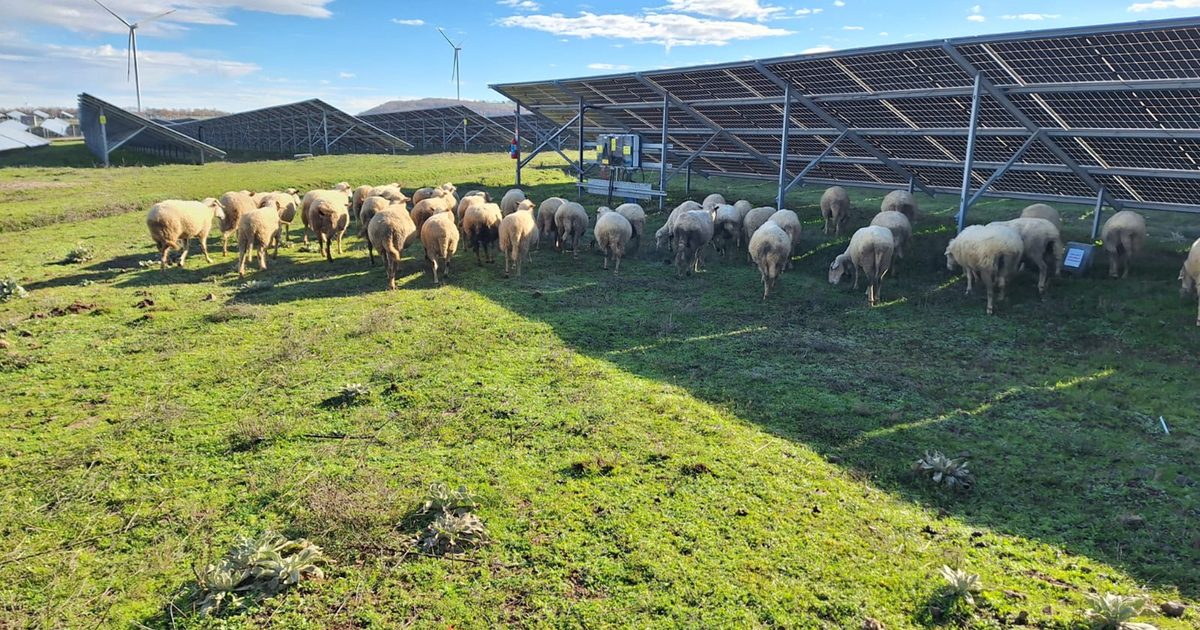
The small ruminant grazing model, implemented instead of chemical and mechanical weed control at the Saros hybrid power plant site in Çanakkale, has boosted local herders' flocks while reducing carbon emissions.
Natural Grazing Model at Power Plants
A new era of eco-friendly site maintenance has begun for solar power plants, aimed at preserving panel efficiency, preventing shading, and eliminating fire hazards. At the Saros Wind and Solar Power Plant site in Çanakkale, a controlled small ruminant grazing model has been launched, replacing fossil-fuel-powered mechanical mowing and chemical spraying. The project, initiated by Borusan EnBW Energy in June last year, integrates sheep and lamb flocks into the maintenance process by naturally clearing the site's vegetation.
Herder Flocks Grew Fivefold
The initiative, carried out in collaboration with local producers in the region, has led to a significant reduction in livestock farming costs. Enis Amasyalı, General Manager of Borusan EnBW Energy, explained the project's benefits to producers:
"While the flocks graze in an extremely safe area protected from natural predators, our herders can also comfortably attend to their other daily tasks. The savings achieved in feed costs through the project have also enabled breeders to expand their flocks."
Thanks to the feed savings, local breeders' small ruminant livestock numbers increased fivefold in a short period, and support was also provided to herders in the form of wool shearing machines.
Chemical-Free Weed Control and Safety
To ensure safe grazing for the animals within the power plant site, cable channels and transformer stations have been protected with physical barriers, and water sources and shaded areas have been established within the site. Amasyalı stated that no chemical herbicides are used on the site, emphasizing that natural grazing protects biodiversity and water resources. Borusan EnBW Energy General Manager Enis Amasyalı added that mechanical mowing is only carried out in limited areas with tough, thorny weeds that animals cannot consume:
"This way, we have minimized fossil fuel consumption and the resulting emissions."
Eight-Ton Reduction in Carbon Emissions
The natural grazing method not only reduces operational maintenance costs but also significantly minimizes fire risk during the summer months by preventing dry grass accumulation. According to company data, approximately 8 tons of carbon emissions were reduced by phasing out fossil-fuel-powered mowing equipment. Borusan EnBW Energy General Manager Enis Amasyalı evaluated the site maintenance approach as follows:
"We viewed the site maintenance need not just as a technical operation, but as a circular economy opportunity that integrates carbon reduction, biodiversity conservation, and local development."
Shared Future in Agriculture and Energy
The successful results at the Saros RES-GES site demonstrate that nature-based land management can be integrated into other renewable energy facilities. Emphasizing that renewable energy production and livestock activities complement each other, Borusan EnBW Energy General Manager Enis Amasyalı made the following assessment:
"At Borusan EnBW Energy, we integrate the Borusan Group's sustainability approach focused on Climate, People, and Innovation (i³) into all our activities. The 'Social Contribution and Carbon Reduction Project through Natural Grazing' is one of the tangible examples of this approach on site."