


Combine Settings Crucial to Prevent Crop Loss in Sunflower Harvest
· TarımTR
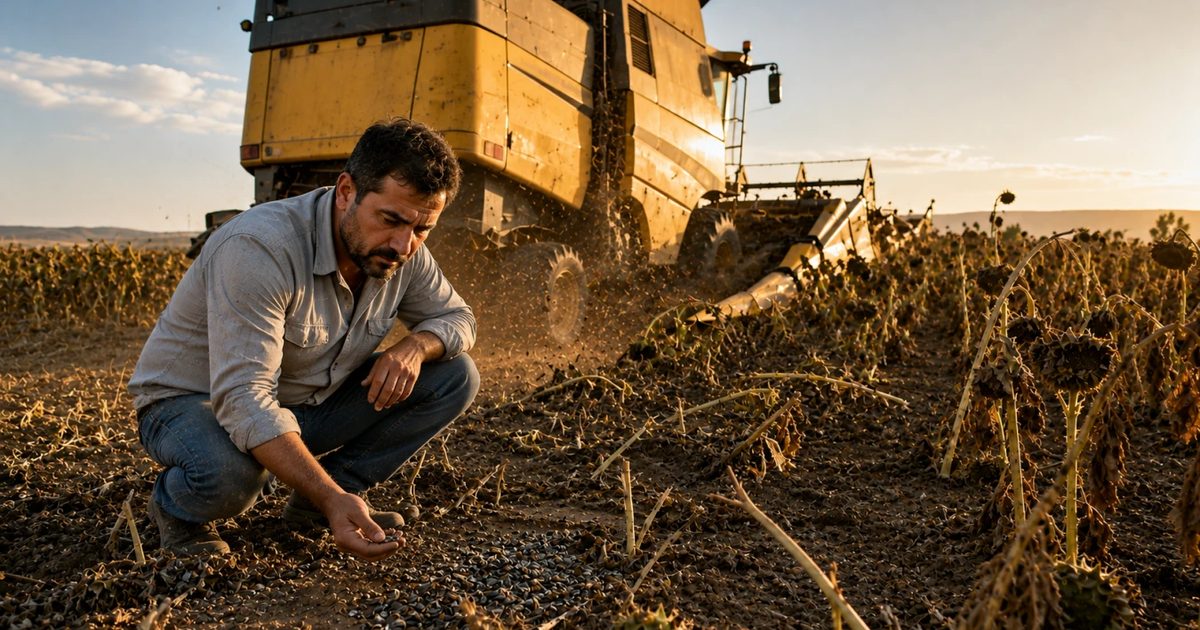
Sunflower harvest losses due to combine harvesters can reach up to 20%, while experts emphasize that correct speed and mechanical adjustments directly protect producer income.
The True Extent of Combine Harvester Losses During Harvest
After months of fertilization, irrigation, and crop protection processes in sunflowers, the grains left in the field during the harvest period directly impact operational profitability. Producers focusing solely on the product entering the storage during harvest can overlook the crop spilled by the combine harvester onto the field. The Trakya Agricultural Research Institute reports that grain loss of approximately 3% under appropriate harvest conditions can be considered normal. However, if machines are operated too quickly or settings are neglected, the product loss rate can climb to 15% to 20%.
Crop Left in the Field Based on Yield Level
Evaluating the magnitude of harvest losses with concrete data clearly reveals the financial loss incurred by the producer. In a field yielding 300 kilograms per decare, a 3% loss means 9 kilograms of crop per decare remain in the field. If the loss rate increases to 15%, the amount of product left in the field reaches 45 kilograms per decare. In a 100-decare production area, the difference between a 3% loss and a 10% loss amounts to 2.1 tons of product.
The Impact of High Operating Speed on Grain Loss
Increasing the combine harvester's forward speed during harvest beyond necessity is among the most significant causes of grain spillage. As the machine's operating speed increases, it becomes more difficult for the combine's mechanical components to regularly intake the plant and separate the grain from the stem. The Trakya Agricultural Research Institute warns that excessive forward speed significantly escalates grain loss in sunflowers. The primary priority for operators and producers should not be to finish large areas quickly, but to transfer the crop from the field to storage with minimal loss.
Correct Adjustment of Header Height
The header height of the combine harvester is a critical parameter that must be carefully determined based on the crop structure and lodging condition in the field. Sunflowers that are semi-lodged or completely lodged due to wind or root structure in the field cannot be harvested with the incorrect header height. Setting the header too high can lead to plant heads being missed or broken and scattered on the ground. Therefore, the header height needs to be adjusted parcel by parcel according to the current plant height and terrain slope.
Cylinder Speed and Threshing Adjustments
The separation of sunflower grains without breakage or crushing within the harvesting mechanism depends on the cylinder speed and the concave clearance. The Trakya Agricultural Research Institute recommends maintaining the cylinder speed for sunflower harvesting within the range of approximately 250 to 350 RPM. Incorrectly set cylinder speeds can cause grains to be fragmented by mechanical impact or thrown out of the separation system. Precise calibration of the clearance between the cylinder and the concave according to the product's fullness and moisture content is also of great importance.
Sensitivity of Fan and Sieve Systems
The fan and sieve adjustments, which constitute the combine harvester's cleaning mechanism, are among the factors that directly determine harvest quality. If the fan blows air at excessively high speeds, light grains are blown out of the machine onto the field along with straw residues. Insufficient airflow leads to an excessive amount of foreign matter and chaff entering the grain tank. Adjusting the sieve openings to perfectly match the grain size requires separate checks in each field to prevent losses.
Regular Rear Inspection Methods in the Field
The most practical method for detecting grain loss during harvest is to inspect the soil behind the combine harvester immediately after it has passed. Free-lying grains, fragmented heads, and spilled crop on the ground should be regularly observed by the producer. During the 2026 harvest inspections conducted by the Ministry of Agriculture and Forestry units, it is stated that a maximum grain loss limit of 2% is applied in some provinces. Producers need to be present in the field to immediately alert the operator in case of potential increases in loss and update the settings.
Correct Harvest Time and Grain Moisture
Proper planning of harvest timing plays a vital role in protecting crop yield, just as much as combine harvester settings. Leaving sunflowers in the field for too long significantly increases the risk of bird damage and natural grain shedding. According to technical sources, the grain moisture of the crop should not exceed approximately 9.5% for harvest operations to begin. Early harvesting increases drying costs, while late harvesting creates a basis for excessive crop loss and economic damage in the field.
2026 Sunflower Yield Expectations
The increasing production potential across Turkey makes preserving every kilogram of product during harvest more strategic. According to the first estimate of 2026 crop production published by TurkStat, sunflower production is expected to reach 2.3 million tons, an increase of 16.2% compared to last year. In a season where production forecasts are rising, minimizing mechanical harvest losses secures both producer income and national oil supply. It is reported that production will be finalized depending on weather conditions.
Seven Key Steps to Prevent Grain Loss
To achieve maximum yield during the harvest process, the combine harvester must undergo seven critical technical checks before entering the field. Header height, cylinder speed, concave clearance, fan airflow, and sieve cleaning must be completed flawlessly. As transitions are made between fields, the same settings should not be kept constant, as product moisture and plant height will change. Producers focusing on the net product amount remaining per decare, rather than harvest speed, and continuously monitoring the area behind the combine completely prevent financial losses.