


Input Cost Hikes Elevate Wheat Per Decare Costs
· TarımTR
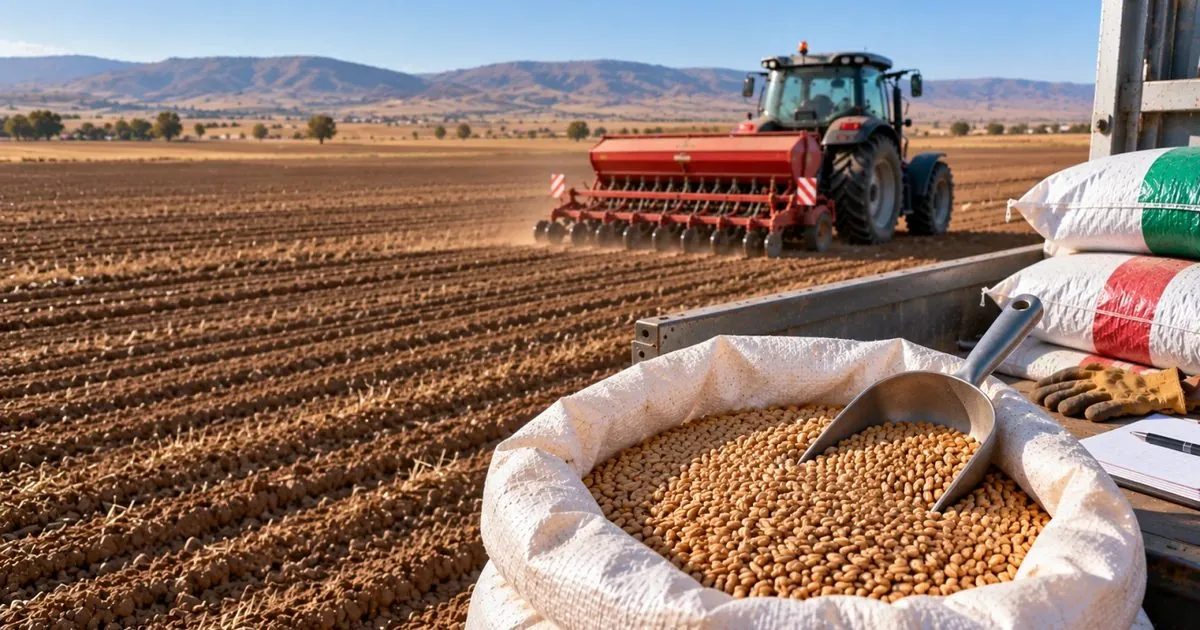
Ahead of the new planting season, annual increases in diesel and fertilizer prices are pushing up wheat production costs, making the break-even point calculation critical for producers.
As the new wheat planting season approaches across Turkey, the cost planning that farmers must undertake before entering the field has once again come to the forefront. When all expenses including seeds, fertilizer, fuel, agricultural chemicals, labor, and harvesting are considered together, production costs show significant changes. Producers now need to calculate not only the amount of seed to be sown per decare but also all expenses incurred until harvest and the break-even point. Planning based on old season figures can lead to misleading results.
According to data from the Union of Turkish Agricultural Chambers (TZOB), there have been notable increases in key inputs used in agricultural production. Examining the August 2026 data released by TZOB, diesel prices are seen to have risen by 57.9% on an annual basis. During the same period, DAP fertilizer, used as a base fertilizer, increased by 25.3%, and 20.20.0 compound fertilizer saw a 32.7% rise. These input increases directly drive up the expenditure per decare.
The costs borne by farmers producing in different agricultural basins of Turkey exhibit quite different dynamics. The input needs and field preparation expenses for dry farming land in the Konya Plain and irrigated land in Çukurova do not align perfectly. Similarly, there is a significant difference between the cost table of a producer who cultivates their own land with their own tractor and a farmer who rents land and purchases machinery services.
In the 2026 cost study prepared by the Adana Farmers' Association, a gross production cost of 7,093.08 TL per decare was determined, based on an assumed yield of 480 kilograms per decare. After deducting support payments and ancillary revenues, the net cost was realized at 5,867 TL. In this calculation, fertilizer expenses were recorded as 1,910 TL, field rent as 1,650 TL, seed costs as 700 TL, and diesel expenses as 462 TL.
According to market data announced by TZOB, in August 2026, the average UREA fertilizer is trading at 27,330 TL per ton across Turkey. The ton price of DAP fertilizer has reached 44,002 TL, while the liter price of diesel is at 83.83 TL. These input price levels are causing producers to forecast the per decare cost, excluding land rent, to be between 7,000 and 9,000 TL for the 2026-2027 planting season.

Even if the total per decare cost remains constant during the production process, the cost per kilogram significantly decreases as the yield increases. For example, on a field with a total expenditure of 8,000 TL per decare, the unit cost increases when a yield of 250 kilograms is obtained, while the kilogram cost is halved when the yield reaches 500 kilograms. This situation necessitates producers to opt for high-yield potential, correct seed varieties, and balanced fertilization methods.
The Turkish Grain Board (TMO) announced the purchase price for Group 2 bread and durum wheat for 2026 as 16,500 TL per ton, or 16.50 TL per kilogram. However, this figure represents the purchase price for the past harvest and does not carry a definitive price guarantee for the harvest to be carried out in the summer of 2027. It is important for producers not to assume the future selling price as guaranteed when making new planting decisions.
In the new agricultural support model announced by the Ministry of Agriculture and Forestry, contributions for wheat have been increased. According to the Ministry's regulation, the total basic and planned production support for wheat will rise to 1,149 TL per decare in the 2027 production year, from 954 TL per decare in 2026. Including certified seed support, a total payment of 980 TL was made in 2026, and the increased support directly contributes to the farmer's net income calculation.
A producer harvesting 500 kilograms of wheat per decare obtains a gross product revenue of 8,250 TL at a price of 16.50 TL. The actual operating profit emerges by adding support payments and subtracting the total production cost, which is around 8,000 TL. Calculating their own break-even kilogram cost by dividing the estimated yield per decare by the total expenses before planting is considered a fundamental condition for financial sustainability.
Producers preparing for the new planting season need to budget their seed requirements, fertilizer program based on soil analysis results, and all fuel expenses, including harvesting, in advance. It is recommended to plan combine harvester and transportation costs without leaving them until the harvest period, and to clearly include rental fees for leased lands in the calculations. Calculations made by considering realistic historical yield averages minimize the risk of farmers incurring losses in a season with high input costs.
| Değer | Dönem | Ölçüm |
|---|---|---|
| 7093.08 TL/da | 2026 | 1 dekar brüt üretim maliyeti |
| 5867 TL/da | 2026 | 1 dekar net üretim maliyeti |
| 480 kg/da | 2026 | Maliyet hesabında baz alınan verim |
| 57.9 % | Ağustos 2026 | Mazot fiyatı yıllık artışı |
| 25.3 % | Ağustos 2026 | DAP gübresi yıllık artışı |
| 32.7 % | Ağustos 2026 | 20.20.0 gübresi yıllık artışı |
| 27330 TL/ton | Ağustos 2026 | Ortalama ÜRE gübre fiyatı |
| 44002 TL/ton | Ağustos 2026 | Ortalama DAP gübre fiyatı |
| 83.83 TL/litre | Ağustos 2026 | Ortalama mazot litre fiyatı |
| 16500 TL/ton | 2026 | TMO buğday alım fiyatı |
| 954 TL/da | 2026 | Temel ve planlı üretim desteği |
| 1149 TL/da | 2027 | Yeni sezon temel ve planlı destek |
| 980 TL/da | 2026 | Toplam buğday destek ödemesi |
| 1910 TL | 2026 | Dekara gübre gideri |
| 1650 TL | 2026 | Dekara tarla kirası |
| 700 TL | 2026 | Dekara tohum gideri |
| 462 TL | 2026 | Dekara mazot gideri |