


400-Year Ocean Breakpoint Shakes Global Agriculture
· GıdaTarım
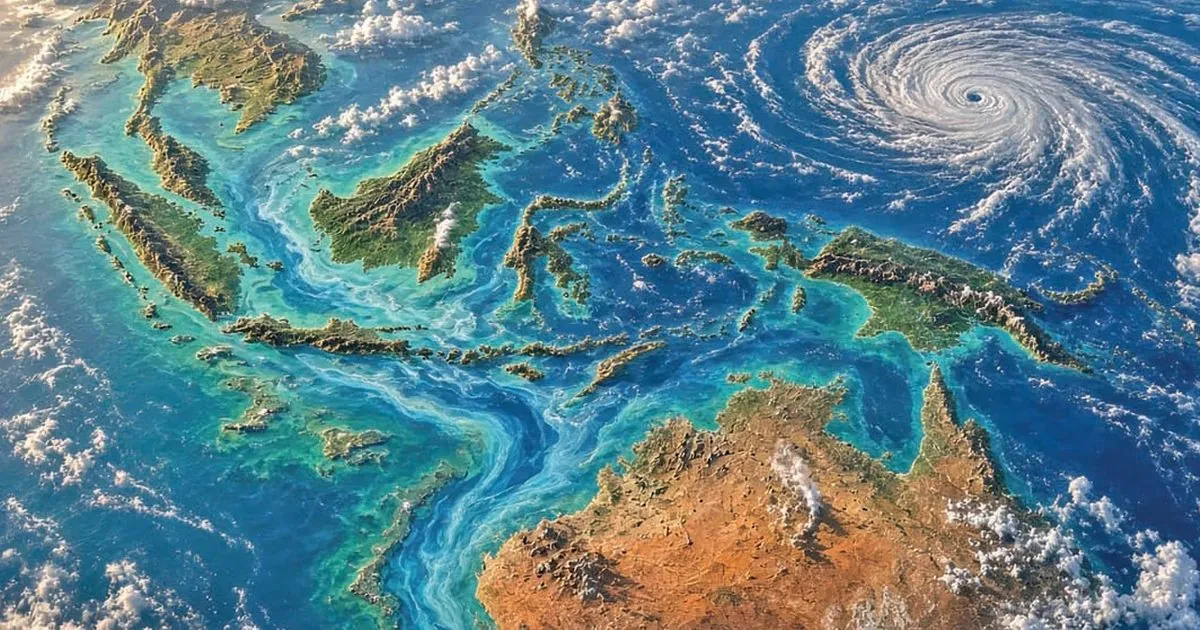
The severing of a 400-year climatic link between the Indian and Pacific Oceans due to greenhouse gas emissions directly threatens global agricultural yields and food supply chains.
Centuries-Old Ocean Balance Disrupted
The climatic harmony between the Indian and Pacific Oceans, central to the Earth's climate system, is experiencing its most critical rupture in history due to anthropogenic emissions. According to research published in Nature Communications, these two vast basins, covering over a third of the Earth's surface and hosting more than 60% of global trade routes, functioned as the planet's thermal engine. The breakdown of a 400-year synchronization, ongoing since the 1600s, is directly shaking agricultural yields, commodity prices, and the food supply chain. Global warming, which accelerated from the 1980s, is weakening the Indian Ocean's ability to respond to changes in the Pacific.
Historical Climate Archives Examined
In a study conducted at the Woods Hole Oceanographic Institution (WHOI), researchers employed comprehensive methods to illuminate the past climate dynamics of the two ocean basins. Scientists combined paleoclimatological archives preserved in coral reefs, tree rings, and cave stalagmites with advanced climate modeling simulations. The data obtained confirmed that the two basins have moved in parallel for centuries. This system, maintained through atmospheric circulation and sea surface temperature fluctuations, regulated monsoon winds and tropical rainfall patterns, forming the fundamental basis for agricultural production worldwide.
More Persistent Than Volcanic Impact
Research findings revealed that past volcanic eruptions could only temporarily weaken the inter-oceanic link. Major tropical volcanic eruptions recorded between 1810 and 1850 had disrupted the Pacific Ocean's usual influence on the Indian Ocean for only a few decades. However, current human-induced global warming carries a much deeper and more persistent nature than the damage caused by historical volcanic activity. This process, triggered by greenhouse gas emissions, is described by researchers as an unprecedented and extraordinary break.
Agricultural Yield and Food Crisis
The severing of the link between the oceans is triggering a massive sustainability crisis that directly threatens global agriculture and financial markets. A significant portion of global crop production and fishing activities relies on the meteorological stability provided by these two basins. Rainfall patterns becoming completely unpredictable are leading to severe drought crises, particularly across Southeast Asia, Australia, and East Africa. This situation is laying the groundwork for hundreds of billions of dollars in agricultural yield losses, disruptions in logistics, and global risks to food security.
| Value | Period | Measure |
|---|---|---|
| 33.3 % | — | Coverage of the Earth's surface by the Indian and Pacific Oceans |
| 60.0 % | — | Share of global trade routes in the region |
| 400 years | 1600-present | Duration of interoceanic climate synchronization |