


Turkey Accelerates Diplomatic Campaign for FAO Leadership
· AA Tarım & Ekonomi
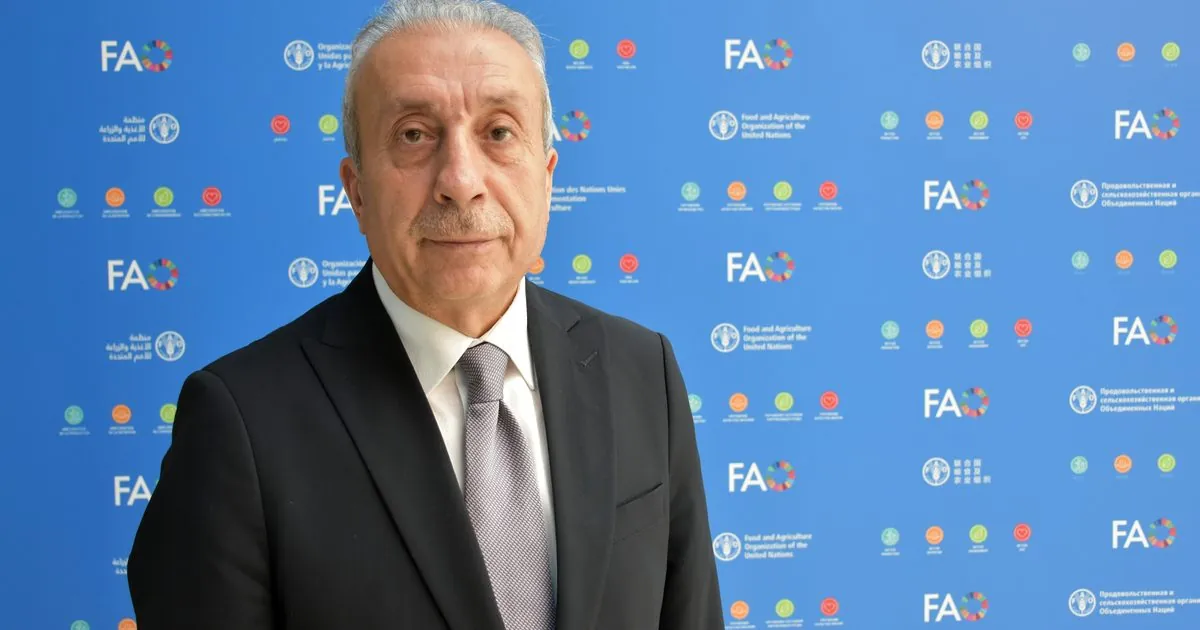
Mehdi Eker, candidate for the Director-General of the United Nations Food and Agriculture Organization, highlighted injustices in the global food system, aiming to bring Turkey's humanitarian diplomacy to the organization's leadership.
Mehdi Eker, candidate for the Director-General of the United Nations Food and Agriculture Organization (FAO), made comprehensive assessments regarding the candidacy process. An intensive diplomatic traffic is underway in the election process, where President Recep Tayyip Erdoğan and Minister of Foreign Affairs Hakan Fidan are seeking support in their international contacts. Turkey's FAO Director-General Candidate Mehdi Eker, relaying the contacts made with countries that will vote in the election, described the diplomatic traffic in the election process with the following words:
It was reported that approximately 100 country representatives have been met with since the beginning of the campaign, and significant commitments have been secured.
Mehdi Eker drew attention to the existing injustice in global food distribution, presenting the gap between production capacity and hunger with data. Turkey's FAO Director-General Candidate Mehdi Eker summarized the current injustice in the global food system with data, stating:
Eker reminded that while 8.3 billion people live on the planet, the global agricultural sector produces enough food to feed a population of 11 billion, emphasizing that disruptions in the system create a global crisis. Restructuring international supply chains and agricultural distribution mechanisms is necessary to address the current imbalance.
Eker stated that they aim to bring Turkey's humanitarian diplomacy to the FAO administration, noting that the fundamental approach is based on the understanding that 'he who eats his fill while his neighbor is hungry is not one of us.' Reminding that leaders from 9 different countries have been elected in the institution's 81-year history, but Turkey has not yet undertaken this role, Turkey's FAO Director-General Candidate Mehdi Eker explained the institutional goals with the following words:
The candidate touched upon the importance of critical logistics routes such as the Black Sea Basin, the Strait of Hormuz, and Bab el-Mandeb in food security, stating that urgent solutions must be found for food crises in conflict zones.
Mehdi Eker emphasized that the first of the three main functional areas performed by the FAO is standard-setting. He recalled that the organization sets the global food code applied worldwide and develops global norms for plant protection and quarantine. He also stated that it is critical for the organization, which has the world's largest network of food, agriculture, livestock, and fisheries statistics, to process data accurately. The transparent sharing of collected agricultural data with 193 member states after quality analysis and reporting is among the factors that directly shape the future of global agricultural production.
Eker stated that the second main area of responsibility for the organization is to provide technical support to developing countries, noting that focus should be placed on projects that will increase agricultural productivity. Eker explained that food waste and product losses can be prevented with the right projects implemented in the field, and emphasized the vital role of combating animal diseases. Pointing out that deteriorations in animal health directly threaten food supply and human health, Eker stated that effective FAO management will prevent epidemic disease risks at their source, thereby protecting farmers' production capacity and increasing yields.
Eker emphasized that the third main function is the direct fight against global hunger, pointing to the inviolability of the right to food. Referring to the situation in Gaza, Turkey's FAO Director-General Candidate Mehdi Eker criticized the situation with the following words:
Turkey's FAO Director-General Candidate Mehdi Eker stated that food is an ontological issue and emphasized its strategic importance:
The current Director-General of the United Nations Food and Agriculture Organization, Qu Dongyu, will complete his second term in 2027. In the elections to be held next summer in Rome, the capital of Italy, where the organization's headquarters are located, a new director-general will be determined for the 2027-2031 term. Ahead of this critical race, in which countries such as Angola, Italy, Spain, and Ireland, as well as Turkey, have submitted their intentions to run, diplomatic traffic has intensified. Turkey aims to lead the FAO in producing more inclusive, balanced, and effective solutions in the fields of global agriculture and food security by assuming this role.
| Value | Period | Measure |
|---|---|---|
| 193 countries | — | Number of UN member states |
| 100 countries | Campaign process | Number of contacted countries |
| 645 million people | — | Number of hungry people in the world |
| 1.4 billion people | — | Number of obese people in the world |
| 2.3 billion people | — | Number of people with insufficient food on their plate |
| 8.3 billion people | — | World population |
| Enough for 11 billion people | — | Current agricultural food production capacity |
| 81 years | — | Time elapsed since FAO establishment |
| 9 countries | Since establishment | Number of countries represented by directors who served at FAO |
| 2027 year | — | End of term for current Director-General Qu Dongyu |
| 2027 2027-2031 period | 2027-2031 | Term for the new Director-General |