


Critical Harvest Season Begins for Cotton Producers
· TarımTR
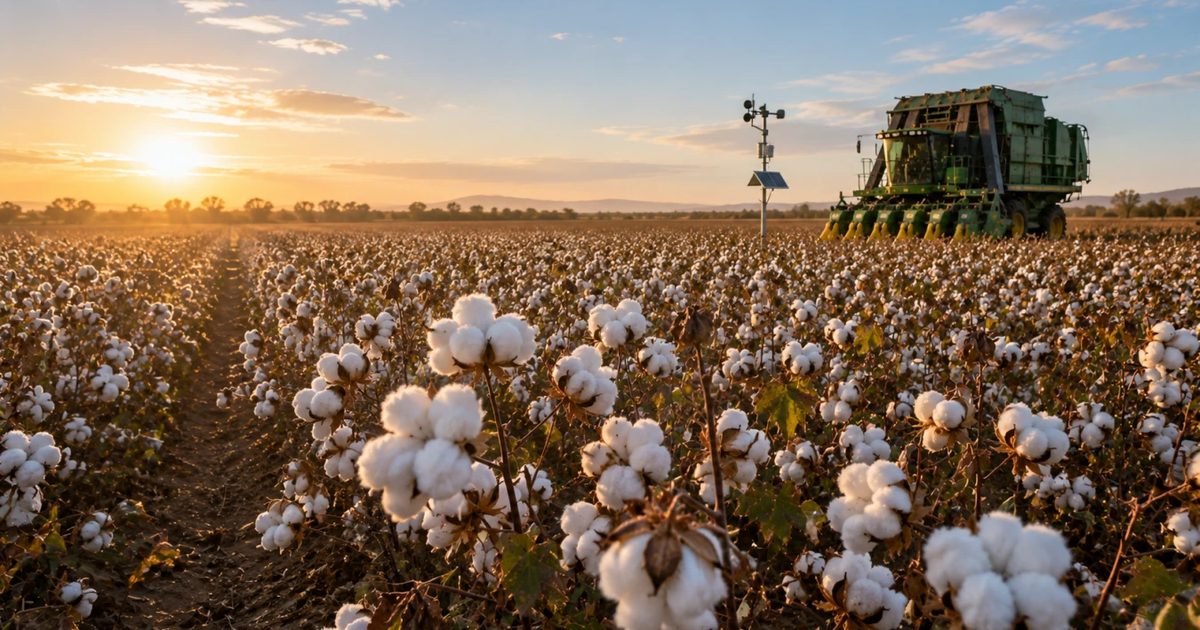
As the harvest calendar approaches in Turkey's cotton-producing regions, authorized institutions have announced critical rules, from boll maturity to moisture control, that directly impact yield and fiber quality.
Critical Harvest Season Begins for Cotton
As the new harvest season approaches in cotton-producing areas across Turkey, technical rules that producers must pay attention to have been announced. According to information shared by the Governorship of Hatay, the harvest period can continue from the end of August to the beginning of November, depending on regional conditions. In major production centers such as Çukurova and Ege, the harvest calendar is shaped by planting dates, climatic conditions, and cotton varieties. Producers need to plan their harvest correctly to reap the rewards of their season-long efforts.
Importance of Boll Opening Rate
Starting the harvest prematurely leads to the waste of unopened bolls in the field and significant yield reductions. According to technical data from the Aydın Provincial Directorate of Agriculture and Forestry, at least 60% of the bolls in the field must be open to commence mechanical harvesting. Producers are advised not to act solely on the motivation of early harvest but to check the overall maturity status of the plant. Balanced maturation across the entire field is the primary condition for obtaining quality fiber yield.
Correct Defoliation Timing
Leaf-dropping applications are crucial for the smooth execution of mechanical harvesting operations and minimizing the rate of foreign matter. According to the Ministry of Agriculture and Forestry's good agricultural practices criteria, defoliant chemicals should be applied based on boll maturity in the field, not on a calendar basis. Producers must use only licensed plant protection products and strictly adhere to label recommendations. Applications made at the wrong time can halt product development and damage fiber quality.
Moisture Management and Night Harvest Risk
The moisture content of seed cotton during the harvest process is a critical parameter for market value and storage life. The Ministry of Agriculture and Forestry's criteria clearly state that the moisture content in seed cotton should not exceed 12%. According to the same regulation, harvesting must be strictly avoided when relative humidity is 70% or higher, and on rainy days. Increased moisture due to dew during the night hours disrupts the ginning process and causes permanent damage to the fiber structure.
Maintenance and Cleaning of Harvesting Machinery
The technical settings and general cleanliness of harvesting machinery directly affect seed and fiber losses. The Aydın Provincial Directorate of Agriculture and Forestry points out that dangerous pests like the cotton mealybug can be transported between fields by machinery. Therefore, collection units, fans, baskets, and filters must be disinfected before entering a new field. Optimizing machine settings according to the field's structure prevents product contact with the soil and reduces losses.
Chaff and Weed Control in the Field
Not only weight but also the proportion of foreign matter and chaff determines the quality of seed cotton. Before harvest, producers need to inspect the field and clear dense weed patches and fallen branches. According to Ministry of Agriculture and Forestry standards, seed cotton with low chaff content commands a higher value in the industry. Preventing the parts of the bolls that come into contact with the soil from entering the machine is critically important for preserving the color and brightness of the fiber.
Transportation and Storage Standards
Errors made during the transportation of harvested product from the field to the ginning factory also reduce quality. According to the Ministry of Agriculture and Forestry's directives, the use of sacks made of polypropylene, polyethylene, and synthetic materials is strictly prohibited for hand-picked or stored cotton. Storing moist cotton in warehouses leads to heating and mold. Therefore, the product leaving the field should be planned for shipment to ginning facilities under appropriate conditions without delay.
Post-Harvest Management Against Pests
Leaving the field to its own devices after cotton harvest endangers the production of the following season. The Aydın Provincial Directorate of Agriculture and Forestry emphasizes that the pink bollworm pest overwinters in unopened bolls and plant residues. Cotton stalks and plant residues remaining in the field must be shredded and buried in the soil through deep plowing in accordance with regulations. This enriches the soil with organic matter and neutralizes the pest population before it overwinters.
Sectoral Implications of Quality Production
Full compliance with harvest standards reduces the foreign matter content in seed cotton, increasing the net income received by the producer. Clean harvesting, which increases the efficiency of ginning factories, ensures the supply of high-quality fiber needed by the textile industry. Correctly adjusting harvesting machinery prevents product loss in the field, positively contributing to the overall yield. Producers adhering to recommendations not only increases their individual earnings but also enhances the competitive power of Turkey's cotton sector.