


Contract Farming Model Reduces Price Risk at Harvest
· TarımTR
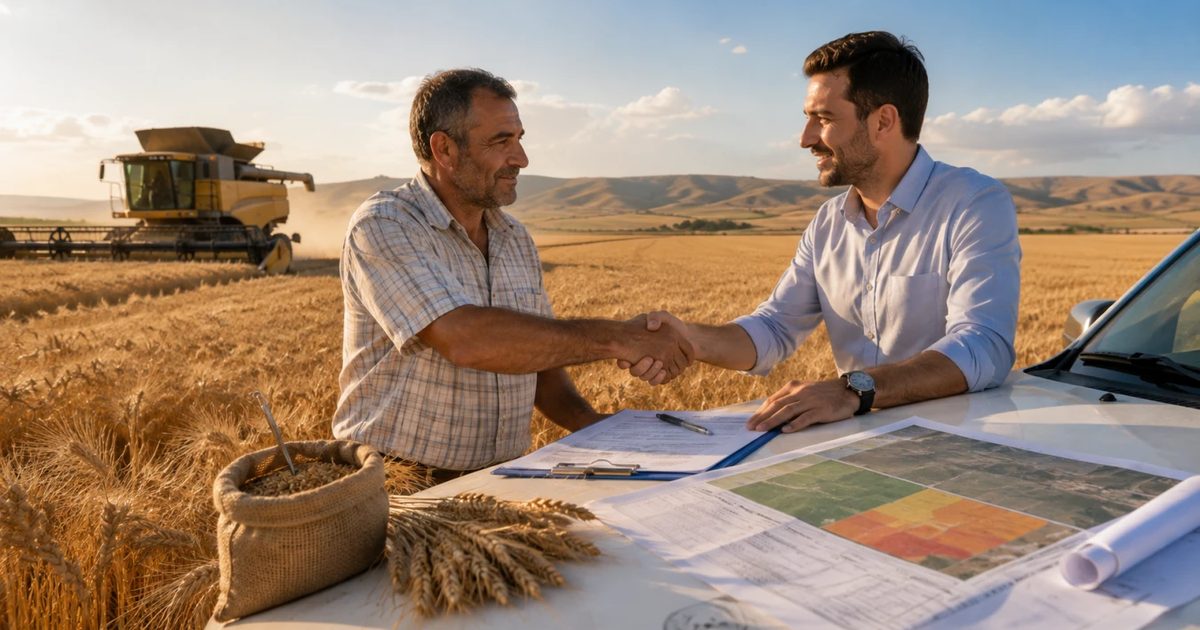
The contract farming model, which brings together buyers and producers with binding commitments before harvest, reduces marketing uncertainties and provides institutional assurance for agricultural and industrial integration.
Price Uncertainty Before Harvest Ends
One of the most fundamental risks faced by producers in agricultural production processes is the uncertainty of the price at which their produce will be sold during the harvest period. Sudden fluctuations in the market, situations of oversupply, or unexpected declines in demand can lead to the months of labor spent by farmers going unrewarded. The contract farming model aims to eliminate these uncertainties by bringing together the producer and the buyer before the seed even hits the soil. Through this mechanism, producers know in advance who they will deliver their produce to and at what price when the harvest season arrives.
Principles of Operation for the Contract Farming System
In the contract production process, parties enter into mutual commitments by preparing a formal written contract before the planting or sowing stage. The type of product to be produced, the total land area to be cultivated, acceptable quality standards, and delivery times are clearly defined in these binding documents. Additionally, the method of delivery, payment schedule, operational responsibilities of the parties, and force majeure conditions are detailed. This established legal framework prevents agricultural production from being left to chance and establishes an institutional guarantee mechanism for both parties.
Pricing Methods and Alternative Models
In the contract farming model, it is not mandatory for the price to always be determined at a single fixed rate. Depending on the contract types, in addition to fixed price applications, minimum price guarantees, models indexed to free market conditions, or dynamic calculation methods based on formulas can also be preferred. This situation aims to protect the rights of both parties while providing flexibility against market movements. Farmers need to carefully examine the formula and cost parameters that will determine the final price of the product when signing a contract.
Direct Advantages Provided to the Producer
A well-structured contract production system allows the producer to focus solely on efficient production by completely eliminating marketing and sales concerns. Farmers clarify their cash flow and financing plans months in advance, while buyer industrial organizations gain regular access to the quality raw materials they need. In some cases where the model is applied, input support such as seeds, seedlings, and fertilizers, as well as technical consultancy services, are provided by the buyer companies. This facilitates the cultivation of standardized products in the field and sustainably increases agricultural added value.
Criteria to Consider When Signing a Contract
It is critically important for producers not to evaluate the contract farming agreement solely based on the price commitment. The product's quality criteria, acceptable spoilage rates, delivery terms, and payment schedule must be clearly stated in the contract. Furthermore, force majeure clauses that will come into effect in case of natural disasters such as drought, frost, or flood, and the legal processes to be applied in case of possible disputes, should be carefully examined. The transparent definition of rights and obligations prevents disputes that may arise between parties after the harvest.
Agricultural Planning and Supply Security
The contract farming model is positioned as a key tool in the production planning strategies implemented by the Ministry of Agriculture and Forestry. Ensuring national food supply security requires minimizing the risks of periodic overproduction or raw material shortages resulting from unplanned planting. Through the contract model, the quantity of agricultural products demanded by industry is matched with the area size that farmers will plant. This balance prevents excessive fluctuations in product prices, directly supporting both producer welfare and consumer price stability.
The Future of Agricultural and Industrial Integration
The integration of the agricultural and industrial sectors has become one of the fundamental dynamics of modern agricultural economies. The contract farming model, based on mutual trust and transparent cooperation, accelerates rural development while increasing the global competitiveness of the food industry. Processing facilities that have uninterrupted access to standardized, high-quality raw materials operate more efficiently, and producers secure their income through market guarantees. Consequently, contract farming offers a strategic structure that contributes to the sustainable growth of all actors in the agricultural value chain.