


TMO Announces Hazelnut Purchase Prices
· TMO
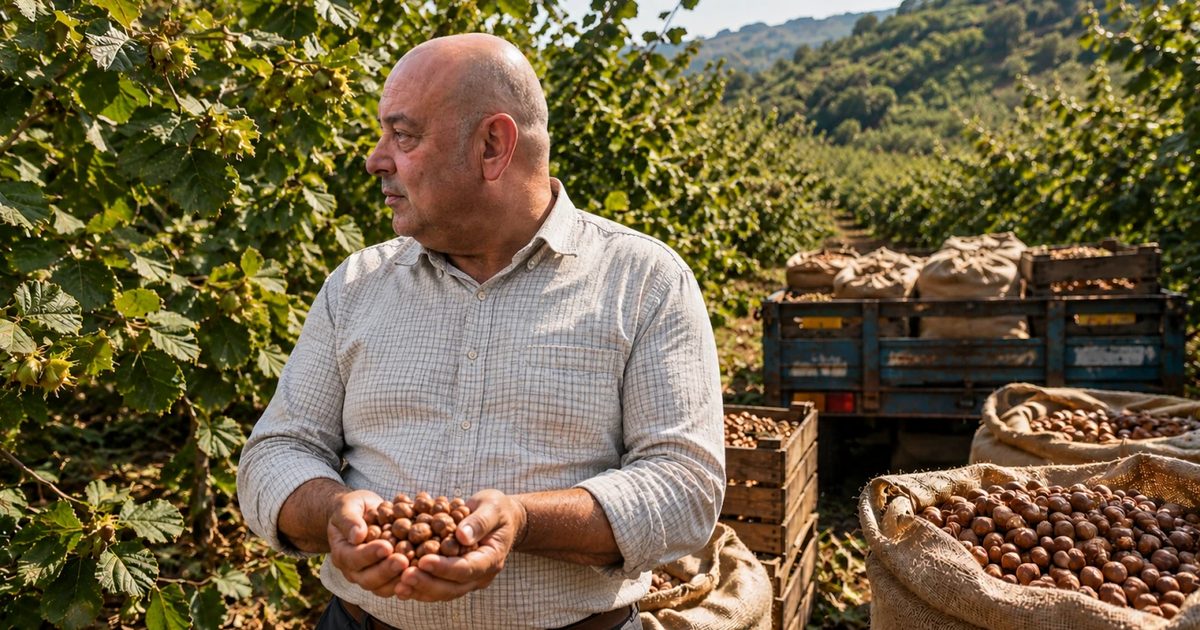
The Turkish Grain Board (TMO) has set the shelled hazelnut purchase price for the 2026/27 season at 255 TL/kg for Giresun quality and 250 TL/kg for Levant quality.
TMO Announces Hazelnut Purchase Prices
The Turkish Grain Board (TMO) has officially announced the shelled hazelnut purchase prices for the 2026/27 season, which has begun in the Black Sea Region. According to the TMO's announcement, the purchase price has been set at 255 TL/kg for Giresun quality hazelnuts and 250 TL/kg for Levant quality hazelnuts. Purchases are reported to have started on August 24th via an appointment system. The base purchase prices determined by TMO are based on 50% sound kernel content and form the fundamental floor reference for the market.
Akçakoca Chamber of Agriculture Cost Calculation
In the cost study prepared by the Akçakoca Chamber of Agriculture on July 13, 2026, the main expense items for hazelnut production were calculated in detail. According to the Chamber's study, the total production cost for one decare of hazelnut garden was 36,410 TL. Based on the average yield of 150 kilograms per decare over the last four years, the cost per kilogram of hazelnut was recorded as 242.73 TL. Fertilization, pest control, pruning, harvesting, and transportation were included in the calculation.
Gross Income Balance for Giresun Quality
Taking the 242.73 TL/kg cost determined by the Akçakoca Chamber of Agriculture as a reference, a gross sales revenue of 38,250 TL per decare is obtained with a yield of 150 kilograms per decare at TMO's price of 255 TL/kg. After deducting the total cost of 36,410 TL per decare, the gross difference remaining for the producer is 1,840 TL per decare, or 12.27 TL per kilogram. While these figures serve as a regional reference, they may vary depending on the land's condition.
Impact of Per-Decare Yield on Cost
Garden productivity plays a direct determining role in unit cost in hazelnut production. According to the modeling based on the Akçakoca Chamber of Agriculture's total cost of 36,410 TL per decare, the cost is 242.73 TL/kg when the yield is 150 kg/decare. When the yield drops to 120 kg/decare, the cost per kilogram rises to 303.42 TL, and when it falls to 100 kg/decare, the cost per kilogram jumps to 364.10 TL.
Cost and Price Gap for Levant Quality
A similar income scenario is observed for the base price of 250 TL/kg announced by TMO for Levant quality shelled hazelnuts. Assuming a yield of 150 kilograms per decare and a cost of 36,410 TL per decare, the total gross sales revenue is 37,500 TL, leaving a gross difference of 1,090 TL per decare. If the yield drops to 120 kilograms, the cost per kilogram rises to 303.42 TL, placing the selling price below the cost.
Reflection of Yield Difference on Price
The yield rate of hazelnuts in TMO's purchasing system directly affects the net price per kilogram received by the producer. According to TMO data, an additional premium of 5.10 TL per kilogram is paid for Giresun quality and 5 TL for Levant quality for every percentage point of yield above 50%. Thus, in the TMO tariff, Giresun hazelnuts with 51% yield rise to 260.10 TL/kg, and products with 55% yield increase to 280.50 TL/kg.
Effect of Drying and Storage on Income
TMO officials emphasize that maximum attention must be paid to the moisture content during product delivery, otherwise, there may be problems with appointments. Shelled hazelnuts that are not sufficiently dried not only lose quality but also carry the risk of mold and spoilage during storage. It is stated that the losses and additional labor costs during the drying process of the product should also be correctly included in the total production cost calculation.
Dimension of Harvesting and Labor Costs
Especially in the sloped lands of the Black Sea, harvesting labor and mechanization expenses constitute a large portion of the total costs. According to the recommended tariff shared for Ordu for the 2026 season, the daily garden worker's wage is announced as 1,750 TL, and the threshing machine service fee is 6,000 TL per hour. In addition to these recommended fees, additional items such as food, accommodation, and transportation can significantly change the total cost burden from garden to garden.
Producer's Real Earnings Calculation Chain
It is emphasized that it is not enough for hazelnut producers to look only at the TMO base price to see their own profitability. For a healthy calculation, the actual yield per decare, the total harvested quantity, the laboratory yield result, the net sales price, and the expenses for fertilizer, pesticides, maintenance, labor, threshing, and transportation must be fully summed up to determine the net producer income. Without establishing this chain, the welfare contribution of the announced price cannot be fully understood.
Producer's Decision on Sale and Holding
The decision of producers to immediately deliver hazelnuts to TMO after harvest or to hold them in the free market is based on various factors. While TMO offers storage and marketing guarantees, the producer's urgent cash needs, existing storage infrastructure, product moisture status, and financing costs determine the decision-making process. It is noted that producers who do not have suitable storage facilities delaying the product solely on the expectation of price increases pose a risk of quality loss.
Market and Producer Impacts of the Season
The base prices set by TMO for the 2026/27 season serve as the main anchor for free market dynamics across the Black Sea. It is predicted that the cost pressure will be felt more severely in low-yield gardens due to high input and labor costs. Yield increase, proper drying, and high yield are considered to be the most fundamental factors in protecting the final income per kilogram obtained by the producer.