


Research: AI in Food Crises Requires Expert Oversight
· Nature Food
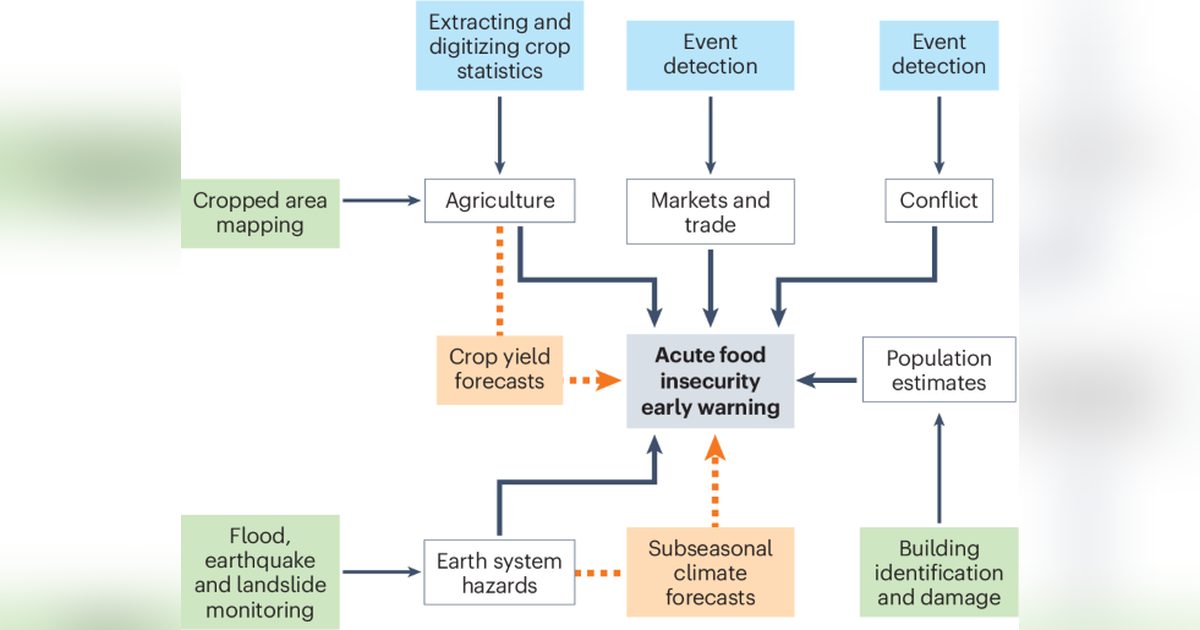
A global study published in Nature Food reveals that the use of artificial intelligence in early warning systems for food security must be balanced with human supervision.
Early Warning Systems in Food Security
A new scientific study published in Nature Food focuses on the future of early warning systems for food security. The research, led by W. Anderson, I. Becker-Reshef, and N. Bodanac, examines mechanisms for predicting food crises. The study reveals how modern technologies impact the capacity to intervene in global food crises. The peer-reviewed publication highlights the critical importance of early identification of malnutrition and supply disruptions in humanitarian aid efforts.
Predictive Power of Artificial Intelligence
The study's findings indicate that artificial intelligence and machine learning models have already advanced early warning mechanisms to a higher level. It is noted that algorithms have particularly increased the speed of data collection and enhanced the capacity for real-time monitoring of events in the field. Systems analyzing complex datasets are reported to provide significant improvements in forecasting agricultural yields and food supply. Researchers emphasize the potential of these digital tools to detect supply shortages in crisis-stricken regions in advance.
Expert Oversight to Prevent Errors
The study reviewed states that using AI outputs as the sole decision-making mechanism carries significant risks. It is pointed out that potential forecasting errors could lead to extremely devastating humanitarian and financial consequences. Therefore, it is stated that technological models must be used selectively and accompanied by expert human supervision in their respective fields. The research demonstrates that balancing algorithmic analyses with expert experience is a vital necessity.
Transparent Governance and Accountability
Researchers argue that a robust governance framework is essential for the sustainability of human decision-making processes. Adopting transparent data practices is characterized as a mandatory step for decision-makers to maintain accountability. It is stated that the parameters used by algorithmic models to reach their conclusions must be clearly documented. This approach aims to ensure the continuation of impartial and effective aid strategies in food security policies.
International Support and Multi-Stakeholder Partnerships
The study in question was supported by a broad consortium, including NASA Harvest, the CGIAR Digital Transformation Program, the European Research Council, and the Gates Foundation. The project, which also benefited from the contributions of researchers from the Alliance of Bioversity International and CIAT, underscores the importance of interdisciplinary partnership. The analysis, conducted with the contributions of global funders, offers a scientific framework for establishing responsible artificial intelligence standards in future food security policies.