


Drip Irrigation Mistakes Lead to Yield Losses
· TarımTR
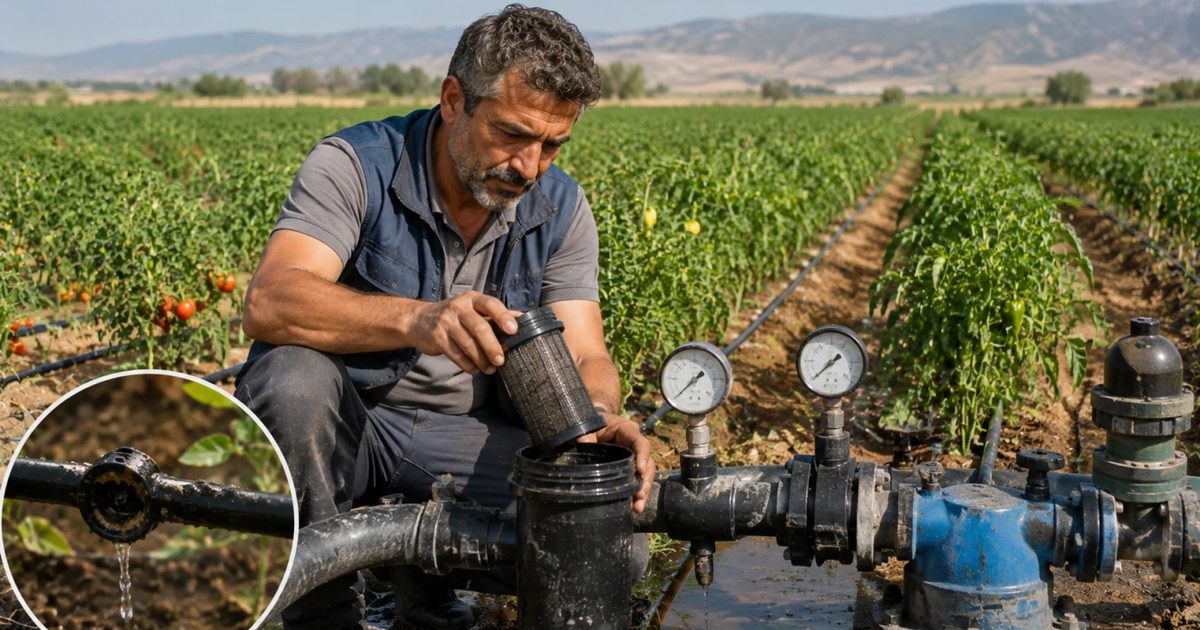
Modern drip irrigation systems, which save water in agricultural production, can be hindered from achieving expected yield increases due to faulty operation, insufficient maintenance, and calendar-based irrigation.
System Installation Alone Is Not Enough
Drip irrigation infrastructure, which increases water efficiency in modern agricultural production, does not guarantee high yields on its own. Field observations reveal that merely installing technological equipment is insufficient for savings and yield increases. Serious yield losses can occur when proper planning, regular system maintenance, and programming according to the plant's real-time water needs are not implemented. Supporting technological infrastructure with correct operational rules is of great importance for agricultural sustainability.
Irrigation Based on Need, Not Calendar
One of the most common mistakes among producers is irrigating based on fixed calendar days without examining the soil's moisture status. However, air temperature, plant growth stage, soil structure, wind speed, and daily evaporation rates constantly change. Periodic irrigations performed without considering these environmental variables create conditions for plant stress. Irrigation timing must be determined based on soil moisture sensors or practical moisture checks.
Over-Irrigation and Oxygen-Deprived Root Zone
The common belief that applying more water directly increases yield can cause serious damage to plant physiology. Excessively applied water depletes the vital oxygen in the root zone, causing the plant to suffocate and leading to the leaching and loss of nutrients from the root zone. At the same time, uncontrolled increases in soil moisture raise the risks of root rot and fungal diseases. Over-irrigation increases energy costs while causing a significant decrease in product quality.
Filter Maintenance and Emitter Clogging
Neglecting the periodic cleaning of filters, which are among the most critical safety elements of drip irrigation systems, leads to serious technical problems. Uncleaned filters eventually cause lime, sediment, and organic matter to accumulate in the emitter lines, leading to widespread clogging in the system. Reduced emitter flow rates result in some plots in the field becoming completely dry. Filter units and emitter flows must be regularly inspected at consistent intervals throughout the season.
Pressure Imbalance and Fertigation Errors
Failure to ensure uniform pressure distribution in irrigation lines causes uneven and heterogeneous plant growth within the field. Insufficient or excessive line pressure delivers high amounts of water to some rows while leaving plants at the ends of the lines thirsty. Furthermore, applying fertilizers without considering soil analysis and phenological stages leads to serious nutritional disorders. Fertigation processes must be carried out with correct dosage, appropriate fertilizer selection, and regulated pressure control.
Record-Keeping Culture and Preparation for the Future
Failure to record the amount of water consumed and fertilizer doses applied in operations prevents proper planning for subsequent seasons. Keeping regular irrigation records allows for the analysis of water and energy costs and prevents resource waste. With the increasing prevalence of sensor-supported precision agriculture technologies, these management errors are expected to be minimized. Producers who operate based on records and data save water while also controlling input costs.