


Fig Producer's Income in Aydın Determined by Drying Efficiency
· TarımTR
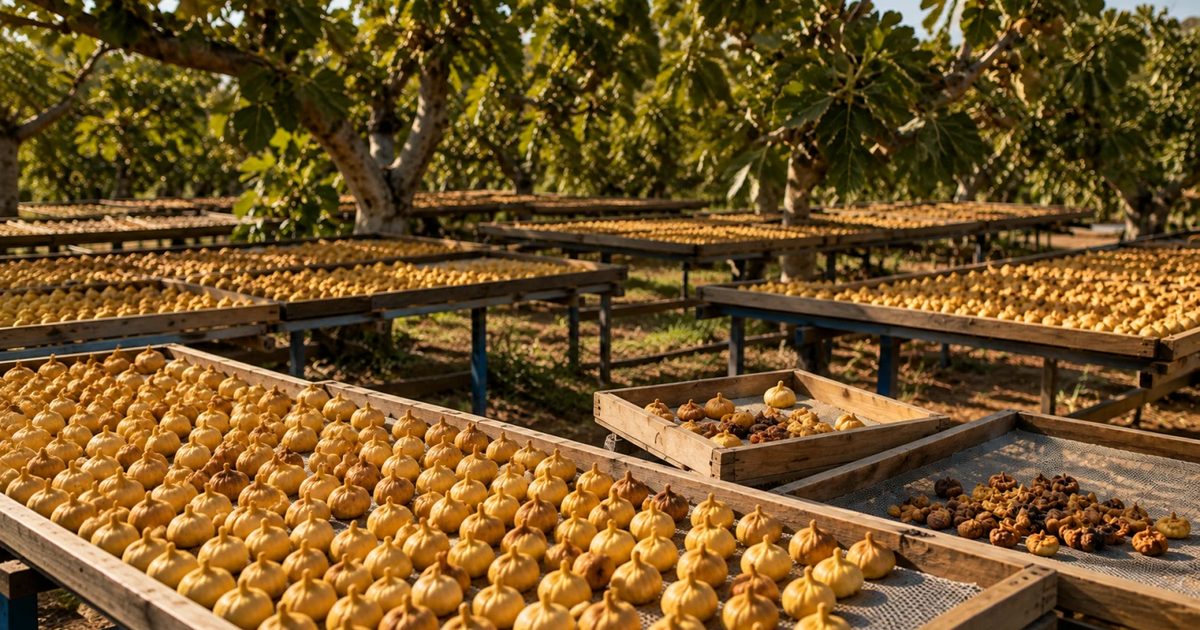
As the 2026 fig harvest season begins in Aydın, experts emphasize that proper drying and hygiene management directly determine export value and producer profit against fresh price fluctuations.
Fig Harvest Season Begins in Aydın
The 2026 fig season has officially opened in Aydın, one of Turkey's most important dried fruit production centers. According to the harvest period calendar published by the Ministry of Trade, July 29-30 was set as the official harvest start date for the Sarılop fresh fig variety, and July 30-31 for black varieties. As activity increases in the orchards, producers' top priority has become maintaining the product's value from the tree after harvest. In this process, extending from the field to the table and export, picking the fig from the branch is only the initial stage.
Critical Yield Calculation in Dried Figs
One of the key indicators directly determining producer income in dried fig cultivation is the drying yield. According to technical data from the Fig Research Institute, approximately 1 kilogram of dried fig is obtained from 3-3.5 kilograms of fresh figs. Based on this calculation, 100 kilograms of fresh product yields 28.5 to 33.3 kilograms, and 1 ton of fresh product yields 285 to 333 kilograms of dried figs. Since the fruit's initial moisture, maturity level, and drying conditions directly affect this conversion rate, producers must focus not only on fresh tonnage but also on net yield.
How Drying Errors Degrade Quality
The drying process is the most delicate stage that determines the fig's market value, shelf life, and commercial grade. Technical publications from the Fig Research Institute note that leaving the product on drying racks for too long or exposing it to excessive heat leads to shell hardening and darkening of color. Uninformed practices, done with the thought of drying quickly, reduce the product's export quality and decrease its marketable quantity. Producers preventing economic loss by regularly checking the fruits during the drying phase and removing ripe products from the racks on time.
Separation of Sound and Defective Fruits
The method of collecting fruits that have ripened and fallen to the ground directly determines the product's health in dried fig production. Technical sources stipulate that ripe products must be collected regularly every day and sound products should never be placed in the same container as defective or waste figs. Contact between defective fruits and sound ones creates a breeding ground for rapid spread of rot, odor, and various fungal diseases. This simple separation prevents the entire batch from spoiling, allowing producers to maintain a high proportion of sound products and market income.
Use of Harvest Nets and Racks
Preventing direct contact of figs with the soil is the most effective method for reducing microbiological and physical contamination. Spreading harvest nets elevated from the ground under the trees and drying the product on wooden racks increases hygiene standards. The Ministry of Agriculture and Forestry has provided material support to producers to popularize these practices. Indeed, according to Ministry data, a total of 10,500 drying racks and 242 harvest nets were distributed to 518 producers across İzmir during the 2025 production year.
Measures Against Aflatoxin and Mycotoxin Threat
The most fundamental criteria determining the prestige and acceptability of dried figs in the international market are food safety criteria. The Ministry of Agriculture and Forestry has organized joint technical studies with producers and researchers in Aydın during 2026 to reduce mycotoxin risks such as ochratoxin A and aflatoxin. Disruption of moisture balance during the harvest and drying process can trigger toxin formation, leading to the product being rejected at the export gate. Therefore, applying correct hygiene rules not only protects local quality but also external market competitiveness.
Post-Harvest Storage and Hygiene
Successfully completing the drying phase does not mean the process is over; storage conditions are critically important. According to Fig Research Institute data, to ensure pest management, storage areas must be completely cleaned of old product residues beforehand. If excessive moisture in storage areas is not controlled, dried products can reabsorb moisture and face rapid mold risk. Producers must disinfect storage areas before placing products, ensure regular ventilation, and meticulously adhere to classification rules.
Fresh Sales vs. Drying Choice
Significant fluctuations unfavorable to producers were observed in fresh fig prices at the beginning of the 2026 season in the Aydın market. In the first week of August, producer representatives stated that fresh Sarılop fig prices had dropped to the range of 35-40 TL per kilogram, causing difficulties in covering production costs. However, when opting for drying instead of selling fresh, the costs of labor, drying loss, racks, and transportation must be calculated correctly. Producers should not make a final decision without calculating the net margin between the fresh fig price and the dried fig return.
Key Steps to Increase Producer Income
Fig producers must implement a series of measures from orchard management to storage to maintain profitability throughout the season. Timely harvesting of fruits without allowing them to remain on the trees for too long and preventing soil contact are the primary conditions. Keeping drying areas clean, preventing burns from excessive sun, and promptly separating dried batches increase yield. Continuously monitoring the moisture level during storage and focusing not just on the fresh yield but on the net dried yield after deducting costs directly increases the money in the producer's pocket.
Sectoral Evaluation and Export Standards
Sectoral workshops held in Aydın show that fig production is now evaluated not just by tonnage but by a complete quality chain. Climate change conditions, post-harvest pest control, and international food safety norms necessitate producers acting consciously. Even if the amount of fresh figs collected from the orchard remains the same, the proportion of marketable quality dried figs increases exponentially through proper drying and storage management. A production model that adheres to regulations both secures the farmer's unit return and boosts national export revenue.