


TMO Sets Wheat Purchase Price for 2026
· TMO
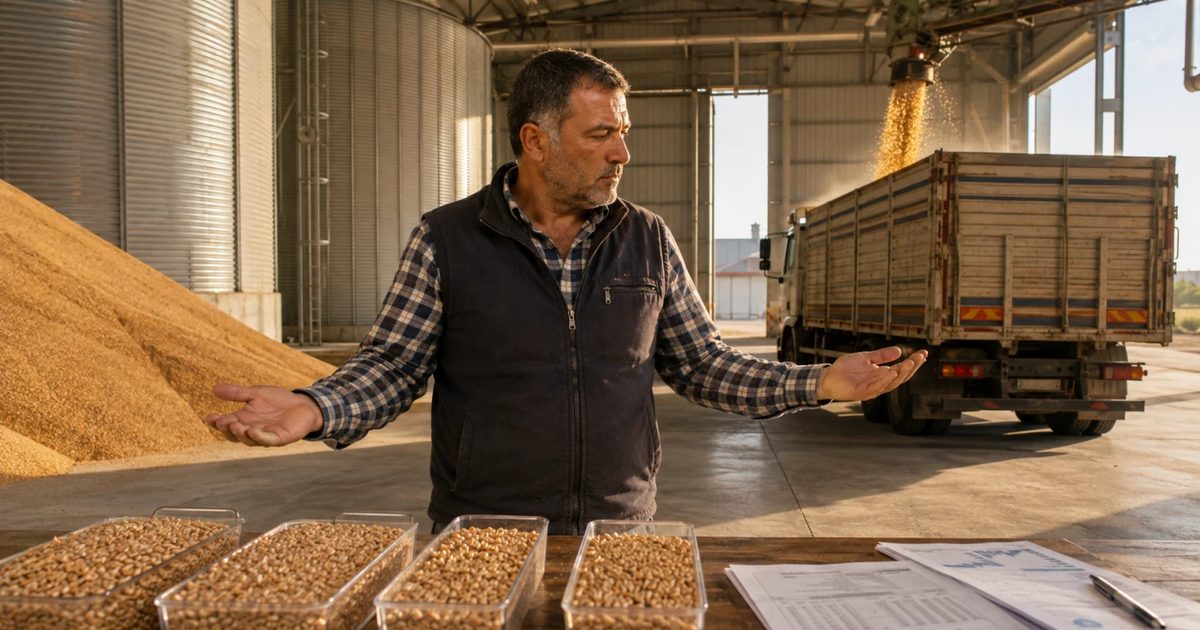
The Turkish Grain Board (TMO) has announced the purchase price for 2nd group bread and durum wheat for 2026 at 16,500 TL per ton. Including ministry supports, the total amount expected to reach producers is projected at 19,514 TL per ton.
TMO Announces 2026 Wheat Purchase Price
According to the statement from the Turkish Grain Board (TMO), the purchase price for 2nd group bread and durum wheat for 2026 has been set at 16,500 TL per ton. The institution announced to the public that it has clarified the purchase conditions to maintain market balance during the harvest period. The TMO's announcement stated that producers' product payments will be deposited directly into their bank accounts within 45 days following delivery. Furthermore, TMO officially shared that it will implement a resale price of 18,500 TL per ton for 2nd group wheat starting from October 1st.
Total Income Balance Formed with Ministry Supports
According to information shared by the Ministry of Agriculture and Forestry, a total payment of 980 TL per decare is projected to be made to producers under basic support, planned production support, and certified seed usage support. Considering the average yield across the country, these supports are calculated to be equivalent to 3,014 TL per ton of product. According to TMO's calculations, when the purchase price and supports are combined, the total amount reaching the producer amounts to 19,514 TL per ton. However, it is specifically noted that support payments are not directly added to the purchase price and are subject to relevant legal conditions.
Importance of Harvest Sales for Urgent Cash Needs
One of the most critical choices facing producers after the harvest period is the timing of product sales. For businesses with high-interest bank loans or those needing urgent cash to cover new season agricultural inputs, selling directly after harvest reduces financial risk. Producers who lack their own storage facilities or access to licensed warehouses may incur additional financing costs by carrying debt solely based on the expectation of potential price increases. In this context, it is noted that producers should base their decisions on net cash flow and income calculations rather than gross price expectations.
Official Advantages Provided in the Licensed Warehousing System
According to TMO's 2026 purchase announcement, significant public supports are provided for producers delivering products to licensed warehouses. Within this scope, producers meeting the legal requirements are granted exemptions from 2% withholding tax and 2% SGK premium deductions. Additionally, the state covers 75% of the warehouse rental fee for up to 6 months in licensed warehouses. Producers can also directly benefit from a 9-month maturity, zero-interest loan opportunity for up to 75% of the value of their stored products.
Hidden Cost Factors in the Storage Process
Producers who decide to store their products and wait must accurately analyze whether potential future price increases will cover all expenses. Rental fees, transportation costs, analysis expenses, and the financing cost of working capital that arise during the storage period directly affect net profit. The risk of quality loss and spoilage that may occur during the waiting period must also be included in the cost calculation. Storage decisions made without calculating the additional burden per ton from total expenses can result in outcomes unfavorable to the producer.
Strong Harvest Expectation According to TÜİK Data
According to the Turkish Statistical Institute's (TÜİK) 2026 1st Agricultural Production Estimate data, wheat production across Turkey is expected to increase by 26.7% compared to the previous year, reaching approximately 22.8 million tons. A 21.7% expansion is projected for overall grain production in the institution's data. These strong production figures shared by TÜİK indicate that the wheat supply in the domestic market will remain robust during the harvest season. It is stated that this increase in supply volume is laying a decisive groundwork for price movements in the market.
Quality-Focused Price Formation in the TÜRİB Market
Producers should not solely rely on local trader offers when monitoring the market but should also observe the transaction data from the Turkish Commodity Exchange (TÜRİB). Within TÜRİB, bread and durum wheat are traded via Electronic Warehouse Receipts (ELÜS) according to different quality classes. Physical and chemical parameters such as protein content, hectoliter weight, and moisture level directly determine the price level. It is noted that producers who complete their quality analysis can conduct more advantageous transactions in the market.
Phased Marketing and Management for Producers
In line with market dynamics, a phased marketing model offers more balanced financial management than making a single sales or storage decision for the entire harvest. Producers selling the portion needed for urgent cash requirements during the harvest period and storing the remaining part in licensed warehouses distributes market risks. It is recommended to compare local purchase prices with TMO reference values and calculate the net benefit of storage incentives. This approach supports producers in establishing income security against potential market fluctuations.
Price Stability and Expectations in the Cereal Market
Rational management of storage and sales balance by producers during the harvest period is seen as a factor that alleviates excessive supply pressure in the market. The phased release of products to the market through the licensed warehousing channel supports the prevention of sudden price drops in the cereal sector. Global commodity dynamics, exchange rates, input costs, and TMO's regulatory moves continue to play a fundamental role in shaping market prices. It is highlighted that producers who plan consciously increase their bargaining power.