


Great Bustard Population Under Protection with IPARD Support
· AA Tarım & Ekonomi
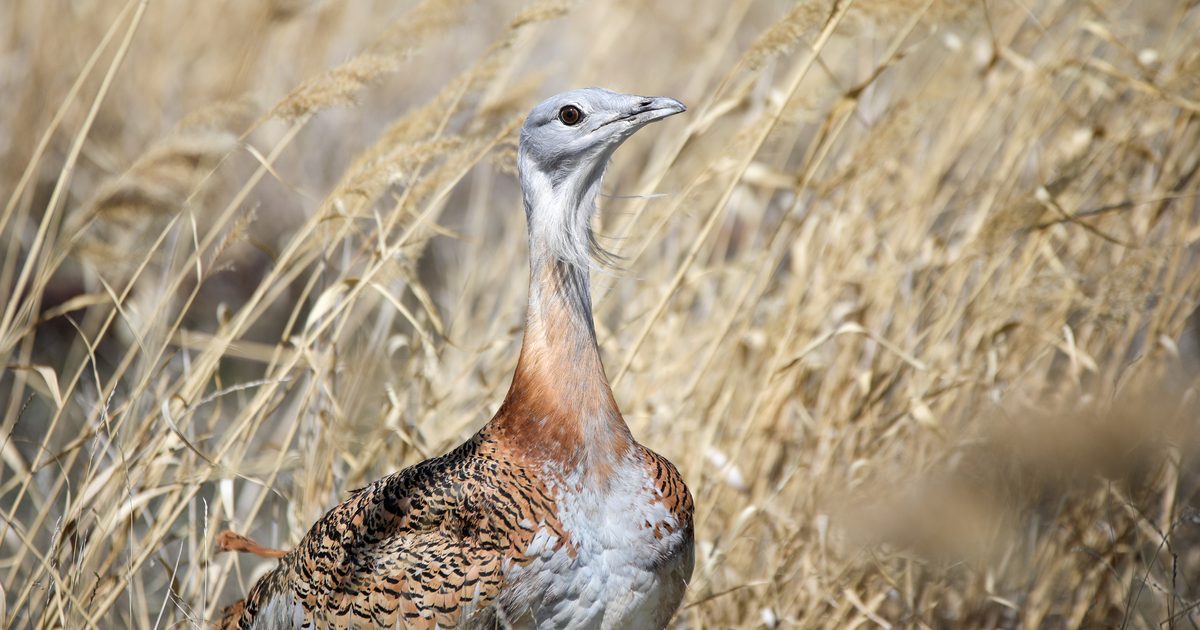
Under the IPARD-III Program, a pilot application launched in Polatlı district of Ankara is protecting the habitats of endangered great bustards, while providing 265 million Turkish Liras in support to farmers engaged in environmentally friendly production.
Agricultural Support Shield for the Great Bustard
Turkey continues its leading position among EU candidate countries with the accreditation it received from the European Commission in May 2017 under the IPARD-III Program's Agriculture-Environment-Climate and Organic Farming Measure. Within the scope of this measure, which aims for rural development through environmentally friendly and sustainable practices in the country, biodiversity activities have been initiated to protect the great bustard, one of the world's largest flying bird species, which is endangered. In the Polatlı district of Ankara, fodder crops are being planted in the feeding areas of great bustards, and these crops are not harvested, directly supporting the strengthening of their natural habitats and population.
Past Experience and Erosion Control
Ahmet Antalyalı, President of TKDK, emphasized that they are promoting environmentally focused production methods while increasing the competitiveness of agricultural enterprises. Antalyalı recalled that during the IPARD-II period, a 5-year commitment contract was signed with 92 farmers in the soil cover management and soil erosion control sector in the Beypazarı district of Ankara, and a total support payment of 21 million Turkish Liras was made for these applications completed on 931 hectares. In the new period, the scope of these activities is being expanded to protect soil fertility.
Huge Budget in the Polatlı Pilot Project
Stating that they have strengthened the measure in the IPARD-III period, TKDK President Ahmet Antalyalı made the following assessments:
"While continuing our applications for soil erosion control, we have implemented the sector for the development of the great bustard population for biodiversity protection for the first time. Thus, we have put into practice a support mechanism that directly contributes to the sustainability of agricultural production as well as the protection of biodiversity."
Antalyalı reported that 95 applications in the field of erosion control were approved, covering an area of 715.8 hectares, and stated the following regarding the budget and targets:
"Support of approximately 77.2 million Turkish Liras is planned to be provided for this sector. In the biodiversity sector, we will start implementing projects this year to improve the great bustard habitat, protect and increase its population. In the call launched as a pilot in the Polatlı district of Ankara, 148 applications qualified for support. A total support of 265 million Turkish Liras is foreseen. The core of our measure is to compensate for the income losses and costs incurred by our producers due to their adoption of environmentally friendly practices. By supporting our producers through 5-year voluntary agri-environmental commitments, we also contribute to the protection of our soils, natural habitats, and biodiversity. In the coming period, we will continue to support sustainable agricultural practices, the protection of soil and natural resources, and the development of biodiversity within the scope of the measure."
Grant Support to Rural Areas with IPARD-III
According to TKDK data, resources allocated for agriculture and rural development investments across the country under the IPARD-III Program are being distributed continuously. Within the scope of the program, 12 call for proposals with a total budget of 499 million Euros have been published to date. As a result of the calls launched, contracts have been signed for a total of 2,721 projects, including 520 in food processing, 554 in livestock, 1,050 in diversification of farm activities, 199 in outdoor crop production, 155 under LEADER, and 243 in agriculture-environment measures, with a grant amount of 20.4 billion Turkish Liras. Actual grant payments totaling 10.4 billion Turkish Liras have been completed for these contracted projects so far.
Fifteen Years of Investment Balance Sheet
The contribution to the rural economy through the IPARD programs implemented across Turkey since 2011 has grown exponentially. According to TKDK data, a total of 2.1 billion Euros in grant support has been provided to more than 27,000 businesses to date. Thanks to the supported projects, an investment volume of approximately 5 billion Euros has been created in rural areas, opening doors to employment for over 107,000 people. Within the scope of all these rural investments, producers and entrepreneurs have also benefited from tax exemptions amounting to approximately 800 million Euros.