


30 Teams Deployed in Muğla for Newborn Calf Care
· Tarım TV
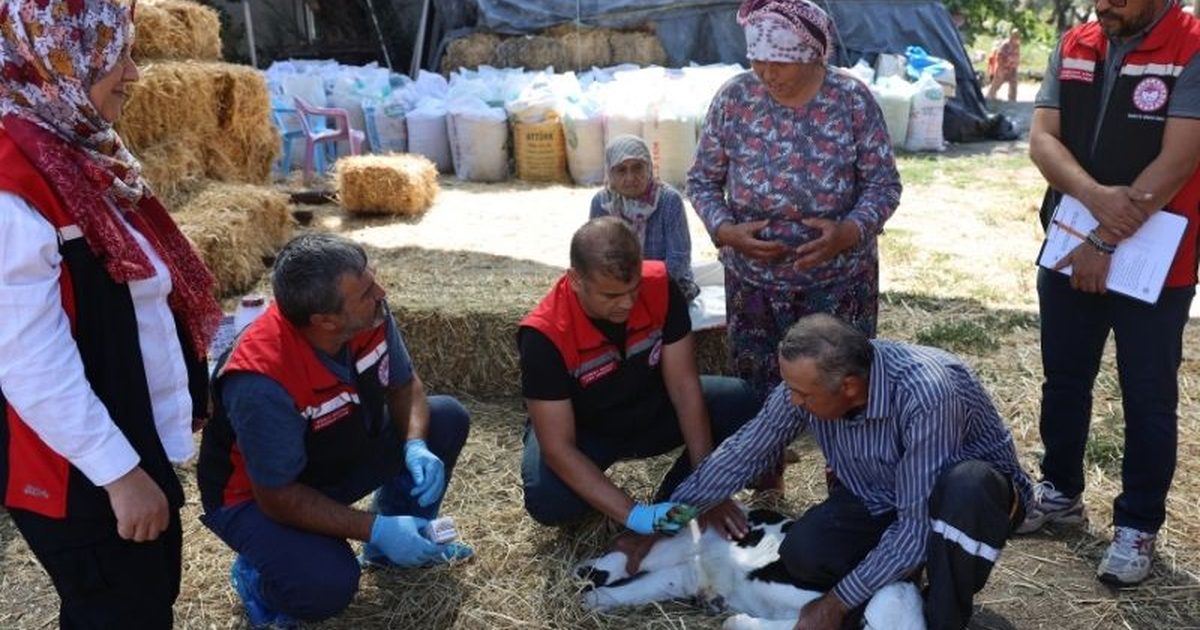
As part of the Ministry of Agriculture and Forestry's goal to prevent calf losses, 30 expert teams in Muğla have been deployed to provide on-site intervention for 330 calves in their crucial early hours.
Mobilization Launched Across Muğla
A critical initiative has been implemented in Muğla in line with the Ministry of Agriculture and Forestry's objective to reduce calf losses. Under the 'Newborn Calf Care Project' prepared by the Muğla Provincial Directorate of Agriculture and Forestry, a total of 30 expert teams have been actively deployed across 13 districts. The teams rapidly reach farms with newborns based on calls received through the producer notification hotline, providing on-site intervention within the first 24 hours. This aims to preserve livestock productivity and prevent losses.
Critical Care and Practical Training
Expert personnel involved in field interventions meticulously apply crucial steps to strengthen the immune systems of calves. Within the project framework, calves receive free septicemia vaccinations, umbilical cord disinfection, and colostrum quality is measured. Additionally, officials provide 10-15 minute practical care training to producers at the calf's side. Field activities are recorded through surveys, regularly reported, and farmers are directly educated on correct care methods on-site.
Targeting Near-Zero Calf Losses
The primary goal of the ongoing project is to prevent calf diarrhea and deaths caused by infections, which are common in small and medium-sized family farms. The Muğla Provincial Directorate of Agriculture and Forestry aims to gradually decrease calf mortality rates across the province. Officials target reducing mortality rates to 10% initially, then to 5%, and ultimately to the globally accepted average of 1%. This will help protect the herd population and ensure the economic profitability of farms remains sustainable.
Project Financing and Institutional Cooperation
Providing information on the project's budget and field operations, Muğla Provincial Deputy Director of Agriculture and Forestry, Dr. Songül Kayğıner Topal, made the following statements:
'Our Ministry prepared an action plan to prevent calf deaths for 2026, dedicating this year to the effort. Specifically, our General Directorate of Livestock has prepared such an action plan to reduce calf losses in medium and small-scale family farms and increase farm profits. As the Muğla Provincial Directorate of Agriculture and Forestry, our Animal Health Branch prepared a project and submitted it to our Ministry. Our Ministry approved this project. 60% of our project's budget is supported by our Ministry. 40% is supported by the Muğla Governorship's Investment Monitoring and Coordination Directorate. Within the project scope, we initiated this work as a training project for newborn calf care to prevent losses from calf diarrhea in the first week, by establishing notification lines in two phases. And from the moment a calf is born, we are working as 30 teams across all 13 districts of the province via the notification line. One of our teams in the Animal Health Branch receives notifications, and our teams deliver information to the districts, reaching the newborn calf immediately. We provide hands-on training to our farmers on calf care, administering 8% serum for protection, and taking measures to protect the calf's immune system. The main purpose of this project is to emphasize that the care in the first week, first day, first half-hour is a crucial detail for the calf's sustainability and survival, and to increase awareness about this.'
Intense Producer Interest in the Hotline
Since the application began, there has been significant interest from producers in the notification hotline established at 0850 308 00 48. Sharing details about field studies and notification data, Muğla Provincial Directorate of Agriculture and Forestry Animal Health and Breeding Branch Manager Mehmet Kuray stated:
'We are currently implementing the first phase of our project between August 31 and September 11. We have 30 teams within the project scope. One of these 30 teams is at the center, while 29 teams are in the districts, directly intervening with calves in the field. They perform umbilical cord disinfection, administer septicemia serum, and measure the quality of the mother's colostrum. After conducting the free nipple test, it doesn't end there. The most important part is providing 10-15 minute training sessions to producers at the calf's side. We started our project on Monday. So far, we have received 350 notifications. 20 of these notifications were erroneous, while 330 were actually evaluated by our notification teams. We plan to implement the second phase of our project during the notification period.'
Second Phase Preparations and Future Outlook
While the first phase of the project was completed with intensive field work between August 31 and September 11, a timeline has been set for the program's continuity. Officials announced that the second phase of the 'Newborn Calf Care Project' will be implemented in the spring of 2027 to reinforce sustainability in livestock farming. With this two-phase training and intervention mobilization, the aim is to permanently minimize calf losses in the region and bring producers up to modern breeding standards.