


Correct Harvest Timing Boosts Raisin Yield
· TarımTR
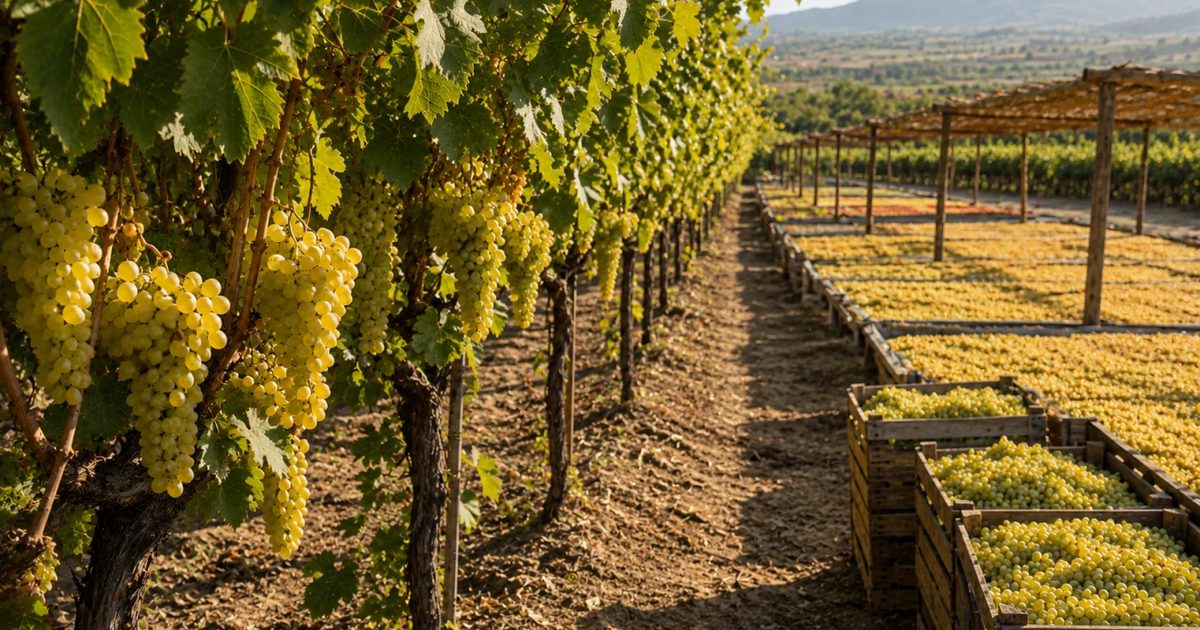
In Manisa, the Sultani Seedless grape harvest has begun, where the dry matter content measured by refractometer, drying time, and proper laying techniques directly determine yield and export revenue.
Grape Season Officially Begins in Manisa
The 2026-2027 Sultani Seedless grape season has officially opened in Manisa, one of Turkey's most important viticulture centers. According to Manisa Commodity Exchange data, the first harvest was symbolically traded at 4,000 TL at the season opening held on August 27. While harvesting for table grapes began on August 11, the harvest and laying of grapes for drying reached their peak in the last days of August. Fresh grapes harvested from the vineyards were transported to drying areas for processing.
Impact of Dry Matter Content on Yield
The timing of the harvest for seedless grapes intended for drying is determined directly by the product's dry matter level. According to technical data from the Manisa Viticulture Research Institute, reaching a soluble solids content of 22-23% in seedless dried grapes is considered the most ideal harvest period. In vineyards that have reached this maturity level, approximately 1 kilogram of dried grapes is obtained from 4 kilograms of fresh grapes. Officials emphasize that harvest decisions should not be based solely on grape color but should rely on refractometer measurements.
Economic Loss for Producers Due to Early Harvesting
Harvesting the product before it accumulates sufficient sugar and dry matter directly reduces the producer's total dried product yield. Sources from the Manisa Viticulture Research Institute indicate that for grapes harvested early at a dry matter level of 18-20%, 5 kilograms of fresh grapes are needed to obtain 1 kilogram of dried grapes. When harvested at the ideal level, this ratio drops to 4 to 4.5 kilograms. Early harvesting results in producers obtaining much less dried grapes from the same amount of fresh product.
Quality Losses Due to Over-Ripening
Delaying the harvest date too much and leaving the grapes on the vine for an excessive period carries risks comparable to early harvesting. Technical reports from the Manisa Viticulture Research Institute state that when the dry matter content reaches the 25-26% range, it causes drying and shedding of the berry stems. This situation increases physical losses during the drying phase and lowers the commercial quality grade of the dried grapes. Producers need to regularly monitor the actual physiological maturity in the vineyard rather than adhering to calendar dates.
Importance of Harvesting During Cool Hours of the Day
Determining the correct grape picking time during the hot August days preserves the physiological stability of the product. Technical information from the Manisa Viticulture Research Institute states that harvesting must be done in the early morning or during the cool evening hours. Quality degradation due to heat stress accelerates in bunches harvested during the hottest hours of the day. It is recommended not to leave harvested grapes in the sun for extended periods, to transport bunches without crushing, and to deliver the product to drying areas quickly.
Sorting Diseased and Rotten Bunches
During the harvest process, not only the degree of ripeness but also the hygienic condition of the harvested product is of great importance. Technical warnings shared by the Manisa Provincial Directorate of Agriculture and Forestry require that healthy grapes be strictly separated from moldy, rotten, and pest-damaged bunches during harvest. Furthermore, producers are strongly advised to avoid unnecessary soil tillage before harvest and to strictly adhere to the waiting periods between the last pesticide application and harvest for applied plant protection products.
Proper Drying Techniques in Laying Areas
The techniques applied during the transfer of fresh grapes from the vineyard to the laying area directly affect the drying speed and color. The Manisa Provincial Directorate of Agriculture and Forestry explains that grapes dipped in a suitable potash solution containing potassium carbonate and olive oil dry within 7-10 days, depending on the air temperature. In the natural drying method without dipping, where no solution is used, this process can extend up to 15-20 days. For homogeneous drying, bunches should not be laid too densely in the drying area.
Precautions Against Rainfall During Drying Phase
Seasonal rainfall possibilities during late August and September pose a serious risk to the drying grapes on the laying grounds. In drying areas exposed to rain, the drying time extends, and irreversible quality losses such as mold and darkening can occur. The Manisa Viticulture Research Institute advises producers to ensure good ground drainage in ground laying areas, to spread bunches in thin layers, and to have covering systems ready in the field against the risk of sudden rainfall.
Seven Checks to Perform Before Harvest
There are seven fundamental steps that producers must meticulously implement before starting the harvest. In this context, the first step is to measure the dry matter content with a refractometer and to take samples from bunches at different points in the vineyard. Adhering to pesticide waiting periods, harvesting during cool hours, preventing bunch crushing, separating rotten berries, and preparing drying areas before harvesting constitute the other items on the list. These preparations directly guarantee drying efficiency.
Distinction Between Table and Drying Grapes
The harvest criteria and market presentation dynamics for table and drying grape varieties are entirely different in viticulture. Based on maturity assessments conducted under the coordination of the Manisa Provincial Directorate of Agriculture and Forestry, harvesting for table Sultani Seedless and Mevlana grapes began on August 11, with exports starting on August 12. For table grape production, factors such as bunch size, berry firmness, color tone, and attractive appearance are the primary determinants of market demand, rather than high dry matter content.
Export Figures and Sectoral Contribution
Correct harvest and drying management reinforce Turkey's strong position in the global dried fruit market. According to Manisa Commodity Exchange data, 210,000 tons of seedless dried grapes were registered as of the end of July in the 2025-2026 season. According to the institution's records dated August 22, 2026, the export of 140,000 tons of dried grapes throughout the season generated $455 million in foreign currency revenue. Maintaining quality standards directly increases producer income and Turkey's competitive power.