


Improper Sunflower Storage Reduces Producer Earnings
· TarımTR
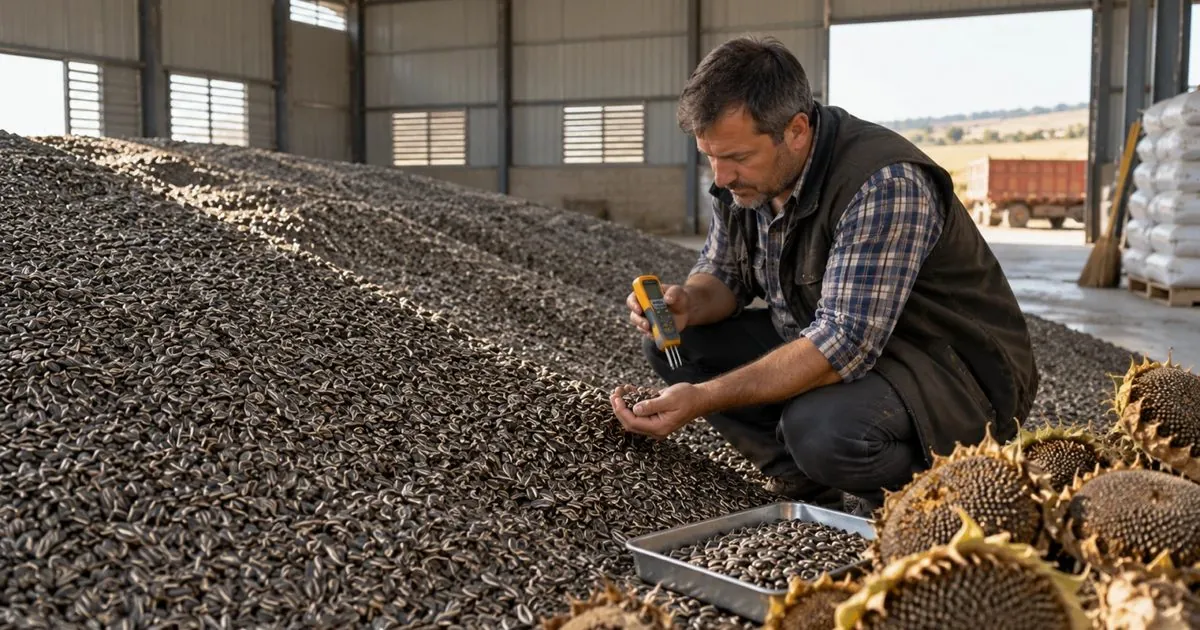
Post-harvest technical storage errors in sunflowers are leading to rapid spoilage of high-oil-content produce and a decline in market value. Experts warn against exceeding safe grain moisture limits.
The completion of the sunflower harvest season does not mean the producer's responsibility is over. This strategic product, with its high oil content, faces the risk of rapid spoilage if stored in unsuitable environmental conditions. According to technical information shared by the Ministry of Agriculture and Forestry, preserving the quality of the crop harvested in the 2026 season directly determines the producer's final earnings. Even the smallest storage error in the post-harvest process can lead to the rapid erosion of months of labor and the product's market value.
The first and most critical step for preserving the product without spoilage is the correct determination of grain moisture. According to data from the Trakya Agricultural Research Institute of the Ministry of Agriculture and Forestry, sunflower grain moisture must be below 9.5% for safe storage. Ministry technical resources also state that keeping grain moisture below 10% is the basic safety limit. When grain moisture drops below 8%, a much safer environment is established against disease and harmful microorganism activity.
There is a technical difference between the combine harvester operating in field conditions and immediately storing the product in a silo. As the plant's stem, leaves, and head dry, the grain moisture is expected to drop to 9-10% at harvest maturity. However, not all harvested produce is considered ready for long-term storage directly from the field. The moisture content of grains taken to storage immediately after harvest needs to be measured again. Uncontrolled transfer of moist batches to storage can disrupt the biological balance of the entire pile, initiating quality losses.
Special measures are deemed mandatory for sunflowers entering storage with a moisture range of 11-12% due to harvest conditions. Ministry of Agriculture and Forestry technical documents state that if products at this moisture level are stored, regular and frequent ventilation must be performed. Continuous monitoring of silo temperature, keeping the pile cool, and ensuring uninterrupted air circulation are stipulated. If long-term and lossless stocking is targeted, it is recommended to reduce the product's moisture content to lower levels using drying methods.

Due to its high content of vegetable oil, sunflower is much more sensitive to changes in moisture and temperature than other grains. In a high-moisture environment, the seed's respiration rate and microorganism activity increase exponentially. This biological mobility creates the ground for a sudden rise in temperature within the pile and the onset of heating in the storage. As a result of heating that goes unnoticed in time, the oil quality of the seed decreases, the acidity level increases, and the product's commercial value approaches complete loss.
Measuring only grain moisture before storage is not enough; the physical cleanliness of the product must also be meticulously carried out. Ministry sources emphasize that foreign matter such as head fragments, flower debris, leaves, and stems negatively affect the stored oil quality. Foreign particles with high moisture-holding capacity create localized spoilage and hot spots within the pile. Therefore, removing foreign matter from sunflowers before they are put into storage eliminates the risk of spoilage and mold that could combine with high moisture from the outset.
In storage architecture, the height of the product pile is a vital parameter for ensuring airflow. Ministry of Agriculture and Forestry crop production guidelines state that the pile thickness in sunflower storage must absolutely not exceed 1-1.5 meters. Piling tons of crop in high blocks at once completely cuts off air transfer in the inner layers. Producers need to spread their products at reasonable heights that allow for control, are suitable for ventilation channels, and prevent pressure-induced temperature increases.
For a successful storage period, it is important for producers to act with a planned control list after harvest. First, silos must be cleaned in advance, disinfected against pests, and the moisture of batches entering storage must be measured with precise devices. For products with moisture levels above 9.5%, urgent ventilation and drying plans should be activated. During storage in rainy weather, controls should be intensified, and the temperature inside the pile should be monitored with probes to preserve the product's quality until the day it is offered to the market.
Sunflower Seed Moisture Standards and Threshold Values
Ministry of Agriculture and Forestry / Trakya Agricultural Research Institute
- Safe Moisture Limit Against Pests
- 8%
- Safe Storage Maximum Moisture
- 9.5%
- Expected Seed Moisture at Harvest (Average)
- 9.5%