


Ecological Farming is Sufficient to Feed Turkey's Population
· GıdaTarım
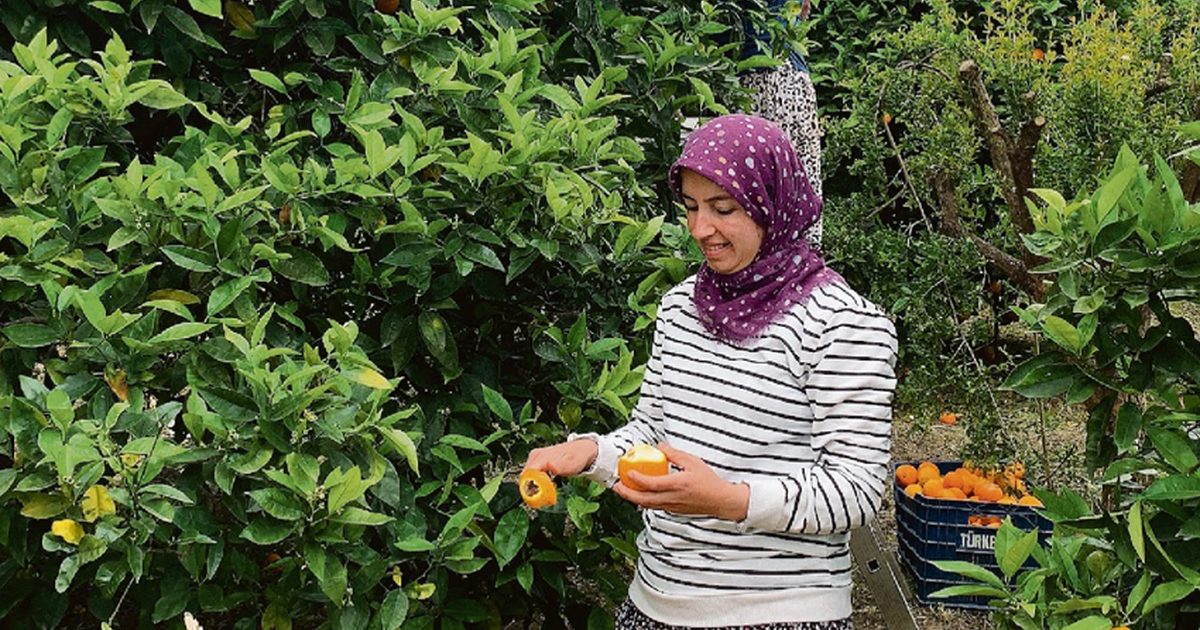
Scientific optimization models and global research prove that agroecological farming methods can fully meet Turkey's food needs.
Current State of Global Ecological Farming
According to 2024 FiBL data shared by the Research Institute of Organic Agriculture, organic farming is practiced on approximately 99 million hectares worldwide. This figure represents only 2% of the total agricultural land on Earth. While natural, protected, and agroecological production methods are widespread from Cuba to India, industrial farming remains the dominant production style. Indeed, conventional methods continue to be applied on 75% of the world's agricultural land.
Evaluating the need for transformation in the sector, Researcher, Author, and Academician states:
"You are right, I think we need to move beyond this discussion and plan how to transform agriculture with agroecological methods and how to disseminate agroecology."
The Heavy Environmental Cost of Industrial Agriculture
Industrial agricultural systems, based on intensive use of synthetic fertilizers, monoculture, and pesticides, cause irreparable damage to ecosystems. A study published by researcher P. Whitefield in 2016 documented soil degradation as the primary outcome of industrial agriculture. One-third of global greenhouse gas emissions originate from the industrial food chain. Ceyhan Temürcü, working within URGENCI, points out that the system harbors externalized hidden costs such as labor exploitation and heavy healthcare expenditures. The rapid decline in soil organic matter completely breaks down the natural resilience of fields against drought and sudden floods.
Food Security and the Global Distribution Crisis
Despite significant incentives and intensive input use, the industrial system has not shown the expected success in feeding humanity. According to FiBL reports, one in three people worldwide currently faces malnutrition and the threat of hunger. If current trends continue, 50% of the global population will be at risk of hunger by 2050. Experts state that the primary cause of the food crisis is not insufficient production capacity, but rather inequitable income distribution and logistical inequalities. Access to food is becoming increasingly difficult in markets dominated by industrial agriculture, while biodiversity and soil health are declining.
Mathematical Ecological Model for Turkey
In a scientific study conducted with researcher Bulut Aslan in 2018, it was mathematically proven that Turkey's entire population can be fed through ecological farming. The established claim by Conventional Agriculture Advocates and Sector Critics was refuted in the project:
"you cannot feed them"
The project, created using Linear Programming optimization based on industrial engineering, developed a balanced nutrition plan providing 2400 kcal of energy per person per day, considering the population and consumption data of all 81 provinces across the country. The developed mathematical optimization model included ecological yield data for 120 plant and 4 animal products, along with inter-provincial logistics needs.
Soil Improvement and Agricultural Resilience
Scientific experiments on yield in ecological production show that sustainable methods catch up with conventional systems in the long term. The Farming Systems Trial, conducted by the Rodale Institute for over 45 years, reveals that ecological soils perform much better during extreme weather events. Increased soil organic matter significantly enhances water-holding capacity, limiting crop loss during dry periods. With farmers gaining experience during the transition and microbial activity revitalizing, a stable harvest balance can be permanently achieved in ecological fields.
The Reality of Ecological Yield with Meta-Analysis Data
A meta-analysis published in Nature in 2012 by Seufert and colleagues clearly explains the relationship between ecological and conventional farming yields. According to the research findings, the average yield loss in ecological farming remains at 25%, with this difference varying between 5% and 34% depending on the crop type. Even with calculations based on these yield reduction rates in the Turkish optimization model, it was confirmed that food supply could be fully met. Properly planning the agroecological transition will end chemical dependency and secure Turkey's food sovereignty and agricultural future.