


Çorlu Seymen Melon Cultivated Without Irrigation for Enhanced Aroma
· Tarım Pusulası
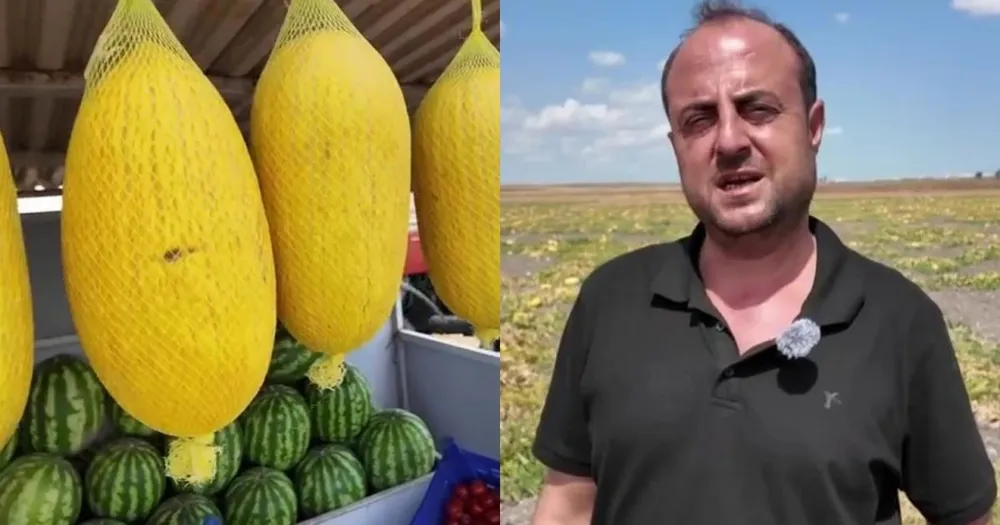
Tekirdağ's geographically indicated Çorlu Seymen Melon is being cultivated using entirely rain-fed agriculture methods, aiming for high aroma quality and extended shelf life.
Unique Aroma Preserved Through Rain-Fed Agriculture
Çorlu Seymen Melon, produced in Seymen Mahallesi of Çorlu district in Tekirdağ and holding geographical indication registration, stands out with its entirely rain-fed cultivation method. Serhat Çıban, a Seymen Melon producer whose family has been cultivating the fruit for generations, expressed his connection to traditional farming with the following words:
'We have been doing this work from father to grandfather. We were probably born into melons.'
Emphasizing that the product's quality is due to zero irrigation, Serhat Çıban stated that while tonnage could increase with irrigation, they do not wish to compromise the aromatic structure.
'If we irrigated, the tonnage might be higher, but we don't want to spoil the aromatic structure.'
Serhat Çıban noted that the yield is reduced by a quarter compared to irrigated melons and provided the following assessment of the product's texture:
'When you eat other melons, there's a fiber in your mouth as they age. That doesn't happen with ours. Our melon becomes syrupy and more flavorful as it ages.'
Planting Schedule and Growing Conditions
The vegetation period of Seymen Melon in the field varies between approximately 115-125 days, depending on the soil's fertility. Almost no pesticides are used in the production of the yellow-colored fruits, which reach an average weight of 4-5 kilograms. Serhat Çıban stated that the planting schedule, previously in April, has been changed due to meteorological conditions and root diseases, and they now adopt early May as the planting period. This minimizes disease risks associated with early planting, ensuring fruit quality by preserving natural growing conditions.
Crop Rotation System for Soil Productivity
A strict crop rotation program is implemented to protect soil health in melon cultivation. Producers avoid planting melons on the same field consecutively for 5-6 years. Serhat Çıban explained that farmers who lack sufficient rotation land on their properties arrange land swaps with their neighbors.
'We give them sunflower plots, and we plant melon plots. The next year, they plant wheat on the melon plot, and wheat suits the land very well in between.'
This crop rotation prevents soil fatigue and diseases, while also yielding high returns from the subsequent wheat crop.
Storage Durability and Market Demand
Seymen Melon can maintain its durability for months when provided with a suitable storage environment after harvest, and can be stored until the end of March. Serhat Çıban highlighted the vital importance of air circulation in preserving the product, noting that fruits that are not bruised retain their quality. He described the growing interest in the product, whose recognition has increased with its geographical indication registration, and explained the demand:
'People have started wanting melons via cargo from here. People going on visits from Çorlu, from our Çorlu, can't leave without buying melons.'
Highlighting the product's flavor, Serhat Çıban concluded his statement:
'Those who taste it know, and we want everyone to taste it.'
| Değer | Ölçüm |
|---|---|
| 4.5 kg | Average melon weight |
| 120 days | Growing period in the field |
| 5.5 years | Non-cultivation period in the same place (crop rotation) |