


Rainfall Doubles Honey Yield in Erzurum
· Tarım TV
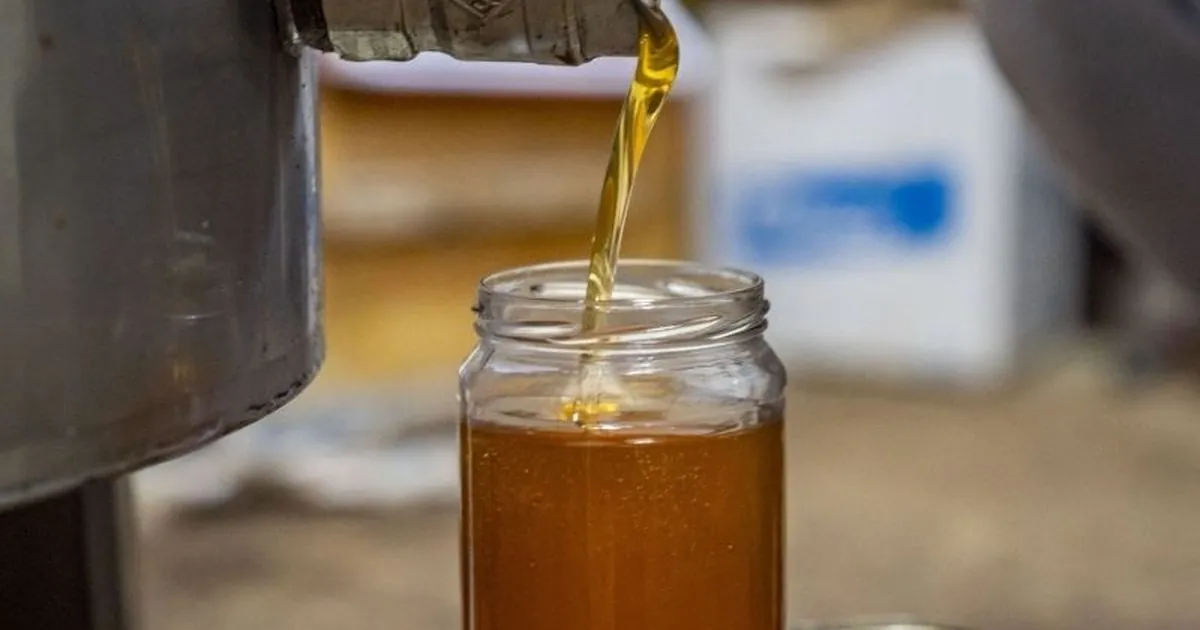
Spring and summer rains across Erzurum extended the flowering period, boosting honey yield per hive to 15 kilograms, doubling last year's output.
Seasonal rains effective in the spring and summer periods across Erzurum have brought vegetation in agricultural areas and natural pastures to its peak vitality. Thanks to the periodic continuation of rainfall, the flowering period of pasture plants has significantly extended. The prolonged flowering period has directly increased the nectar and pollen collection time for honeybees, providing a strong impetus to honey production throughout the season. Producers experienced one of the most fruitful harvest periods in recent years.
Erzurum Provincial Director of Agriculture and Forestry, Alpaslan Kenger, noted the jump in yield as honey extraction work in the city nears completion. Kenger stated that the yield, which averaged 7-8 kilograms per hive last year due to adverse conditions, has risen to 15 kilograms this year, and made the following assessment:
With its high altitude, vast pastures, and rich endemic plant diversity, Erzurum continues to be one of Turkey's most strategic beekeeping centers. Nectar flow continued uninterrupted throughout the season in the plateaus, which were sufficiently nourished with moisture during the spring and summer months. The geographical advantages of the region form the main source of high-quality, nutrient-rich honey production while also accelerating the development of bee colonies.
Erzurum, which hosts thousands of producers every year with its fertile flora, has once again been among the most preferred routes for migratory beekeepers this season. Evaluating the city's potential, Erzurum Provincial Director of Agriculture and Forestry, Alpaslan Kenger, stated that the city offers significant capacity not only on a local but also on a national scale. In his statement on the matter, Kenger emphasized that they hosted approximately 200,000 bee colonies in the city during the season, and this external capacity proves how extensive the region's production base is.
New targets have been set to further strengthen the registered beekeeping infrastructure operating in the city. Erzurum Provincial Director of Agriculture and Forestry, Alpaslan Kenger, stated that there are currently 134,000 bee colonies in Erzurum and commented on the hive capacity as follows:
New training and grant projects are being implemented in coordination with the Ministry of Agriculture and Forestry to expand beekeeping activities in the districts. Explaining the support mechanisms for producers, Erzurum Provincial Director of Agriculture and Forestry, Alpaslan Kenger, conveyed the contributions as follows:
Thanks to these supports, the technical infrastructure of businesses is being modernized.
In addition to traditional beekeeping in the high-altitude regions of Erzurum, value-added organic honey production is also rapidly expanding. Erzurum Provincial Director of Agriculture and Forestry, Alpaslan Kenger, reported that there are producers engaged in organic beekeeping, particularly in the Çat and Aşkale districts, and that these enterprises are encouraged through special support programs by the Ministry of Agriculture and Forestry. Organic honey, produced in controlled pastures free from chemical inputs, provides high income to the regional economy while also contributing to the city's branding process.
| Value | Period | Measure |
|---|---|---|
| 7-8 kg | Last season | Honey yield per hive last year |
| 15 kg | This season | Honey yield per hive this year |
| 134000 hives | Current | Number of local bee hives in the city |
| 200000 hives | Seasonal | Number of migratory bee hives hosted |