


Canola Support Per Decare Rises to 1,326 Lira
· TarımTR
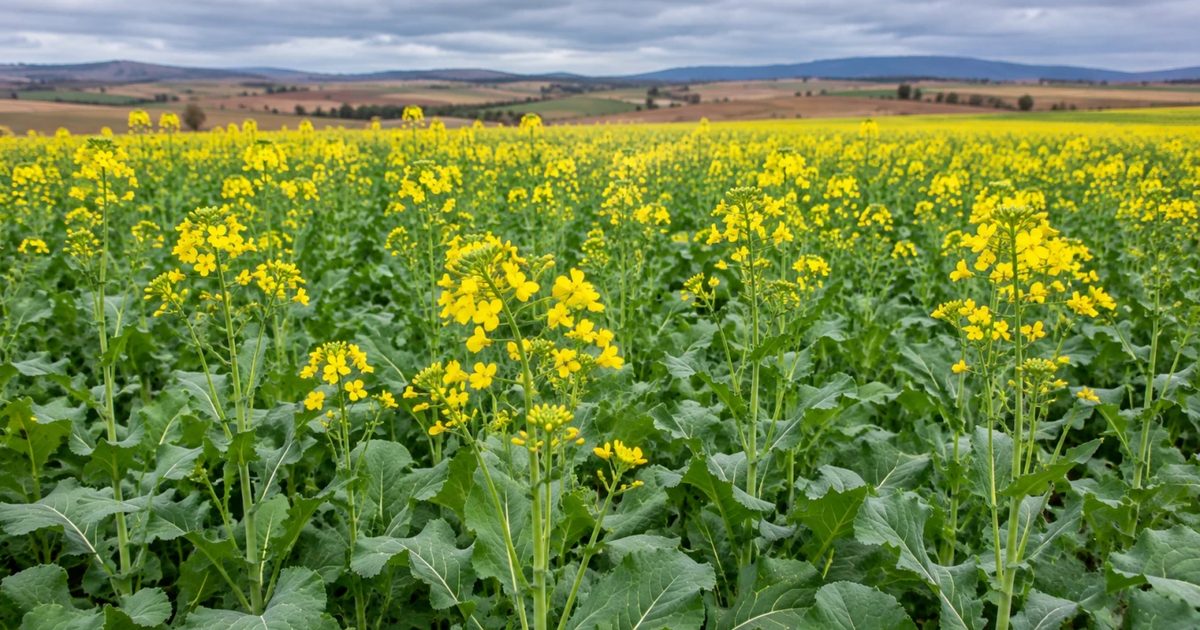
The Ministry of Agriculture and Forestry has increased the total support per decare for canola, which it has included in its strategic product group under a new production planning framework, to 1,326 lira for the year 2027.
New Support Increase for Canola
In the new support model announced by the Ministry of Agriculture and Forestry, incentives for canola producers have been significantly increased. According to the Ministry's statement, the total basic and planning support for canola for the 2026 production year has been updated to 1,101 TL/da, while this figure will be raised to 1,326 TL/da in the 2027 production year. The product, which is covered by support in the same category as sunflower, dry beans, and soybeans, has entered the list of key alternatives re-evaluated by farmers in their production patterns, thanks to these increased premium amounts.
Strategic Product Category and Crop Rotation
Although it has been cultivated in Turkey for many years, canola lags behind wheat and sunflower. Within the scope of new production planning, it is being evaluated as a strategic product group. The crop rotation practices included in the Ministry's new production model aim to prevent yield losses and soil fatigue caused by planting the same crop consecutively. Canola, which has a winter planting calendar, stands out as a successful rotation crop that breaks monoculture farming in regions with suitable soil and climate conditions.
Critical Planting Calendar and Timing
The starting point for achieving high yield and efficiency in canola is timely and correct planting in the autumn months. Technical information from research institutions affiliated with the Ministry of Agriculture and Forestry indicates that the planting period for canola should generally be between September 15 and October 15, depending on the region. If the planting date extends into November, seed emergence slows down significantly, and achieving a homogeneous plant cover in the field becomes difficult.
Entering Winter Strong and Frost Risk
In winter canola production, it is essential for the plant to form a strong rosette structure before frost hits to survive the winter season without damage. The Ministry's technical resources clearly state that winter canola can withstand low temperatures with a strong root system and good rosette development. Especially in regions with harsh winters like Central Anatolia, young plants that are planted late or have weak emergence can be directly affected by the cold and emerge dried out in the spring.
Importance of Choosing Certified Seeds
In canola, seed selection not only determines grain yield but also directly affects the oil content, which is crucial for direct sales to industry. The Ministry's technical guide recommends that producers use certified seeds produced under controlled conditions and choose varieties resistant to the climatic risks of their region. Furthermore, while the Ministry's 2026 unit prices include a support of 62 TL/da for certified seed usage for rapeseed, it is advised to consider cold resistance when purchasing seeds, not just the price.
Realistic Cost Calculation for the Field
When planting canola, producers should not view the announced support amount per decare as pure profit but should calculate the actual cost. All inputs such as seeds, fertilizers, soil preparation, pesticides, fuel, irrigation, harvesting, and land rent must be summed up and divided by the expected yield. For example, a farmer expecting a yield of 350 kilograms per decare under their own conditions should calculate their break-even cost per kilogram by dividing their total expenses by this yield and compare it with market prices.
Key Factors in Comparison with Sunflower
Although both are in the oilseed category, the production calendars, winter hardiness, and soil requirements of canola and sunflower are entirely different. When farmers switch from sunflower to canola, they need to consider not only the market tonnage prices but also the winter conditions of their land and the groundwater level. It is known from technical data that canola roots suffocate and rot in agricultural lands with poor drainage that retain water and become waterlogged for long periods during winter months.
Marketing Channels and Sales Security
One of the most significant differences between canola and traditional grains like wheat is the presence of regional buyers and contract farming networks after harvest. Farmers need to establish a connection with a crushing facility, purchasing center, or oil factory where they will deliver their product before sowing the seeds. If a ready trade channel is not available in the region during the harvest period, even the state support provided may not be sufficient to save the producer from transportation costs and price pressure.
Strategy for Producers in the New Season
Farmers planning for the 2027 production period should implement a multifaceted production plan, not solely relying on the support amount of 1,326 TL/da. Climatic risks, suitable planting intervals, certified seed procurement, sales channels, and field-level costs must be considered as a whole. For producers who accurately analyze their fields in line with the Ministry's guidance, canola can be a profitable rotation crop, while unplanned plantings can lead to significant income losses.
Declared Per Decare Support Amounts in Canola
Ministry of Agriculture and Forestry
- 2026 certified seed support
- 62 TL/da
- 2026 basic and planned support
- 1,101 TL/da
- 2027 basic and planned support
- 1,326 TL/da