


FROM FIELD TO FUTURE: THE NEW ADDRESS FOR KNOWLEDGE IN AGRICULTURE
· Ezher Eren ÖZ
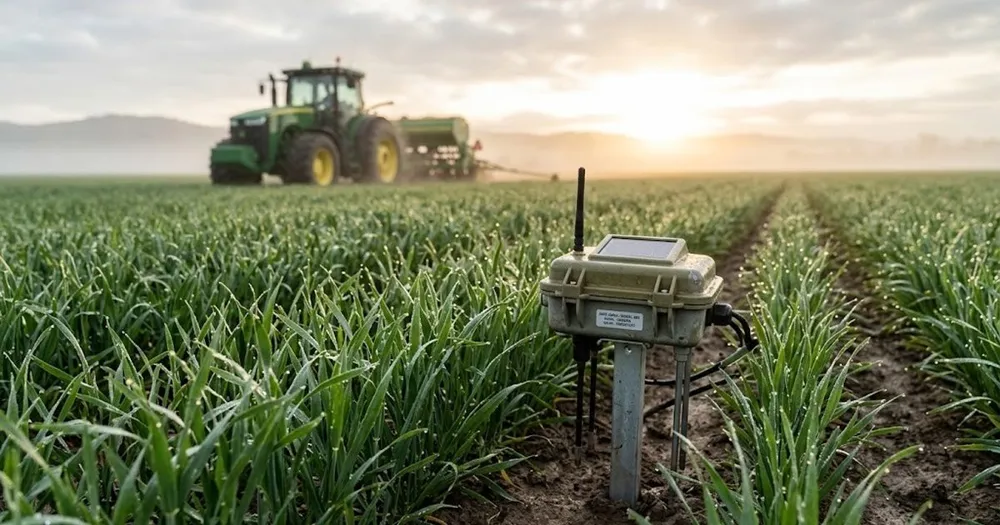
Agriculture is thought to have a history of over 10,000 years.
Agriculture is thought to have a history of over 10,000 years.
The fact that the first agricultural activities and production constituted a turning point in the development of settled social life is a separate sociological reality.
The transition of mobile hunter-gatherer communities to agriculture-based production is one of the most significant economic transformations in human history. This situation also marked the beginning of a new era in shaping social life. Agricultural production, tied to specific lands, laid the groundwork for the development of settled life, population concentration in certain areas, the emergence of the division of labor, the development of trade, and the strengthening of economic and social relations between different societies.
Agriculture, which has gained increasing importance from its inception to the present day, has become a more strategic sector than ever before. While in the past it was primarily evaluated in terms of basic food production and rural development, today it has become a sector that directly determines a wide range of areas, from food security to energy, from trade to foreign policy, from climate change to national security.
The rapid increase in the world's population, the impact of climate change on production conditions, the more frequent and severe occurrence of droughts and natural disasters, the increasing pressure on limited water resources, and the fragility of global supply chains due to wars and geopolitical tensions further increase the strategic importance of the agricultural sector.
In this new era, the goal is not just to produce more.
It is now a necessity to increase efficiency, improve quality, record and audit production processes, reduce costs, protect natural resources, and ensure reliable food sustainability. Achieving this requires timely interpretation of sectoral developments, development of appropriate policies against changing conditions, and timely implementation of needed action plans.
Today, a development occurring anywhere in the world can directly affect producers, industrialists, consumers, or policymakers in another country in a short period. Drought in one geography can affect global food supply and commodity prices, while a war starting in one region can significantly increase the costs of fertilizers, energy, and other agricultural inputs.
Similarly, pandemics, which we have experienced in the recent past, have clearly shown us how fragile agriculture can be, from production to consumption habits, from logistics to storage-auditing and marketing processes.
Therefore, the need for reliable, up-to-date, understandable, and accessible information in the agricultural sector is increasing day by day.
The idea of an Agriculture Portal gains meaning precisely at this point: to serve as a dynamic information and communication center that follows, interprets, and conveys sectoral developments to relevant stakeholders.
A new production technology, an alternative raw material, a new market, a different product variety, a change in production in a country, or a development in global markets can turn into unexpected opportunities for the sector when followed in a timely manner.
Moreover, the problems that the agricultural sector will face in the coming period are expected to both diversify and become more interconnected.
Climate change will alter production patterns, water will become even more important as a strategic production factor, and the growing population will increase demand for food while intensifying pressure on natural resources. In addition, wars, geopolitical tensions, and changing trade policies will more severely affect the international movement of agricultural products, fertilizers, energy, and other inputs.
In such an environment, the protection of domestic resources and the development of strategic products are of great importance. Agricultural production needs to be more strongly integrated with industry, and agricultural by-products need to be transformed into high value-added products. Furthermore, the use of new production and processing technologies and the branding of agricultural products on a global scale are also important.
In short, value will need to be created at every stage of the chain from field to table. In other words, a holistic structure will need to be created where technology, R&D, branding, logistics, marketing, and ancillary investments are integral parts of agriculture. Digital agriculture, precision agriculture applications, artificial intelligence, sensor technologies, satellite imagery, automation, biotechnology, and new production techniques will be among the fundamental tools of this structure.
One of the most striking examples of this is Dutch agriculture.
The success of the Netherlands in agriculture stems not only from the use of advanced technologies but also from the integrated handling of scientific knowledge, data, engineering, and production processes. Many technologies, from sensors and satellite data to artificial intelligence, from automation to precision production techniques, are combined with accurate information and become part of production decisions. This approach demonstrates how technology in agriculture can make a difference when used not alone, but in conjunction with knowledge and a systemic understanding. Therefore, I find the publication of a 'Netherlands File' on the Agriculture Portal valuable.
On the other hand, consumers will question what is produced, how it is produced, and how reliable it is, rather than 'how much is produced'. In this context, the Agriculture Portal will fill an important gap.
A platform that closely follows sectoral developments, brings global changes to the local agenda, and raises awareness…
At the same time, a platform that questions existing practices, constructively objects to points it finds wrong or lacking; and sheds light on decision-making and implementation processes by presenting different perspectives, alternative suggestions, and successful practices…
A platform that can access information quickly, detect change early, follow technology, foresee risks, and evaluate opportunities in a timely manner…
For this reason, I find the establishment of the Agriculture Portal extremely valuable in terms of strengthening the information infrastructure needed by the agricultural sector.
I wish for the Agriculture Portal to build a strong bridge between information and the sector on this journey, and to become an important platform that contributes to understanding the present and shaping the future of the agricultural sector.
I hope that its new publication life will be beneficial for our country's agricultural sector, our producers, industrialists, academics, investors, and all our stakeholders; and I wish it a publication life full of success.