


Seven Critical Rules for Soil Sampling During Soil Analysis
· TarımTR
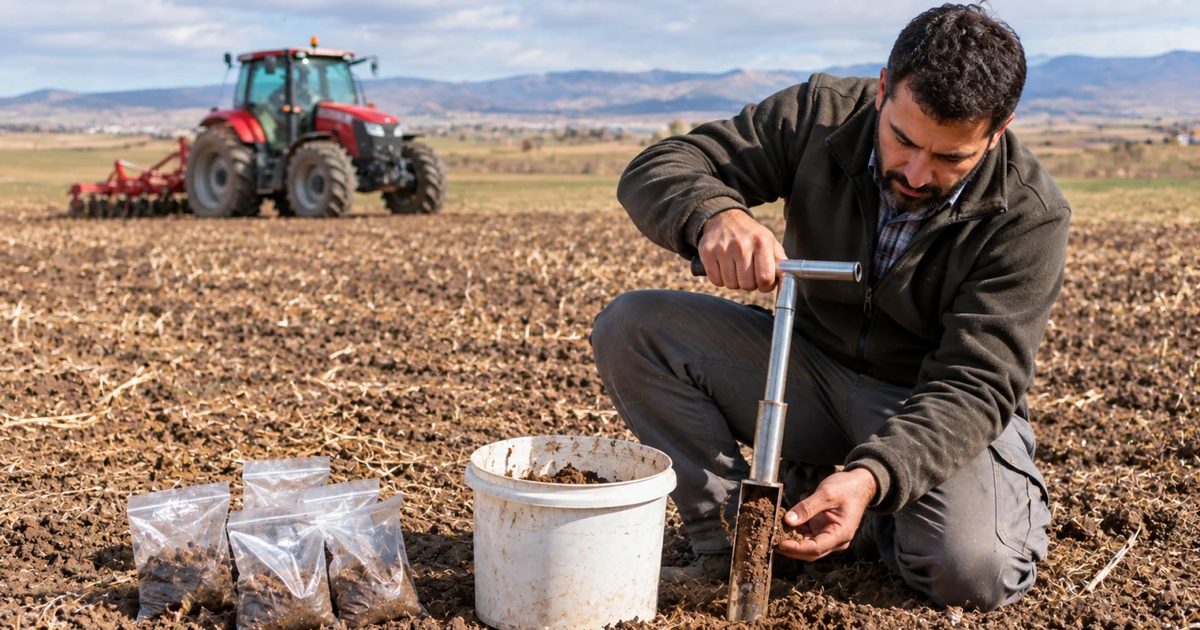
Producers seeking to determine the actual nutrient needs of their fields before the fertilization season have been informed about soil sampling rules. Research institutes have warned that incorrect sampling can lead to improper fertilization and yield loss.
The Critical Importance of Soil Analysis Before Fertilization
Soil analysis is the first step in the fertilization calendar for farmers who want to achieve balanced and productive crop production during the growing season. Research institutes operating under the Ministry of Agriculture and Forestry state that laboratory results should be the basis for determining lime and fertilizer requirements. Applications made without knowing the actual needs of the field can lead to the use of excessive or insufficient fertilizer. Applying the same fertilizer recipes used in neighboring plots to another field may not yield the expected results due to the different biological and chemical structures of each soil.
Parameters Examined in the Laboratory for Correct Fertilization
Examinations conducted in authorized laboratories reveal not just one or two nutrient elements, but all the fundamental fertility dynamics of the soil. In the analyses, the pH value, which indicates the soil's acidity or alkalinity balance, as well as organic matter, lime, electrical conductivity (salinity), and texture properties indicating sand, silt, and clay distribution, are tested. Phosphorus, vital for plant root development, and potassium levels, which regulate water balance, are also included in these reports. In some extensive analysis packages offered by laboratories, the amounts of nitrogen, iron, zinc, magnesium, and calcium are also reported in detail.
Soil Sampling Schedule and Conditions
The timing of soil sample collection from the field is of great importance for the analysis reports to be ready for the planting program. The Central Black Sea Transition Zone Agricultural Research Institute recommends that soil samples be taken approximately 1.5-2 months before planting or fertilization. It is essential that the soil is moist on the day of sampling; samples should not be taken from excessively dry, muddy, heavily rained-on, or frozen ground. While analysis is recommended before each planting season for field crops, this process can be repeated every few years for perennial orchards and vineyards.
The Necessity of Dividing the Land into Homogeneous Sections
One of the most common mistakes in the sampling process is collecting soil from land parts with different characteristics in a single container. Within the same field, soil color, slope, drainage structure, depth, irrigation history, and the amount of base fertilizer applied in previous years can vary. These areas with different properties must be divided into plots and sampled independently. Mixing soils taken from two dissimilar areas and making them into a single sample leads to misleading analysis results from the laboratory.
Determining Representative Points by Zigzagging in the Field
To increase the representativeness of the sample, one should walk in zigzags across the field instead of a straight line and collect samples from randomly distributed points. The guide from the Central Black Sea Transition Zone Agricultural Research Institute describes a method of collecting and mixing 8-10 soil samples from different points in the field. The application brochure published by the Tokat Agricultural Research Institute recommends collecting samples from 10-15 points depending on the size of the field. Farmers are required to take samples from a sufficient number of points, considering the size of their field, and adhere to the laboratory's standard instructions.
The Importance of Correct Depth in the Tilled Layer
Samples taken without correctly determining the tillage depth, where plant roots are concentrated, lead to incorrect fertilization decisions. According to the technical documents of the Ministry of Agriculture and Forestry, the tilled topsoil layer at a depth of 15-20 centimeters should be considered for field crops. During the application, a V-shaped pit should be dug with a shovel to a depth of 20 centimeters, and a slice of soil should be removed by shaving from the clean edge of the pit. For perennial fruit trees and vineyards, as the root depth extends deeper, samples should be taken from lower layers in addition to the surface.

Points to Absolutely Avoid When Taking Samples
Soils taken from points that do not represent the field can completely distort the analysis results and lead the producer to unnecessary fertilization expenses. Samples should never be taken from areas where chemical fertilizers or lime were previously piled, or where farm manure was stored. Mixing sites, animal housing areas, and the centers of stubble or weed fires should be excluded from sampling. Furthermore, waterlogged pits, mounds, field borders, roadsides, irrigation canal edges, and the bases of trees should absolutely not be included in sampling as they do not reflect the true nutrient composition of the field.
Mixing and Labeling Soils in Clean Containers
Soil fragments collected from different designated points should be carefully combined and mixed in a clean plastic bucket. Stones, plant roots, debris, and stubble residues should be meticulously removed from the soil placed in the bucket, and contamination with metal or chemicals should be avoided. Approximately 1 kilogram of the thoroughly mixed composite soil should be taken and transferred to a clean sample bag. The farmer's name, plot number, province, district, location, type of crop to be planted, and the depth from which the sample was taken should be written on the bag; a pencil must be used for writing to prevent it from being erased by moisture.
Correct Interpretation of Analysis Reports and Technical Support
The analysis results obtained from the laboratory are not just raw numbers and must be interpreted by agricultural engineers. Since evaluating the soil's pH value alone can be misleading in fertilizer selection, it is recommended to examine it in conjunction with lime and salinity values. Even if high levels of phosphorus or potassium are detected in the soil, the soil's calcareous or acidic nature may prevent the plant from absorbing these elements. Producers are advised to adhere to expert prescriptions rather than using excessive fertilizer or soil conditioners on their own initiative by simply looking at the report page.
The Role of Analysis in Reducing Input Costs and Fees
Soil analysis directly optimizes the farmer's input costs by preventing the purchase of unnecessary fertilizer types that are not needed in the field. With this method, which clearly reveals the soil's deficiencies, fertilizer expenses are brought under control while the risk of yield loss is prevented. While analysis costs vary depending on the laboratory and the scope of the package, the Aydın Provincial Directorate of Agriculture and Forestry announced on October 15, 2026, that it has reduced the fee for basic soil fertility analysis within the institution to 350 TL per sample. Farmers conducting analyses appropriate for their fields are highlighted as a fundamental tool in preventing input waste.
| Value | Period | Measure |
|---|---|---|
| 1.5-2 months ago | Before sowing or fertilization | Sampling time |
| 15-20 cm | Before sowing | Sampling depth in field crops |
| 20 cm | Sampling | V-pit depth |
| 8-10 points | Per plot | Number of guide sampling points |
| 10-15 points | Per plot | Number of brochure sampling points |
| 1 kg | Per plot | Amount of sample to be sent to the laboratory |
| 350 TL | 15 October 2026 | Basic soil fertility analysis fee |