


Agricultural Teams Meet Farmers in 246 Villages in Bartın
· Google Haberler
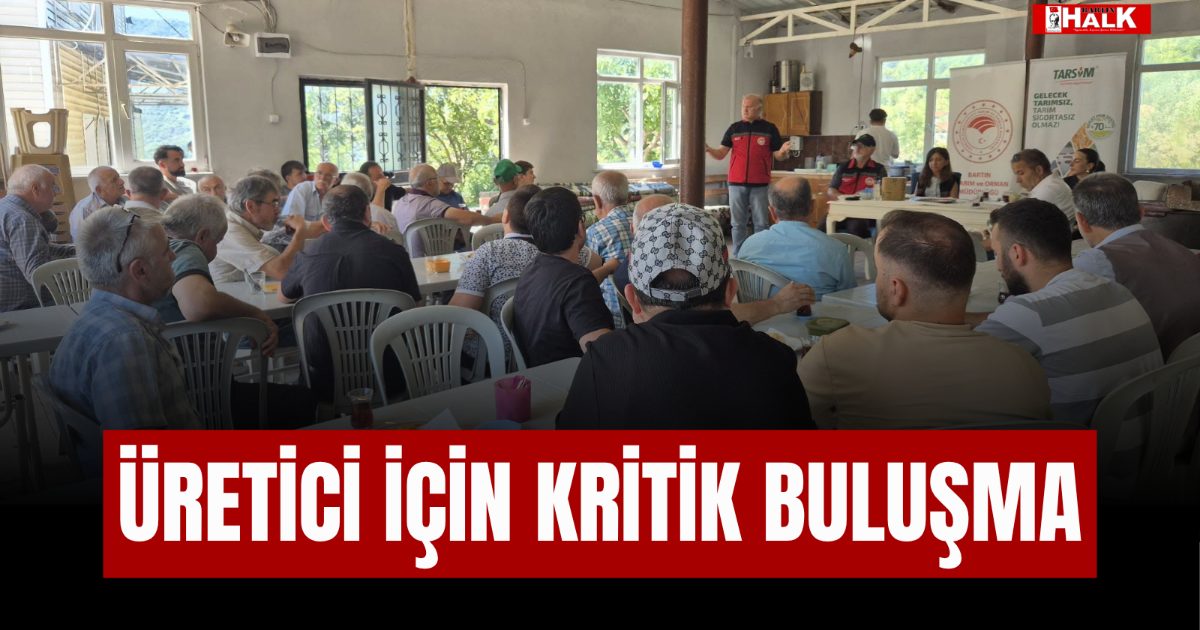
Bartın Provincial Directorate of Agriculture and Forestry reached approximately 4,000 producers in 246 villages as part of its Friday Meetings, explaining new production planning, pest control, and the B-Prescription system.
Comprehensive Producer Mobilization Across Bartın
Technical personnel from the Bartın Provincial Directorate of Agriculture and Forestry are continuously carrying out the "Friday Meetings" program to inform producers about agricultural developments. Within the scope of these activities, a total of 246 villages have been visited to date, with direct contact established with 3,987 producers. The latest stop of the program was Kayacılar Village, connected to the city center, where farmers' problems, demands, and expectations were listened to firsthand. Thanks to this field-oriented application by the Ministry, the obstacles faced by producers are identified on-site, and agricultural policies are directly shaped.
New Production and Support Model
One of the main agenda items at the meeting held in Kayacılar Village was Agricultural Production Planning and the New Support Model. Officials emphasized that planned production is essential for the much more efficient use of agricultural resources and the uninterrupted continuation of strategic product supply. In the new support system, payments are grouped under the headings of basic support, planned production support, and production development support. By encouraging the cultivation of designated strategic products in the most suitable agricultural basins, both yield increases and supply-demand balance are targeted.
Warning Against the Brown Marmorated Stink Bug Threat
The invasive brown marmorated stink bug, which can cause severe yield and quality losses in agricultural products, was discussed in detail at the meeting. Critical warnings were issued to producers regarding the pest, which causes fruit and vegetable drop and deformities by feeding on them. The biological, biotechnological, mechanical, and chemical control methods implemented by the Ministry of Agriculture and Forestry were explained to producers individually. Experts stated that strict adherence to the calendar and instructions determined by technical teams, instead of individual and untimely spraying, is essential.
Digital Tracking Era for Agricultural Pesticides
Producers were comprehensively informed about the B-Prescription System, which has been implemented to ensure the effective and controlled use of plant protection products. With this system, which the Ministry of Agriculture and Forestry has put into practice nationwide as of July 1, 2026, chemical pesticides are fully recorded. The aim is to electronically match pesticides based on the farmer, agricultural area, and the crop being grown. Thus, it is aimed to prevent unconscious and excessive pesticide use, protect human health, and eliminate the risk of residues in food.
Soil Fertility and Stubble Burning
Stubble burning, which becomes a major threat to agricultural lands and forests with the arrival of summer, was another topic of the meeting. It was explained to producers that burning stubble after harvest damages the soil's organic structure, destroys beneficial microorganisms, and increases the risk of fire. It was reminded that heavy administrative fines are imposed for stubble burning under the Environmental Law, and these penalties are increased for fires near forests. Farmers were advised to regularly maintain their agricultural machinery and to report suspicious situations to the authorities without delay.
TARSİM Assurance Against Climate Risks
The importance of state-supported agricultural insurances against disasters such as drought, frost, hail, storms, and floods, which are increasing with changing global climate dynamics, was explained. It was stated that TARSİM provides a wide range of insurance opportunities, from plant production to greenhouse cultivation, from cattle and sheep farming to beekeeping. Emphasizing that a significant portion of policy premiums is directly covered by the state, producers were called upon. It was stated that farmers should insure their product and animal assets on time without missing the policy acceptance deadlines to avoid income loss.