


Low Water-Consuming Alternative Crops Gain Prominence Over Corn
· TarımTR
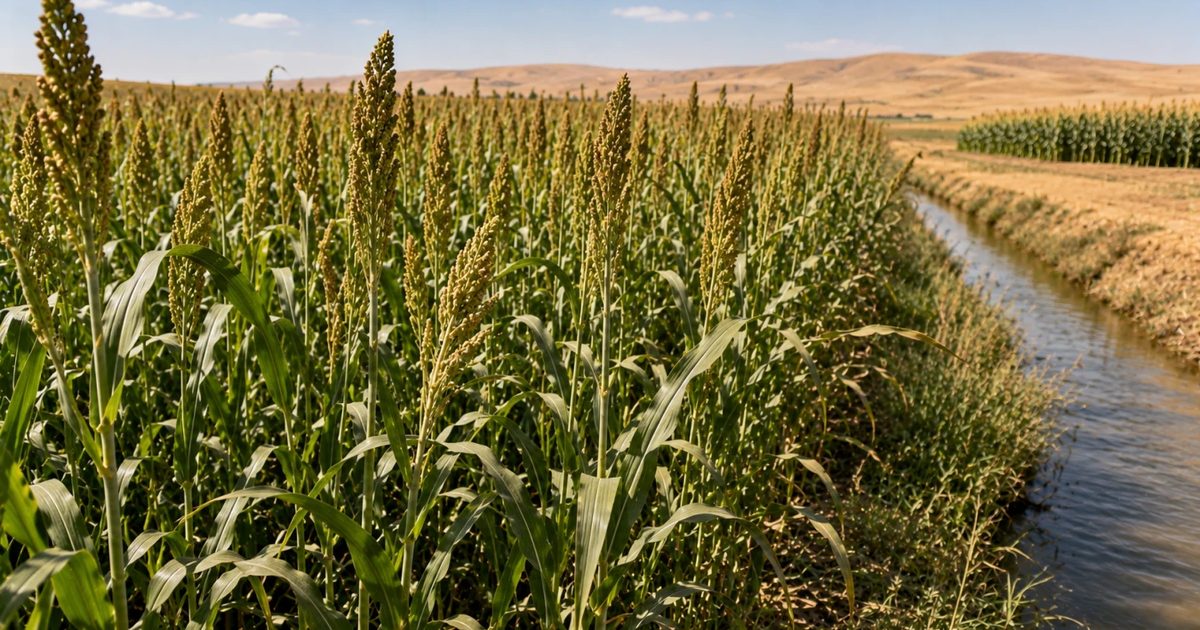
In agricultural basins facing water restrictions, crop patterns developed as alternatives to silage and grain corn are reducing producers' irrigation costs while securing their roughage needs.
Water Scarcity and Corn Alternatives
The diminishing water resources in the agricultural sector are driving producers of silage corn, a crop with high water consumption, to seek new solutions. While silage corn remains an indispensable source of energy and roughage for dairy cattle operations, it significantly increases irrigation costs in arid regions. It has become inevitable for producers to incorporate low-water-consuming plants into their field planning to establish a sustainable roughage chain. Experts emphasize that not only water consumption but also soil structure and market conditions should be considered when making choices.
Fodder Projects in Konya Districts
Projects launched in 2026 across Konya are accelerating the transformation of fodder crops in basins experiencing the most severe water restrictions. Within the scope of the project, the cultivation of plant species alternative to silage corn is being expanded in the districts of Ereğli, Kadınhanı, Karapınar, Karatay, and Sarayönü. The primary objective of the ongoing efforts is to ensure an uninterrupted supply of quality roughage required by livestock operations while conserving limited underground and surface water resources. This model, placed at the center of agricultural production planning, supports producers in generating income without exceeding the ecological limits of the region.
Sorghum-Sudan Grass and Water Savings
Among the strongest alternatives to silage corn are sorghum-sudan grass hybrids, which are resistant to high temperatures and drought. In the demonstration area established by the Konya Provincial Directorate of Agriculture and Forestry in the Meram district, the plant was successfully cultivated with a total of 6 irrigations and 52 hours of drip irrigation. According to data from the Provincial Directorate, this method achieved a 60% water saving compared to traditional silage corn production. Sorghum-sudan grass hybrids maintain silage quality and roughage yield even in dry periods, providing low irrigation costs for operations.
Millet and Crop Rotation Scenarios
In arid agricultural lands with insufficient water resources, millet is considered a critical crop that can be included in crop rotation. In agricultural production planning studies prepared in the Altınekin region of Konya, millet and sorghum varieties are positioned as replacements for corn within different crop rotation scenarios. It is stated that millet cannot directly replace silage corn in every field and must be planned according to the land's intended use, local market demand, and the farm's livestock inventory. Millet, when included in the rotation system, helps balance water usage while also reducing soil fatigue.
Kartopu Fodder Watermelon Production Potential
The registered Kartopu Fodder Watermelon, developed to reduce the ration costs for livestock operations, has become another notable alternative in trials conducted in Konya. According to data from the Konya Provincial Directorate of Agriculture and Forestry, this crop yields between 10 to 25 tons of fresh produce per decare and reaches approximately 14% crude protein content. The fodder watermelon's low water requirement and its ability to be stored for over a year without spoilage after harvest create a significant advantage for operations. Incorporating the product into animal rations directly contributes to the operation's protein balance.
Legume Fodder Crops and Soil
Including legume species such as dry beans, chickpeas, and lentils in crop rotation on lands under water restrictions enriches the crop pattern. Legumes contribute organic nitrogen to the soil, reducing the fertilizer costs for subsequent crops, and require much less irrigation water compared to corn. Farmers need to consider not only water savings but also the overall nutrient cycle of the field and the economic returns of the operation when choosing crops. Production planning analyses in Konya show that the inclusion of legumes in crop rotation increases the field's economic productivity.
Sunflower and Grain Corn Distinction
Producers must clearly distinguish between silage corn and grain corn objectives when choosing their crops. For farmers who do not engage in animal feeding and offer their produce directly to the market, oilseed sunflower presents a strong, lower-water-consuming option compared to grain corn. While sorghum hybrids are prioritized for livestock operations aiming to produce their own roughage, oilseed crops and legumes yield profitable results for businesses targeting commercial sales. Therefore, crop changes made without defining the production purpose can lead to unforeseen risks in the farm budget.
Farmer Decision-Making Criteria
It is recommended that a producer planning alternative crops instead of corn evaluate 6 key criteria simultaneously at the beginning of the season. The total amount of water available for the field throughout the season, the dry matter yield per decare, the nutritional value of the crop, and the seed-fertilizer costs must be calculated accurately. Furthermore, whether the harvested crop will be consumed directly on the farm, the purchasing capacity of the regional market, and the agricultural support provided to the region should be analyzed. Decisions made solely focusing on low water consumption without this comprehensive economic calculation may not yield the expected results.
Public Support and Subsidy Models
Various subsidy and support mechanisms are implemented by the Ministry of Agriculture and Forestry to promote the widespread adoption of water-saving fodder crops. According to a statement from the Ankara Provincial Directorate of Agriculture and Forestry, sorghum-sudan grass seeds were distributed to producers with a 75% subsidy within the scope of the Projects for Enhancing the Utilization of Agricultural Lands (TAKE) in 2026. These public-funded subsidies reduce the farmer's seed costs and accelerate the adaptation to low-water-consuming fodder crops. Producers following current incentives through provincial and district directorates gain a cost advantage.
Production Planning and Future Vision
Climate change and drought pressure are shifting agricultural production towards obtaining the highest economic value per unit of water, rather than just the highest physical yield. As seen in the examples of Konya and Ankara, the proliferation of low-water-consuming crops slows down the decline in underground water levels while also reducing farmers' energy expenses. In the future production model, diversified and balanced crop patterns including sorghum, millet, and legumes are gaining prominence in water-scarce basins, replacing monoculture corn cultivation. Planned crop rotation strategies form the basis of a drought-resilient production structure in Turkish agriculture.