


Pre-Harvest Water Management in Rice Prevents Yield Loss
· TarımTR
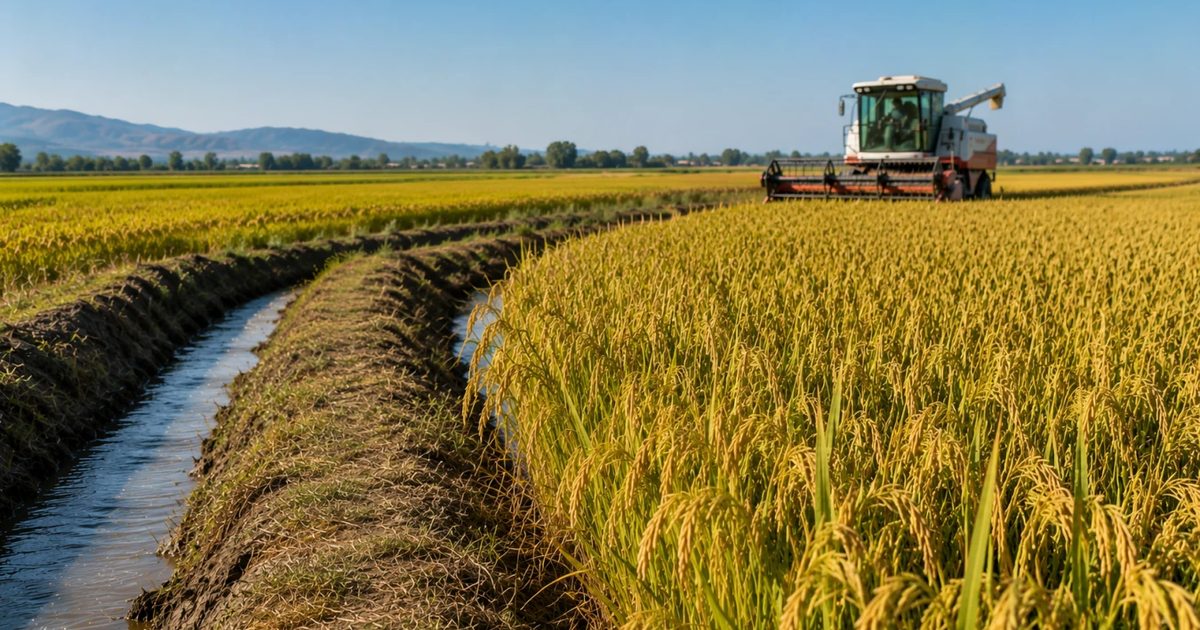
The timing of water drainage and the drying plan before harvest in rice production constitute the most critical stage directly affecting per-decare yield and product quality.
Critical Water Management Before Harvest
As the harvest period approaches in rice production, terminating the irrigation regime at the right time is among the most sensitive stages determining yield and product quality. The uninterrupted water management applied throughout the season must give way to a controlled drying plan during the maturation phase. The drainage of water from the field should be based on plant physiology and field conditions, rather than solely on the calendar. Gradually lowering the water level balances grain maturation and prepares the ground for harvesting machinery.
Rice Yield Targets Across Turkey
According to data from the Ministry of Agriculture and Forestry, the average per-decare rice yield in Turkey is approximately 780 kilograms. Protecting this high yield potential across the country without harvest loss is directly dependent on meticulous field management at the end of the season. For the months-long efforts of producers to turn into economic gain, the field must be prepared for harvest, and post-harvest processes must be carried out completely. Even the slightest technical error in irrigation timing can cause significant losses in the harvest.
Grain Risks of Early Water Drainage
Draining water from the field prematurely causes sudden water stress, especially in panicles that have not completed their grain filling stage. Draining water based solely on the calendar, without considering the variety's earliness, planting date, and panicle structure, can halt plant development. Shriveled grains and yield losses are observed in grains whose development is interrupted, putting the high tonnage targeted by the producer at risk. Therefore, the decision to stop watering should be made after the milk and yellow ripening stages of the grains in the field are checked by expert eyes.
Machinery Damage from Late Water Drainage
Keeping water in the field for longer than necessary brings about major problems for harvesting machinery. The soil's carrying capacity decreases under excess water, increasing marshiness and making it impossible for heavy combine harvesters to enter the field. Machines with wheels stuck in mud not only increase fuel consumption and harvesting costs but also cause significant grain losses. The extended drying time of the field delays the harvest, increasing the risk of the product being caught in autumn rains.
Drainage Plan According to Field Conditions
Since the soil structure, leveling, and drainage capacity of each rice plot differ, there is no standard water drainage day. In plots with poor drainage and uneven leveling, water pools dry slowly, while well-leveled fields become ready much faster. Producers need to evaluate air temperatures, recent rainfall, and soil permeability together when planning water drainage. Keeping drainage channels open ensures the homogeneous removal of groundwater, facilitating the harvest.
Plot Sequencing for Combine Harvester Entry
Farmers operating in large areas need to determine the combine harvester's entry schedule in advance and plan water drainage backward from there. The variety's development period, expected harvest date, and soil drying rate must be calculated as a whole. Since harvesting the entire area at once will create operational congestion, plots should be tiered according to their maturity. With proper logistical planning, combine harvesters can enter the field without delay, minimizing labor and operational costs.
Post-Harvest Drying and Moisture Criteria
The job is not finished with draining water from the field in rice; the moisture content of the harvested grain needs to be brought to a safe level. According to technical data from the Rice Research Institute, the ideal grain moisture for storage is required to be between 13% and 14%. It is recommended that crops harvested with high moisture content be taken to a dryer within 4 hours at the latest. In products left wet, odor, color change, reduced broken grain yield, and microbial spoilage increase rapidly.
Field Monitoring and Producer Recommendations
For a successful harvest season, producers are advised to observe low points in the field, drainage channels, and grain hardness daily. Promptly sending products with high harvest moisture to drying facilities is an indispensable rule for profitable production. Avoiding unnecessary water use during periods of increased irrigation costs directly contributes to the operating budget. Producers who strike the right balance achieve high-yield products and keep their harvesting costs under control.