


August Irrigation Determines Sugar Beet Polarity Balance
· TarımTR
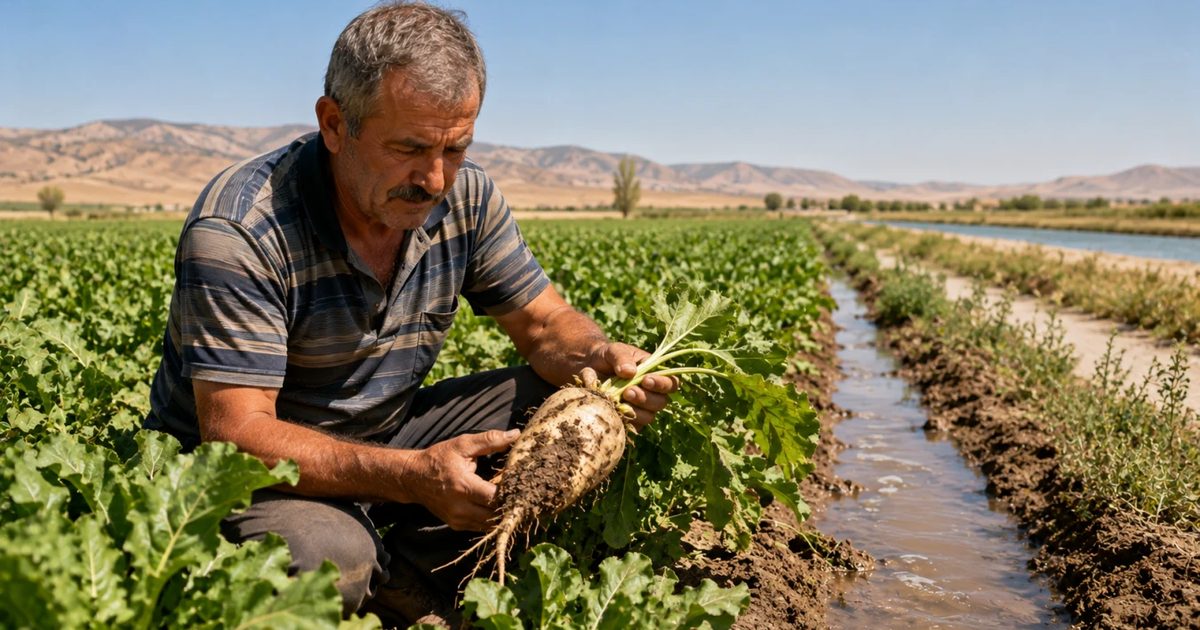
In August, when root growth and sucrose accumulation peak for sugar beets, proper management of field moisture levels directly impacts both per-decare yield and the sugar content (pol) ratio sought by factories.
Water Needs of Beets in August
August is considered one of the most critical vegetation stages in sugar beet cultivation, where root growth and sucrose accumulation occur simultaneously at their highest rates. During this period, as the beet's high water consumption continues, growers must closely monitor the moisture levels in the field. If irrigation practices focus solely on increasing root volume, undesirable drops in sugar polarity can occur. Therefore, balanced water management is essential in August to maintain both tonnage and technological quality.
Water Consumption Data in the Central Anatolia Region
According to data from the Konya Provincial Directorate of Agriculture and Forestry, the water consumption of sugar beets in August alone reaches approximately 270 mm under Central Anatolian conditions. The same institution's cultivation guide notes that the total amount of water the plant needs throughout the entire season is approximately 1125 mm. A large portion of this need in the region is met through planned irrigation. Therefore, it is of great importance to consistently continue water management, as prematurely ending irrigation in August can lead to significant growth delays in the field.
The Impact of Insufficient Irrigation on Roots and Sugar
Prolonged water stress in sugar beets reduces the photosynthetic capacity of the leaves, directly slowing down the plant's energy production mechanism. Scientific data indicates that plants receiving insufficient water begin to show leaf wilting, and the development of storage roots and the rate of sucrose accumulation are significantly suppressed. This situation can lead to a dual loss of income for the producer at harvest time. In plants that cannot reach adequate moisture, both root weight decreases, and the amount of sugar accumulated in the root falls short of expected standards.
Major Risks Posed by Over-Irrigation
The common perception among producers that excessive watering will increase yield under all circumstances opens the door to significant quality losses in sugar beets. In areas with heavy-textured soils and poor drainage, over-irrigation creates oxygen deficiency in the root zone, rapidly increasing the risk of root rot. Furthermore, excessive water disrupts the nutrient balance in the soil, increasing irrigation costs and negatively affecting polarity quality. The goal should not be to saturate the field but to maintain the usable moisture content around the roots.
Irrigation Frequency Based on Soil Texture
According to the water-saving guide prepared by the Eskişehir Provincial Directorate of Agriculture and Forestry, an average irrigation interval of 7-8 days is recommended for medium to heavy-textured soils between June 15 and September 15. The same guide states that this interval should be kept at 5-6 days for light-textured soils. However, experts recommend that these durations are valid for general conditions and advise growers to always consider their own field's soil structure, current air temperature, and plant growth stage together.
Nitrogen Risk Affecting Sugar Polarity
Technical resources from the Ministry of Agriculture and Forestry indicate that for a high-quality harvest, the sugar content in beets should be high, and molasses-forming substances should be at their lowest levels. According to ministry data, excessive nitrogen applications lead to an accumulation of alpha-amino nitrogen, directly reducing the processing quality of the product in the factory. Uncontrolled nitrogen fertilization in August, aimed at keeping leaves greener or promoting more root growth, is strongly discouraged as it significantly reduces polarity.
The True Role of Potassium in Balanced Nutrition
Although potassium is one of the essential nutrients for sugar synthesis and transport in sugar beets, random applications do not provide the expected benefit. Technical instructions from the Ministry of Agriculture and Forestry emphasize that fertilization decisions should be based solely on analysis results, and potassium loading without knowing the existing soil conditions will not automatically increase polarity. Growers are advised to focus on practices that maintain the soil's true nutrient balance rather than using costly fertilizers for deficiencies not identified by analysis.
Strategic Timing of Pre-Harvest Irrigation
There is no single calendar applicable to all plots regarding how many days before harvest irrigation should be stopped. The Ministry of Agriculture and Forestry's irrigated agriculture guide classifies irrigation into three stages: initial, development, and pre-harvest irrigation. The primary purpose of pre-harvest irrigation is stated to be to bring the soil to a workable moisture level, preventing root breakage. Therefore, the decision to stop irrigation should be made by examining factors such as the harvest plan, weather forecasts, and the soil's deep moisture content.
Steps Growers Should Implement in the Field
In August, growers need to regularly check the root zone moisture by taking soil samples from different points in the field using a soil auger or shovel. Irrigation schedules should be flexibly shaped not just by calendar days but by observing signs of wilting and leaf curling in the plants. Rapid drainage of areas where waterlogging and pooling occur is essential for root health. Additionally, no additional chemical fertilization outside of analysis should be applied during this period to prevent unnecessary energy and water consumption.
Water Saving and Contribution to Grower Profitability
Through proper irrigation management, both tonnage in sugar beets is secured, and the full benefit of polarity premiums for products delivered to the factory can be realized. In today's conditions of rapidly diminishing water resources and increasing energy costs, water use efficiency per unit area directly affects the grower's net profit. Conscious irrigation practices reduce root diseases, ensure balanced ripening in the field, decrease harvest losses, and secure the raw material quality of the sugar sector in the long term.