


Planned Production Model Dictates Farmers' New Season Preferences
· TarımTR
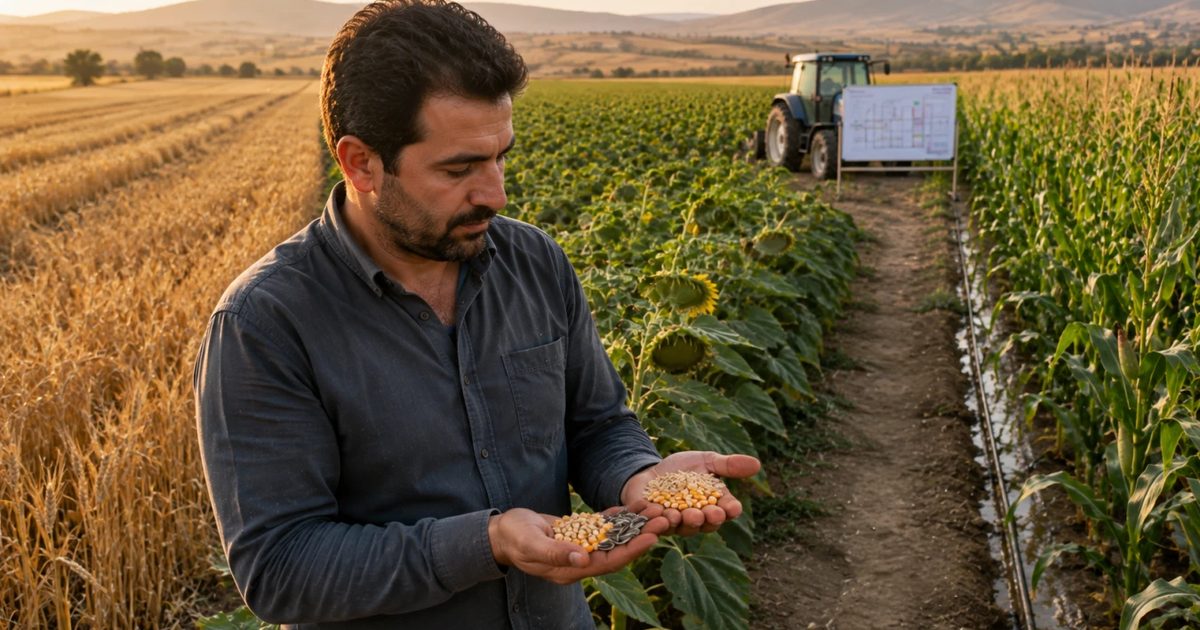
The Ministry of Agriculture and Forestry's new support model and water restriction criteria are playing a decisive role in farmers' crop pattern decisions for the 2027 production season.
New Season Dynamics in Production Planning
As the 2027 production season approaches in the agricultural sector, the process of farmers' crop choices is undergoing a fundamental change. Planting decisions, traditionally based solely on harvest period price expectations, are now shaped by water availability, production costs, agricultural support coefficients, and market dynamics. In line with the production planning approach implemented by the Ministry of Agriculture and Forestry, we are entering a period where producers must seek sustainable profitability on their land, not just high prices. Regional climate and resource conditions are becoming decisive factors in the profitability equation.
Yield Increase and Price Pressure in Cereals
According to TÜİK data, wheat production is expected to increase by 26.7% to approximately 22.8 million tons in the 2026 crop production estimates. Similarly, barley production is projected to record a significant increase of 50%, reaching 9 million tons. While this strong rise in yield across the country provides a productivity advantage for the producer, it also carries the risk of price pressure due to oversupply during the harvest period. Therefore, seed, fertilizer, and storage facilities must be carefully calculated.
Water and Energy Costs in Corn Production
TÜİK data predicts a 5.9% decrease in grain corn production, with the yield estimated to be around 8 million tons. Despite offering high yield potential per decare, corn incurs high costs in areas with limited water resources due to its intensive irrigation needs. In regions where groundwater is drawn from deep wells, the electricity and fuel expenses for irrigation directly reduce net profitability. Producers need to focus on energy costs, not just product prices.
Increasing Production and Strategic Importance of Sunflower
Sunflower production, which holds a critical place in the oilseed group, is expected to reach 2.3 million tons with a 16.2% increase according to TÜİK estimates. Turkey's vegetable oil deficit and domestic market demand continue to keep sunflower in a strategic position. When choosing sunflower for the 2027 planting season, producers must consider the crop's adaptation to the regional climate, its place in crop rotation, oil content, and access to industrial buyers. Market demand supports the crop's profitability potential.
Coefficient System in the New Support Model
In the 2025-2027 crop production support model implemented by the Ministry of Agriculture and Forestry, producers are supported with basin-based coefficients. The new model consists of basic support, planned production support, and production development support. Within the scope of planned production, a support coefficient of 1.3 has been set for wheat and barley, while a coefficient of 1.5 is applied to oilseed sunflower and 2.25 to raw cotton. Producers must have the relevant crop included in the planning list for their basin to benefit from these incentives.
Crop Rotation Requirement in Basins with Water Restrictions
In accordance with the Ministry of Agriculture and Forestry's planning principles, production patterns in agricultural basins identified with water restrictions are reorganized according to water reserves. Particularly in production centers like the Konya Plain, where groundwater levels have dropped to critical thresholds, the cultivation of low-water-consuming crops and crop rotation requirements are becoming mandatory. It has become a necessity for producers to move towards sustainable agricultural practices, focusing on the net added value obtained per unit of water, rather than solely calculating gross income from their fields.
Key Evaluation Criteria for Planting Decisions
To ensure a successful season for producers preparing for the 2027 production season, seven key criteria must be analyzed simultaneously. These criteria include water availability, input costs, regional yield potential per decare, basin support status, marketing channels, crop rotation plan, and climate risk management. Producers comparing seed, fertilizer, pesticide, and energy expenses by examining their fields' yield and input records from the last three years, and researching buyer connections before harvest, are key to securing net profitability.
Market Balance and Agricultural Future Expectations
The effective implementation of production planning will directly contribute to maintaining the supply-demand balance and conserving water resources in Turkish agriculture. Linking support directly to basin-based planning will strengthen supply security for strategic products while minimizing the producer's losses from market fluctuations. Conscious planting choices in the 2027 period, centered on water restrictions and actual cost items, are considered a fundamental building block for strengthening the sustainability of the agricultural economy.