


Silent Desertification and the Soil's Digital Memory
· Zeynep Aksoy
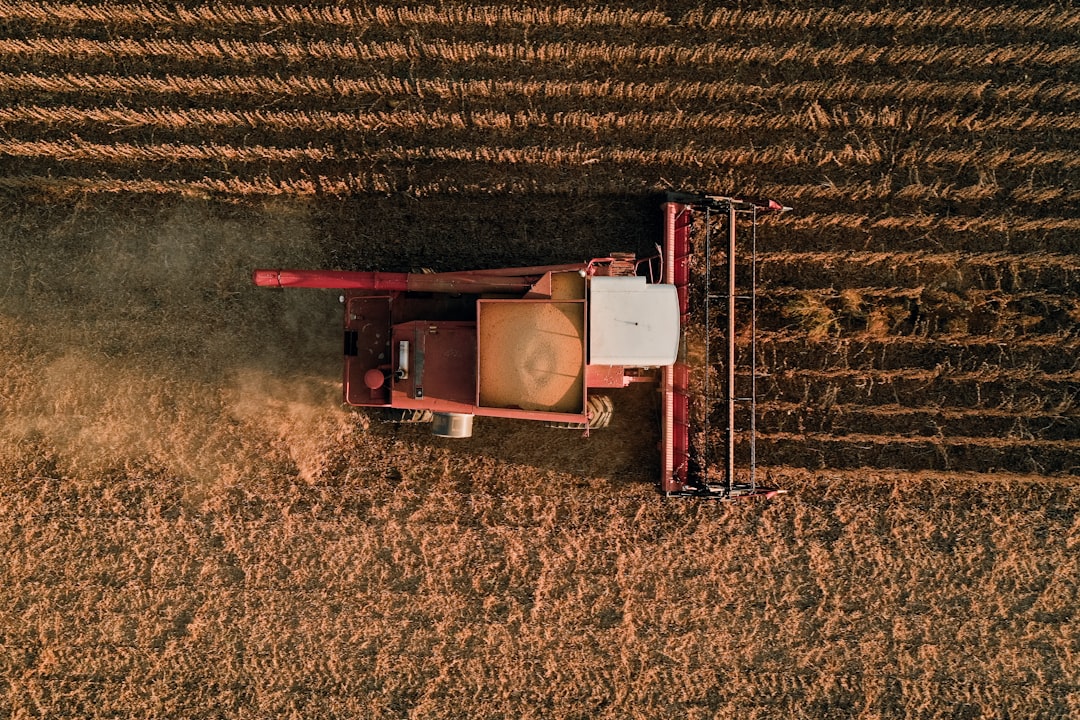
As agricultural production tests its conventional limits under the shadow of the climate crisis, data-driven regenerative agriculture is redefining not only soil biology but also the balances of the global food economy. Every drop of water and gram of carbon in the field is now transforming into a key indicator of future financial stability.
We stand at a climatic threshold where Mediterranean winters gradually morph into springs, and springs into scorching summer droughts. Reservoir levels and yield forecasts are no longer merely the concerns of meteorologists or farmers; they have become top-tier agenda items for central banks, commodity exchanges, and macroeconomists. Trapped in the triangle of food inflation, supply chain vulnerabilities, and water stress, the modern world is compelled to radically rethink its relationship with the soil.
For decades, the illusion pushed by industrial agriculture—that "more chemical inputs equal higher yields"—depleted the organic matter in our soils, turning a living ecosystem into an inert substrate. Yet, a single handful of healthy soil hosts more microorganisms than the entire human population on Earth. As we eroded this vitality, the soil's water retention capacity collapsed; as water dwindled, input costs soared, pulling farmers into a debt spiral. The crisis we face today is not merely a drought crisis; it is the biological bankruptcy of the land.
At this critical juncture, modern agricultural technologies step in, replacing nostalgic romanticism with the rigorous power of data and science. Spectral satellite imagery, IoT sensors mapping moisture and minerals down to the square meter, and AI-driven irrigation algorithms are ending the era of estimation and ushering in an era of precision. Smart irrigation systems can now reduce water consumption by up to 40%, and when integrated with regenerative agriculture practices, these technologies exponentially enhance the soil's organic carbon sequestration capacity.
On the economic front, an entirely new paradigm is emerging: carbon farming. Every ton of carbon sequestered in the soil not only helps cool the atmosphere but also opens up a direct revenue stream for farmers through verified digital carbon credits. The productivity of a hectare is no longer measured solely by the tonnage of harvested grain, but by the enriched digital footprint of the soil and the volume of carbon it stores.
The future lies neither in surrendering entirely to ancestral methods nor in relying blindly on nature-agnostic technology. The true imperative is to interpret ecological cycles through digital intelligence, abandoning the view of farming as an extractive mining operation and treating it instead as a regenerative ecosystem investment. For unless we heal the soil, we can neither tame food inflation nor secure the bread on our tables.