


Incorrect storage conditions are decimating potato yields
· TarımTR
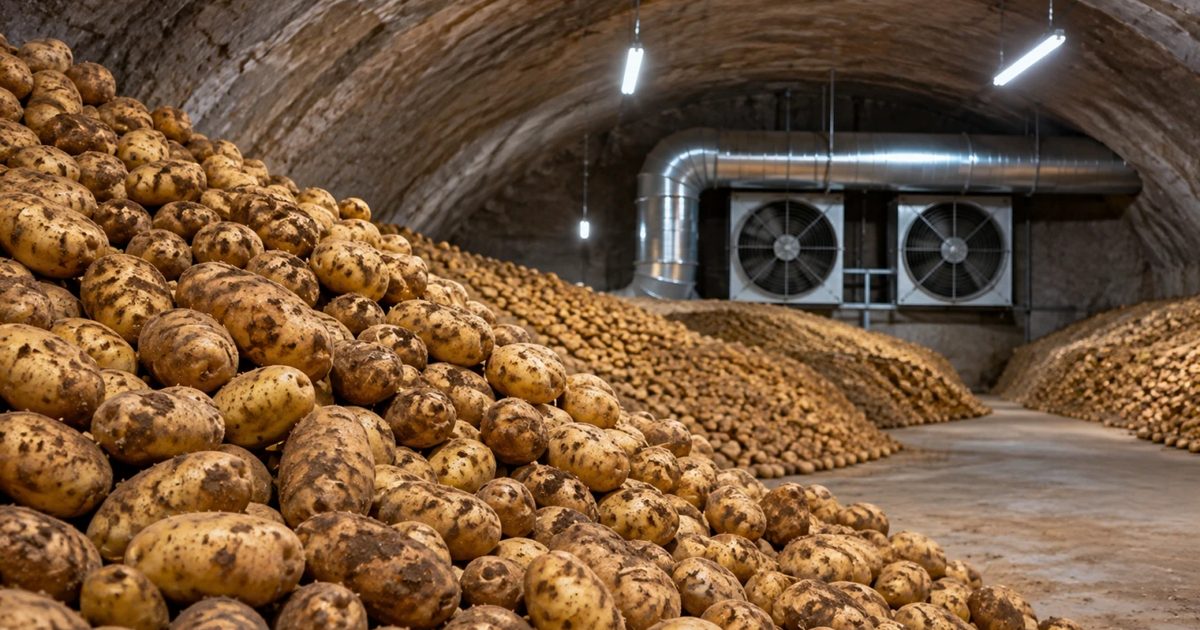
Post-harvest ventilation, light, and temperature errors in storage facilities are accelerating physiological aging in potatoes, reducing their market value.
Post-Harvest Physiological Losses in Potatoes
Potato production is not limited to field harvesting; it also encompasses a critical storage phase until the product reaches the market. Tubers, as living biological organisms, continue their respiration activities after harvest. During respiration, oxygen is consumed, and carbon dioxide, water vapor, and heat are released. In incorrect storage environments, this respiration accelerates, leading to significant losses. Uncontrolled temperature and humidity imbalances trigger physiological aging in potatoes, causing premature sprouting, shriveling, and water loss.
Sorting Out Diseased and Injured Tubers
One of the biggest mistakes in the storage phase is storing tubers damaged during harvest or carrying pathogens along with healthy products. Mechanical impacts from harvesting machinery, transport crates, and unloading belts cause micro-cracks and deep fissures on the skin surface. Scientific studies conducted in potato storage facilities in the Central Anatolia region show that bacterial and fungal tuber rots originate from these injuries. Unhealthy and damaged products must be strictly sorted out before entering storage; otherwise, rot spreads rapidly throughout the entire batch.
The Importance of the Harvest Wound Healing Period
Potatoes should not be immediately moved to final low storage temperatures after harvest; they must undergo a wound healing phase. The potato management guide published by the University of Massachusetts Amherst states that a 10 to 14-day curing period is necessary for the formation of a suberin layer in the skin tissue and for wounds to close. During this phase, by providing high relative humidity and moderate temperatures, the tuber naturally protects itself. In tubers stored for long periods without healing harvest wounds, the risk of infection and excessive respiration loss becomes inevitable.
Temperature Management According to Intended Use
Applying a single temperature standard to all stored potatoes invites yield loss. According to University of California data, there are technical temperature regimes depending on the intended use. For potatoes stored for fresh consumption, it is recommended to maintain the ambient temperature between 3 and 7 °C. Tubers stored for seed purposes should be kept in the 3 to 4 °C range to preserve their dormancy period. It is important for businesses to store each product class separately, considering the variety's characteristics and storage duration.
Risks of Low Temperatures for Industrial Potatoes
The storage temperature for potato varieties intended for the processing industry should be kept much higher than for other usage classes. Technical data from the University of California suggests that products to be used for chip production should be stored at 10 to 13 °C, and tubers for french fry production should be kept at 7 to 10 °C. Storing industrial potatoes in cold storage below 7 °C causes starch to convert into reducing sugars. This biochemical reaction, known as cold sweetening, leads to dark brown burns and bitterness on the product surface during frying.
In-Storage Ventilation and Gas Balance
Ensuring uniform airflow within stored piles is one of the main factors accelerating product losses. A technical document prepared by the Ministry of Agriculture and Forestry on sprouting in stored products states that inadequate ventilation and accumulated carbon dioxide trigger spoilage. When air circulation between piles is insufficient, microclimates form, leading to temperature differences. The inability to dissipate the released heat causes premature sprouting in tubers. Ventilation systems should be operated regularly, considering external weather conditions, and measures should be taken to prevent excessive drying and loss of products.
Light Exposure and Glycoalkaloid Increase
Potatoes should not be exposed to even the slightest light leakage during storage. In tubers exposed to light, chlorophyll synthesis occurs, and the potato skin turns green. Simultaneously with greening, the concentration of toxic compounds called glycoalkaloids, which can be harmful to human health, rapidly increases. Glycoalkaloid accumulation causes an undesirable bitter taste in potatoes for fresh consumption and completely destroys their market value. For this reason, storage areas must be completely dark, and lighting should only be turned on for short periods during inspections.
Humidity Control and the Danger of Surface Condensation
Humidity management during the storage process relies on a delicate balance; excessive dryness leads to wilting, while excessive moisture leads to rot. As emphasized in the University of California guide, the primary goal is to provide enough moisture to prevent water loss from the tubers without causing condensation on the surface. Condensation dripping from ceilings and walls onto the potato pile creates the most favorable environment for the germination of fungal and bacterial spores. It is imperative for producers to monitor relative humidity with hygrometers and avoid sudden air temperature fluctuations that could cause surface wetness.
Volcanic Tuff Rock Cellars in Central Anatolia
Tuff rock-hewn cellars in the Niğde and Nevşehir regions, which are potato production centers in Turkey, offer natural climate control. These volcanic caves, built thanks to the region's geological structure, provide relatively stable temperature and humidity parameters throughout the year, reducing cooling costs. Academic research confirms that even traditional tuff cellars can be susceptible to rot due to lack of air circulation if left uncontrolled. In natural storage areas, air exhaust chimneys and air circulation mechanisms should also be regularly monitored and recorded.
Storage Management for Marketable Yield
The producer's success is measured not by the total mass harvested in the field but by the quantity of marketable, high-quality product that comes out of storage. The reduction in tonnage from harvest due to losses from rot, excessive water loss, and sprouting in storage directly undermines agricultural profitability. Adhering to hygiene rules, performing disinfection before storage, and promptly removing rotting tubers from the pile extends the storage life. Professionally managed storage monitoring ensures that the farmer preserves the market value and quality of their product against price fluctuations in the potato market.
Potato Storage Temperature Regimes by Intended Use
University of California
- Fresh consumption (lower limit)
- 3 °C
- Fresh consumption (upper limit)
- 7 °C
- Seed (lower limit)
- 3 °C
- Seed (upper limit)
- 4 °C
- Crisp production (lower limit)
- 10 °C
- Crisp production (upper limit)
- 13 °C
- French fry (lower limit)
- 7 °C
- French fry (upper limit)
- 10 °C