


August Heat Pressures Grain Corn Yield
· TarımTR
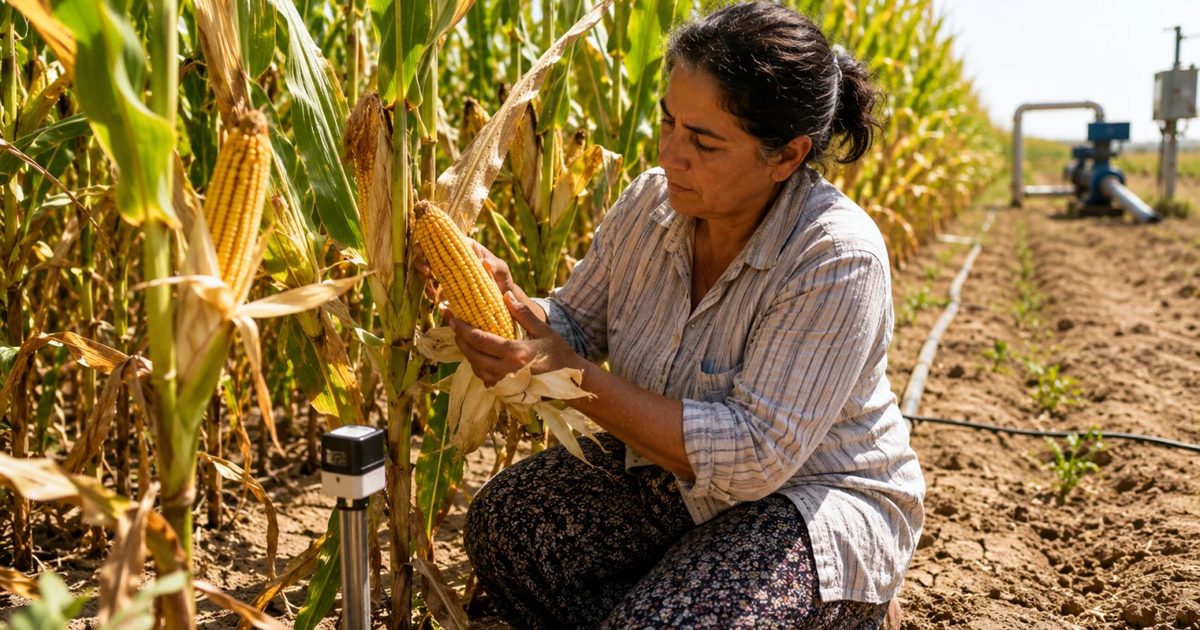
Extreme heat and water stress threaten corn yields as the crop enters its critical grain-filling stage across Turkey, with the 2026 harvest expected to remain around 8 million tons.
Critical Season Turnaround in Corn Fields
Across Turkey's corn-cultivated agricultural lands, the season has entered one of the most strategic and sensitive phases: the grain-filling and harvest maturity stage. The meteorological conditions brought by August during the period of cob development and grain dry matter accumulation play a significant role in the final yield. While producers focus on increasing grain weight and hectoliter values, temperatures exceeding seasonal norms are directly impacting field management processes. There is a risk of significant final product losses in plants that cannot complete their development process healthily and balancedly.
TurkStat's 2026 Yield Estimate Details
According to the 2026 Crop Production 1st Estimate data announced to the public by the Turkish Statistical Institute (TurkStat), an increase of 21.7% is calculated in overall grain production compared to the previous season. In contrast, grain corn production is projected to decrease by 5.9% compared to last season, reaching approximately 8 million tons. These initial official figures do not constitute a definitive yield; temperature and humidity balances in field conditions, especially in August and September, are seen as the primary factors shaping the final harvest volume.
Physiological Impact of August Heat on Plants
According to information in the technical guide for corn cultivation prepared by the Ministry of Agriculture and Forestry, ambient temperatures rising above 35°C can lead to direct yield losses in plants. It is stated that when temperatures reach 38°C, even with regular irrigation, plant roots have great difficulty meeting the water evaporating from the leaves through transpiration. The addition of low soil moisture and dry air to high temperature values prevents the grains from filling completely, causing unfilled gaps at the tips of the cobs.
Water Stress During the Grain-Filling Stage
According to technical resources from the Turkish Seed Registration and Certification Center Directorate, the periods of cob tassel emergence and grain setting in corn represent the stages where the plant's total water requirement reaches its peak. Severe water stress occurring during this critical phenological period causes a significant decrease in grain weight, incomplete cob filling, and the plant entering a premature forced maturation process. However, excessive and uncontrolled watering does not increase yield and seriously damages root health by preventing aeration of the root zone.
Errors in Final Irrigation Decisions
Unplanned and untimely irrigations in the field as the harvest calendar approaches create grounds for significant cost increases and operational difficulties for corn producers. Late irrigations, carried out without considering the soil's water-holding capacity, the growth stage of the planted variety, and the time remaining until the planned harvest date, lead to energy and water waste. Over-saturating corn fields that have reached harvest maturity delays the entry of heavy combine harvesters into the land, causing grain moisture to remain at undesirably high levels, resulting in additional drying costs and economic losses for the producer.
Regional Harvest and Management Differences
As indicated in the August agricultural calendar of the Adana Provincial Directorate of Agriculture and Forestry, activities such as ear hilling, irrigation, and nitrogen top dressing are continuing at an intensive pace for second-crop corn plantings in the Çukurova region. It is stated that early-planted first-crop corn in the relevant calendar is being harvested starting from the second half of August. Accordingly, producers are compelled to devise different field management strategies based on regional planting dates, climatic conditions, and the current phenological stage of the crop in the field.
Field Measures Producers Should Implement
Corn growers are advised to increase field checks throughout August to closely monitor for signs of pests and diseases such as corn earworm and leaf blight. Regularly testing soil moisture along the root depth and planning the final irrigation time in full coordination with harvest logistics will preserve yield. On days affected by extreme heatwaves, it is necessary to observe the physiological stress level experienced by the plants and to have combine harvester procurement and transportation arrangements ready in advance.
Feed Sector and Market Balances
Fluctuations in the grain corn yield in Turkey directly affect not only farmers but also the compound feed and livestock industries, which use corn as a primary energy raw material in their rations. If the total production for 2026 remains around the 8 million ton mark, domestic supply-demand balance and import needs will be redefined. This development will directly determine feed costs, livestock production expenses, and the floor and ceiling prices for grain corn in the free market.