


Call for Comprehensive Transformation in Agricultural Support Model
· GıdaTarım
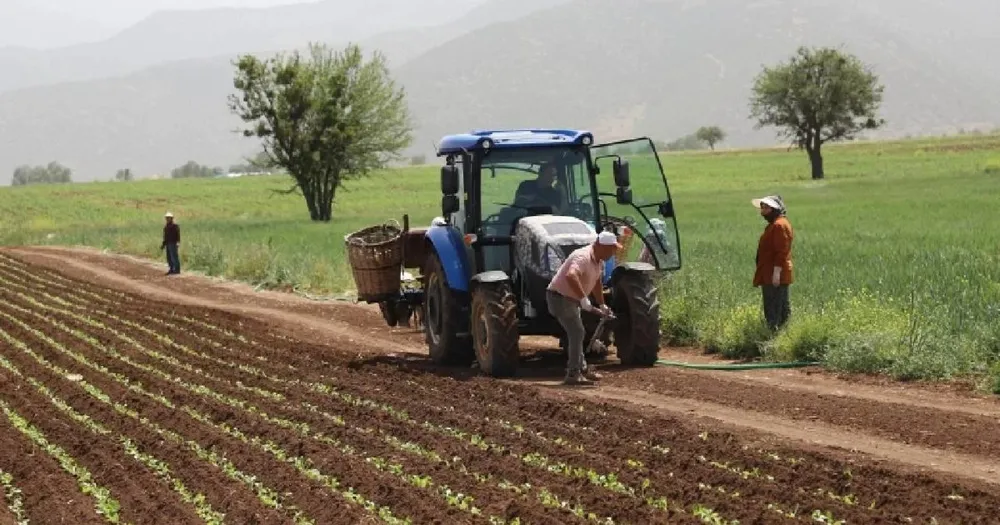
Prof. Dr. Bülent Gülçubuk stated that agricultural supports need to be restructured to focus on producer welfare and risk management in the face of the climate crisis, cost pressures, and market uncertainties.
Need for Radical Transformation in Support Model
Prof. Dr. Bülent Gülçubuk, a faculty member at Ankara University and founder of the Agricultural Information Platform, announced that the climate crisis and global market fluctuations necessitate a new support model. Stating that support policies should be shaped not only by the volume of products produced but also by sustainability and future preparedness criteria, Prof. Dr. Bülent Gülçubuk made the following assessment:
'Climate change, water scarcity, rising production costs, wars-geopolitical tensions in the world, global economic turmoil, high inflation, and market uncertainties necessitate a new support model in Turkey's agricultural policy. The fundamental question of the new era should no longer be 'how much support are we giving to farmers?', but rather 'to what extent does the support provided prepare farmers and rural areas for future risks, and do the supports provided meet the minimum living and welfare needs of those living in rural areas, as well as production?'
Input Costs and Farmer Welfare
Although agricultural production volume remains at high levels, the rapid increase in input costs and general inflation prevent producers from achieving real gains. Drawing attention to the continued importance of existing support mechanisms, Prof. Dr. Bülent Gülçubuk expressed his views as follows:
'Diesel, fertilizer, product, and premium supports, along with subsidized loans, undoubtedly retain their importance for the sustainability of production. However, the acceleration of climate change, the pressure on water resources, rising production costs, and market uncertainties, coupled with a low level of organization, require a reconsideration of the scope of support policy.'
Given the multi-functional nature of the agricultural sector, which provides food security and raw material supply to industry, the psychological and economic resilience of the producer must be among the primary goals.
Traditional Policies and Risk Management
The new agricultural support approach is proposed to be built on three fundamental pillars. In the first dimension, Prof. Dr. Bülent Gülçubuk argued for the uninterrupted continuation of traditional input supports such as pesticides and fertilizers. In the second phase, he recommended strengthening income security and agricultural insurance against market fluctuations. While aiming to replace traditional production-oriented policies with practices based on producer welfare and risk management, the third dimension involves securing social balance and living standards in rural areas.
Social Security and Insurance Indicators
The low rate of farmers producing in rural areas under the umbrella of social security stands out as one of the most fundamental structural problems of the sector. Emphasizing that risk management must include humanitarian dimensions alongside production, Prof. Dr. Bülent Gülçubuk presented the situation with the following data:
'In other words, coordination must be established between production and the vital support of farmers. For instance; while approximately 56% of cattle in Turkey are insured, 26% of farmers registered in the Farmer Registration System (616,000 out of 2.363 million farmers) are covered by SGK. This means the number of farmers covered by SGK is less than half the proportion of insured cattle.'
| Value | Measure |
|---|---|
| 56% | Rate of insured cattle |
| 26% | Rate of farmers registered in ÇKS within SGK coverage |
| 2.363 million | Total number of farmers registered in ÇKS |
| 616 thousand | Number of farmers within SGK coverage |