


New Wholesale Market Law Draft Submitted to Parliament Speaker
· Sabah Ekonomi
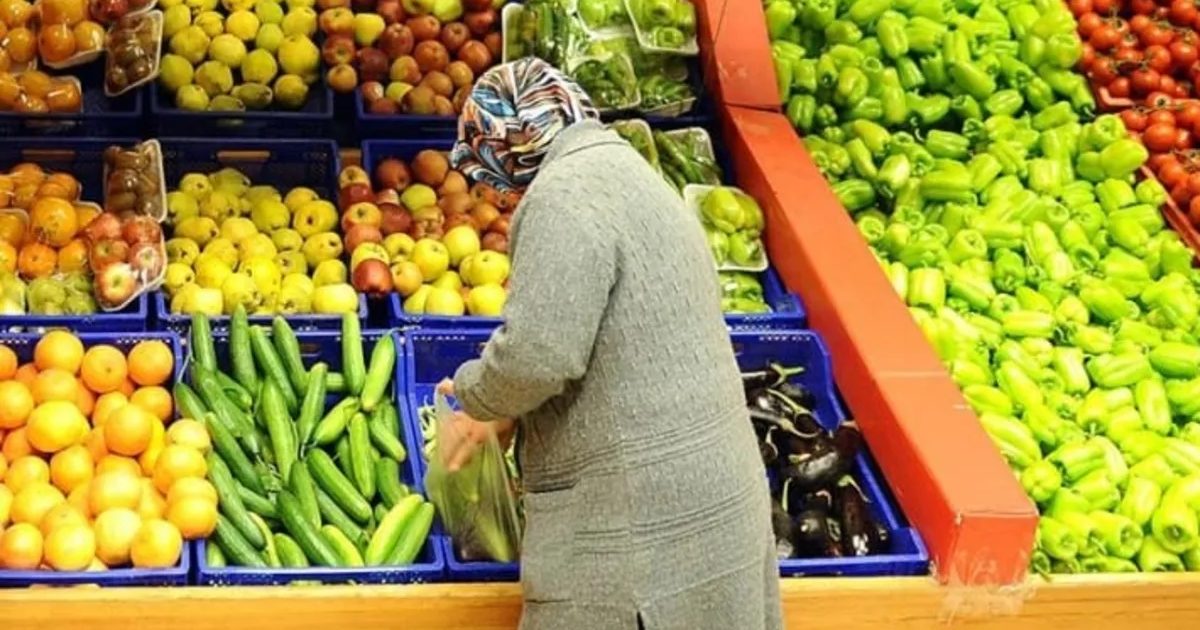
A nine-article new Wholesale Market Law proposal, aiming to narrow the price gap between producers and consumers, has been submitted to parliament, featuring reduced commission rates and imprisonment penalties.
Final Stage for Wholesale Market Law Draft
The new Wholesale Market Law regulation, aimed at narrowing the gap between producers and consumers in agricultural product trade, has reached its final stage. The work, jointly carried out by the AK Party Group and relevant ministry bureaucrats, has been completed and the draft law has been submitted to the Grand National Assembly of Turkey. The bill, consisting of a total of nine articles, aims to solve structural problems in the agricultural supply chain. Food Engineer Nurten Sırma, highlighting the significant weight of food items in inflation, evaluated the process with the following words:
'A significant item in inflation is food inflation. Therefore, all commercial regulations in the trade of fruits and vegetables have been tried to be brought under control for a long time. This is because various actions that artificially increase prices have been detected there.'
Strong Support and Exemptions for Producer Cooperatives
The core of the new regulation is to increase the market share of agricultural producer organizations. Minister of Trade Ömer Bolat stated that 22 legislative changes have been implemented this year to protect consumers and emphasized that producer unions and cooperatives will be positioned much more effectively in wholesale markets and marketplaces. Minister of Trade Ömer Bolat made the following statement regarding the scope of the draft law:
'Our draft law, which proposes the establishment of producer unions and producer cooperatives, their greater participation in wholesale markets and marketplaces, and their support with financial aid for establishing their own wholesale markets, as well as benefiting from exemptions such as taxes and duties, has been submitted to our Group in Parliament, following comprehensive changes to the Wholesale Market Law enacted in 2012 regarding fruit and vegetable trade.'
The regulation aims to double the number of agricultural cooperatives.
Commission Rates and Imprisonment Penalties
The draft text foresees deterrent legal sanctions against intermediaries making exorbitant profits. It is planned to impose imprisonment penalties in addition to administrative fines on actors who violate rules and cause speculative price increases. While aiming to end unregistered trade and prevent tax losses, a fundamental cut is also being made in commission rates. Food Engineer Nurten Sırma, reporting that the double buying and selling in the sector is being scrutinized, announced that the 8% commission rate taken by commission agents will be reduced to 4% and unnecessary intermediary stages will be liquidated.
Direct Sales Model from Farm to Shelf
The bill opens the way for producers to sell their products directly to markets, consumers, or digital channels. Special allocated sales areas will be made mandatory for genuine producers in marketplaces and wholesale markets through unions and cooperatives. Various tax incentives will be offered to market chains that allocate shelf space to local producers. While aiming to break the value-added price inflation in the chain by ensuring that products produced on the farm meet the consumer directly, a rule will be introduced requiring most of the products sold in markets to be of local origin.

Digital Tracking and Wholesale Market Registration System
The digital infrastructure in wholesale markets will be strengthened to track product movements from the moment they leave the farm until they reach the table. Notification, sales, and inspection processes will be carried out transparently through the Wholesale Market Registration System (HKS). With the HKS application, which can be downloaded from mobile stores, consumers will be able to instantly see the producer's exit price and the selling price of the fruits and vegetables they purchase by scanning a QR code. Nurten Sırma noted that only 30% of the fruits and vegetables produced in Turkey enter the wholesale markets, with the remaining 70% being with chain suppliers, and emphasized the critical importance of digital traceability.
Consumer Prices and Fair Competition Expectations
The gap between producer and retail prices is cited as the main justification for the new regulation. Food Engineer Nurten Sırma, conveying her field observations, expressed the current market distortion with the following concrete example:
'If a farmer producing Ayaş tomatoes sees the tomatoes they produced at 8 liras in a market 100 meters away in the same region selling for 100 liras, then there is a structural defect in the system.'
With the Wholesale Market Law and the subsequent Retail Law, the aim is to remove wholesale markets from a system where merchants look out for each other, establish fair market competition, and ensure consumers have access to affordable food.
| Value | Period | Measure |
|---|---|---|
| 22 units | This year | Number of legislative changes enacted in consumer protection |
| 2012 year | 2012 | Year of acceptance of the Market Law |
| 9 articles | Current | Number of draft articles in the Market Law |
| 8% | Current | Current commission ceiling rate |
| 4% | Draft | New commission rate foreseen in the draft |
| 8 TL | Sample | Production cost/price in the field for sample Ayaş tomato |
| 100 TL | Sample | Market sales price for sample Ayaş tomato |
| 30% | Current | Share of fruits and vegetables produced in Turkey entering the markets |
| 70% | Current | Share of suppliers and retail chains outside the markets |