


Miracle Substance: Water
· Yörük Kızı
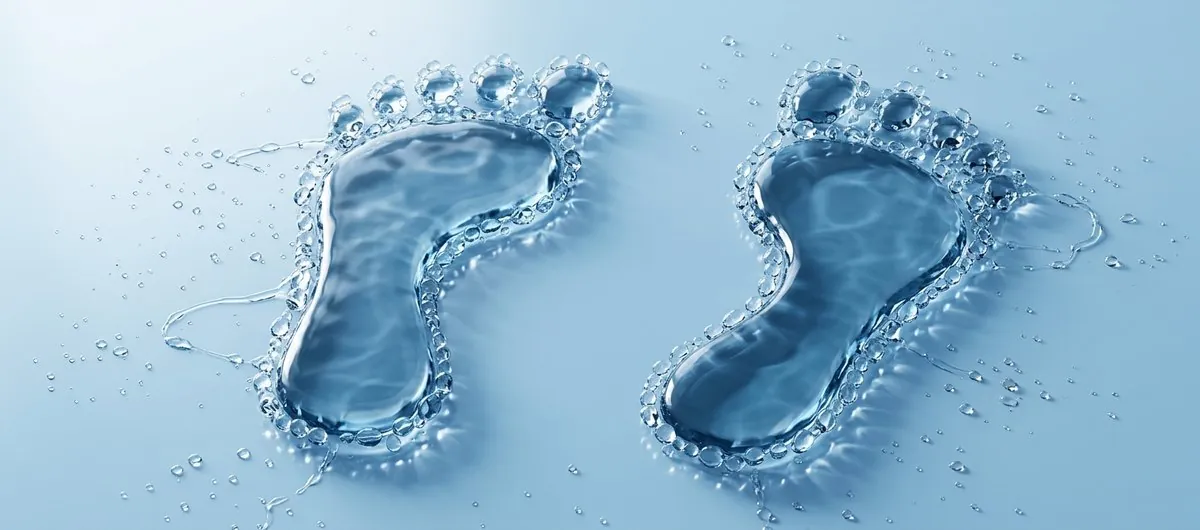
Water is of vital importance for all living things. A human can live for almost 40 days without eating anything and drinking only water. But he can only survive without water for 10 days. It is difficult to withstand thirst. Water has been in the same amount since the formation of the world and constantly changes form in a cycle. In other words, the water flowing from fountains in people's homes is the water that dinosaurs drank in the story of the world's existence.
Water is vital for all living beings. Humans can survive for approximately 40 days by drinking only water, but they can only endure thirst for about 10 days. Enduring thirst is difficult.
Water has remained in the same quantity since the Earth's formation and continuously changes form in a cycle. This means the water flowing from our taps at home is the same water that dinosaurs drank throughout Earth's history.
Only 2-3% of the water on Earth is drinkable. 2.1 billion people, or one in every nine people, cannot access purified clean water. The potential for contaminated water worldwide causes the deaths of 200 children every hour. In Turkey, 26 million tons of food are consumed unnecessarily in one year. This also means 26.6 billion cubic meters of water are wasted. This amount is more than the active storage volume of the Keban Dam. Approximately 70% of the freshwater used by humans is consumed for agriculture and livestock. In this century, within a few years, 40% of the world's population will experience drinking water shortages, and 33 countries will run out of water. In our homes, 35% of water is used in bathrooms, 30% in toilets, 20% for washing clothes and dishes, 10% for cooking and drinking water, and 5% for cleaning. If a faucet leaks one drop of water per second, between 1,900 and 11,000 liters of water are wasted annually. Approximately 80% of groundwater is polluted, so an estimated 700 million Chinese people consume contaminated water. A swimming pool loses about 3,800 liters of water per month due to evaporation and other reasons. If we continue to wash dishes by hand, we use about 7 times more water than a dishwasher. Do we know that it takes 50 glasses of water to drink just 1 glass of orange juice, 140 liters to grow coffee beans and make one cup of coffee, 10,000 liters to grow the cotton needed to produce a single t-shirt, and 11,000 liters to produce a single pair of jeans? Or that we use 75 liters in the shower and 6 liters of clean water every time we flush the toilet?
So, what should we do?
Rudolf Steiner's philosophy states that if we believe all life, from the smallest village to the largest city on Earth, is sacred, we must also accept the importance of water, which is indispensable for life. We need to understand the nature of water that supports all life forms and how to utilize it best. For this, we must mobilize the synergy of nature, technological knowledge, and ethical values for the benefit of humanity.
Factors such as the ever-increasing population, industrial development, and climate change, along with the conservation, sustainability, and management of diminishing water resources, have become more critical than ever. A new perspective and a frequently inquired concept on the agenda of world countries is 'Water Footprint'....
What Does Water Footprint Mean?
The concept of Water Footprint was first introduced in 2002 at UNESCO-IHE (Water Footprint Network-WFN) by Arjen Hoekstra.
The water footprint of an individual, community, or business sector is the total amount of freshwater resources used to produce the goods and services consumed by that individual or community, or used by the producer to produce goods and services.
Water Footprint is measured by the amount of water consumed (including evaporation) and/or polluted per unit of time (Water Footprint Network, 2012). The water footprint of a product is referred to as the virtual water content of the product, or its hidden, embedded, external, or shadow water (Hoekstra and Chapagain, 2008). Virtual water content refers only to the hidden water within the product. This concept is used to describe visible water flows internationally or between regions. If a country or region imports or exports a product, it is also virtually importing/exporting water. This is generally called virtual water flow or trade (Hoekstra et al., 2007). The water footprint is not just about the volume of water; it also indicates the type of water used (green, blue, grey), and when and where it was used. Therefore, a product's water footprint is a multidimensional indicator.
Water use is divided into 3 categories based on the sources from which water is drawn and the water that is polluted: green water, blue water, and grey water. Green Water Footprint: The total rainwater used in the production of a good. Blue Water Footprint: The total volume of surface and groundwater freshwater resources needed to produce a good (freshwater). Grey Water Footprint: The amount of water spent to treat the water polluted during the production of a product.
So, How Do We Consume Water?
We consume water in two ways: directly and indirectly. Direct consumption refers to water used directly from the tap. Indirect consumption refers to the water used to produce the products, goods, and services we consume.
According to TÜİK data, the average daily water consumption per person for drinking and domestic use in Turkey is 216 liters. If we add virtual water to this, the daily direct and indirect water consumption of a person in Turkey is approximately 5,400 liters.
In Turkey, 64% of the water footprint originating from production is green water, 19% is blue water, and 17% is grey water. The agriculture sector constitutes 89% of the total water footprint. When evaluating agriculture's water footprint, blue and green water footprints are prominent. Of agriculture's water footprint, 92% is from crop production and 8% from livestock. Looking at the crop production part of the water footprint, cereals have the largest share (38%). They are followed by fodder crops (31%), industrial crops (13%), oil crops (5%), and vegetables and legumes (2%).
The situation changes in domestic and industrial water footprints, where the grey water footprint comes into play. In Turkey, the grey water footprint rates for domestic (87%) and industrial (92%) sectors are quite high. The industrial sector obtains approximately 35% of the water it uses in production from freshwater resources (wells, networks, dams, rivers).
What Can I Do as an Individual?
In our warming world, what can my individual contribution be? As conscious consumers, we must value every drop. As long as humanity exists, agricultural and industrial activities will continue, and consumption limits will be pushed. Let's not forget that if we become conscious, everyone will eventually have to become conscious. We can start by consuming less and being conscious consumers.
Water footprints of some products
Here are a few things we can do: consume what we need, not all waste is trash and is recyclable, separate waste properly, choose products that save energy and water, choose certified products, and support non-governmental organizations working in this area to take significant steps in reducing the water footprint and leave a clean world for future generations.
Footnote
The water footprint of 1 serving of red meat (200 gr) is 3,100 liters, 1 serving of white meat (200 gr) is 780 liters, 1 slice of bread is 40 liters, 1 cup of coffee is 208 liters, 1 cup of tea is 30 liters, 1 glass of milk (this amount is five times higher for milk powder) is 200 liters, 1 serving of rice is 150 liters, 1 packet of potato chips (200 gr) is 185 liters, 1 hamburger is 2,400 liters, 1 pair of leather shoes is 8,000 liters, 2,720 liters for 1 cotton t-shirt (250 gr), 10,850 liters for 1 pair of jeans (1 kg), 17,196 liters for 1 kg of chocolate.........
Yörük Kızı