


Forest Fires and Heatwaves Poison Global Air
· France 24
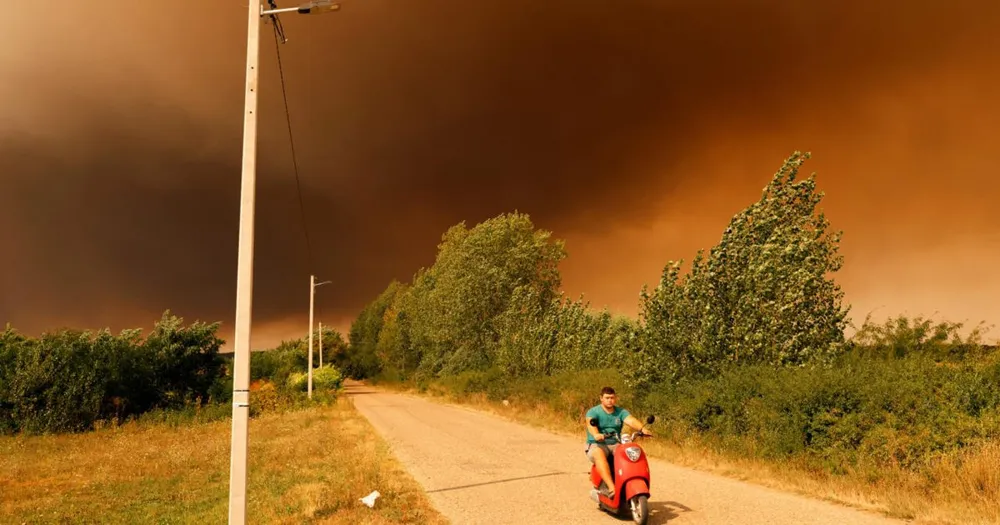
The World Meteorological Organization announced that increasing heatwaves and severe forest fires are overshadowing reductions in industrial emissions, pushing air quality to dangerous levels.
Climate Change and the Fire Threat
The latest annual Air Quality and Climate Bulletin released by the World Meteorological Organization (WMO) revealed that increasing heatwaves and severe forest fires are significantly degrading global air quality. The organization highlighted the devastating effects of wildfire smoke in its official statement:
'Extreme wildfires are increasing and causing major health problems due to the high toxicity of the smoke.'
The World Meteorological Organization stated that pollution from fires is rising despite a decrease in industrial emissions, and described the shift in pollution sources in its official statement:
'While regulations in Europe and North America have reduced industrial and transport-related PM2.5 emissions, exposure to wildfire-related PM2.5 has increased.'
Emphasizing the need to manage the climate crisis and air pollution simultaneously, the WMO called for coordination in its bulletin report:
'We need complementary and coordinated policies on air quality and climate, as they cannot be addressed independently.'
The Danger of Toxic PM2.5 Particles
PM2.5 microscopic particles, smaller than 2.5 micrometers in diameter, pose lethal risks to human health as they can penetrate the deepest parts of the lungs and directly enter the bloodstream. These dangerous particles are released into the atmosphere not only from fossil fuel industrial facilities, agricultural activities, and transportation but also through forest fires and dust storms. Lorenzo Labrador, a scientist at the WMO Global Atmosphere Watch Network, explained the direct link between the two crises:
'Air quality and climate change cannot be addressed separately. If one worsens, the other also worsens.'
Evaluating the pollution intensity observed in fire-affected areas, Lorenzo Labrador, a scientist at the WMO Global Atmosphere Watch Network, presented field data:

'We find a lot of fine particulate pollution in areas with relatively strong wildfires.'
Labrador noted that these micro-substances, resulting from the burning of vegetation, are even more toxic than particles released from vehicle exhausts.
Inadequacy of Traditional Risk Models
Wildfire smoke, carried by winds to distant geographies, directly affects not only the disaster-stricken area but also settlements and wildlife thousands of kilometers away. The WMO reported that current measurement systems are insufficient to reflect the true toxicity of wildfire smoke and included a striking figure in its bulletin report:
'Traditional risk models based on total PM2.5 concentrations may underestimate deaths attributable to wildfires by up to 93%.'
According to a scientific study cited in the report, extreme wildfire smoke events have tripled globally since the 1990s. This devastating scenario paved the way for approximately 100,000 additional premature deaths worldwide each year between 2010 and 2018 alone.
Heatwaves and the Ozone Threat
When high temperatures, stagnant atmospheric conditions, and intense solar radiation combine, ground-level harmful ozone accumulation reaches dangerous levels. Recent severe heatwaves in China, Europe, and the southeastern United States have significantly accelerated this chemical accumulation process. The World Meteorological Organization issued a warning about the deadly consequences of ozone pollution:
'This increased exposure to ozone pollution has the potential to cause tens of thousands of additional premature deaths, particularly due to respiratory diseases.'
Ozone gas, unable to disperse due to atmospheric stagnation, exacerbates chronic respiratory illnesses and cardiovascular problems, especially in sensitive and vulnerable groups, increasing the burden on global health systems.

Global Spread of Aerosols and Soot
Pollutants such as aerosol particles and black carbon released into the atmosphere can travel thousands of kilometers from their origin to oceans and pristine continents. The WMO bulletin report shared the following observation regarding these pollutants, which disrupt the balance of sunlight reflection and alter freshwater and soil chemistry:
'One example is the accumulation of black carbon or soot on snow and ice; this reduces the amount of sunlight reflected by the surfaces and can accelerate the melting process.'
These particles accumulating in the poles and glaciers increase the planet's surface temperature, pushing the climate crisis towards an irreversible threshold.
The New Atmospheric Route of Microplastics
Plastic waste, broken down by sunlight and environmental abrasion, is now found not only on land and in water but also intensely in global air currents. The bulletin's simulation assessment shared the following data on microplastic sources:
'51 million tons for land and 22 million tons for oceans; these are also sources of microplastics for the atmosphere.'
The World Meteorological Organization stated that the danger will grow rapidly if plastic pollution is not stopped and called for urgent global monitoring in its bulletin report:
'As plastic production and especially poorly managed plastic waste continue to increase, tracking the air pathways that carry microplastics from their sources will be critical.'
| Value | Period | Measure |
|---|---|---|
| 2.5 micrometers | — | Particle matter PM2.5 diameter limit |
| 93% | — | Share of underestimation of fire-related deaths by traditional risk models |
| 100,000 people | 2010-2018 | Additional annual deaths from extreme wildfire smoke |
| 51 million tonnes | — | Estimated amount of microplastics on land |
| 22 million tonnes | — | Estimated amount of microplastics in oceans |