


Eskişehir Agriculture Resists Cost Pressures Alongside Industry
· Tarım Dünyası
Sector representatives, gathered under the coordination of the Eskişehir Chamber of Industry and Provincial Directorate of Agriculture, announced that despite the city's agricultural output of 51 billion Turkish Liras, water scarcity, food inflation, and a labor crisis threaten production.
Historical Heritage of Eskişehir Agriculture
Eskişehir has always played a pioneering role in the agricultural development drive of the Republic of Turkey. Founded on December 13, 1925, upon the instructions of Mustafa Kemal Atatürk, Turkey's first research institution, Islah-ı Buzr, continues its activities today as the Geçit Kuşağı Agricultural Research Institute. The city's sugar factory, laid on February 1, 1933, was completed in record time and opened on December 5, 1933. The Dry Farming Experimental Station, established in 1929 by one of the first agricultural engineers, Ali Numan Kıraç, entered world literature as a Turkish miracle. The Mahmudiye Village Teacher Training Course in 1936 and the Çifteler Village Institute in 1940 formed the basis of rural education.
Agriculture Desk at the Chamber of Industry
Although agriculture directly accounts for 7% of Eskişehir's economy, the city's deep-rooted agricultural memory and production awareness remain vibrant. Under the leadership of Celalettin Kesikbaş, Chairman of the Eskişehir Chamber of Industry, a strategic sensitivity is applied to the food industry. In this context, a broadly attended Sectoral Professional Groups Meeting was held on Thursday, August 13, 2026, with representatives from the food, confectionery, flour products, and feed sectors. At the meeting, industrialists and producers jointly addressed current issues from field to factory, raw material supply, and cost pressures.
The City's Agricultural Production Value
According to data from the Eskişehir Agricultural Investment Guide prepared by the General Directorate of Agricultural Reform of the Ministry of Agriculture and Forestry, there are 24,113 registered producers in the Farmer Registration System as of 2025. The total land assets include 5.5 million decares of agricultural land, 3.4 million decares of pasture, and 1.3 million decares of fallow land. According to official data shared by Yüksel Çil, Provincial Director of Agriculture and Forestry, the city's total agricultural output has reached 51 billion Turkish Liras, with 30.7 billion Turkish Liras from plant production and 19.3 billion Turkish Liras from animal production.
Plant and Animal Assets
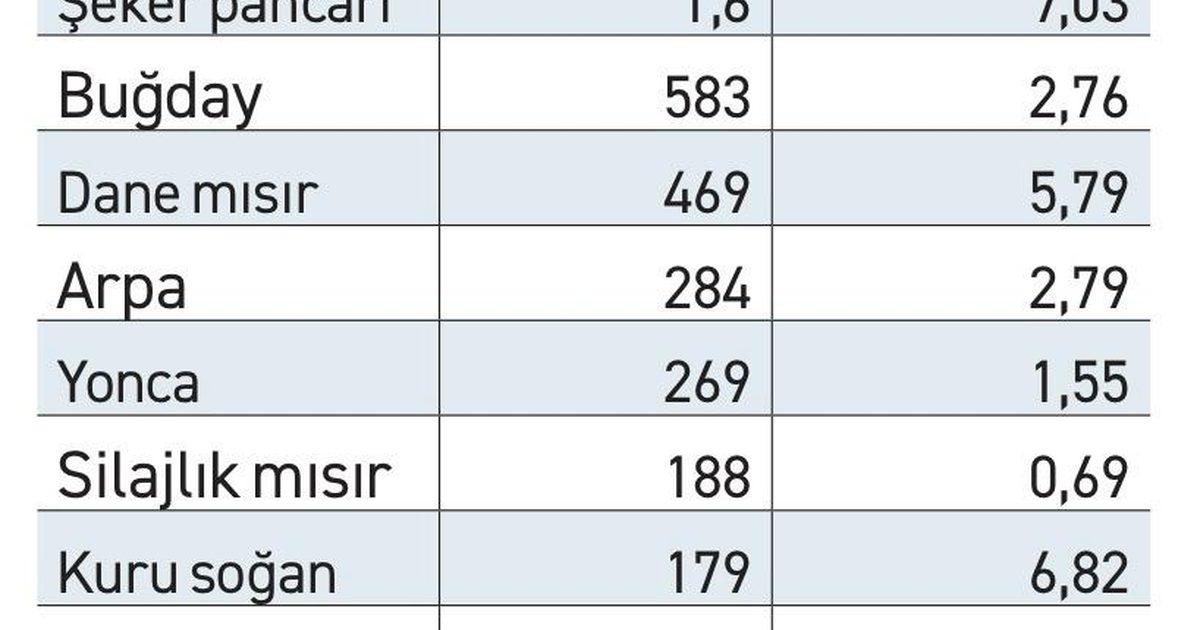
In Eskişehir, approximately 70% of the plant production pattern, carried out in 14 districts and 546 neighborhoods, consists of cereals and legumes. The city, a critical hub for sugar beet and certified seed cultivation, also holds a decisive position in the Turkish market for greens production. Specifically, 77% of Turkey's arugula needs are met from these lands alone, with an annual harvest of 34,000 tons. In livestock, there are 160,000 head of cattle and 1.3 million head of small ruminants identified across the province.
Agri-Based Industry Infrastructure
The agricultural raw materials produced in Eskişehir are transformed into value-added products by a strong local industrial network. There are a total of 1,092 manufacturing enterprises operating in the province based on agriculture. Among these facilities, 273 feed factories, 266 flour product businesses, and 161 pastry product facilities are prominent. Additionally, 75 dairy and dairy product facilities and 20 modern meat and meat product processing facilities continuously sustain their production, directly contributing to agricultural employment and food supply security.
Water Scarcity and Climate
Despite increasing production figures, one of the most critical threats to Eskişehir's agriculture is the inadequacy of water resources. Eskişehir is one of the 11 provinces officially declared to be under water restrictions in Turkey. Six of the 52 districts nationwide included in the Ministry of Agriculture and Forestry's water restriction scope are within Eskişehir's borders. Experts speaking at the meeting clearly stated that drought risk, rising energy costs, and difficulties in securing labor are limiting production, and there is an urgent need for projects that increase efficiency in agricultural irrigation.
Industrialist's Reaction to Food Inflation
Evaluating the rise in food prices and its impact on industry, Celalettin Kesikbaş, Chairman of the Eskişehir Chamber of Industry, made the following statement:
"The industrialist has put their hand in the fire, and their hand is now bruised. They are devastated from being crushed under that stone. We explain this everywhere we go. Turkey's food inflation is 37%, and service sector inflation is over 45%. This is unfair. We tell our Minister of Economy that if you are going to implement a prescription for this inflation, apply a separate prescription for the industrialist, a separate one for reducing food inflation, and a separate one for the service sector. What do we care about the cost of a child attending a private school or something else? We use the same aspirin as industrialists to reduce that cost and inflation, the same aspirin to reduce food inflation, and the same aspirin, the same pill, to reduce the service sector. What happens here is to the industrialist, they are crushed. Because we have done our job. There is 17.7% inflation in basic industrial goods. This is not my figure; it is the figure from TÜİK (Turkish Statistical Institute), whether you believe it or not. At the end of the day, we are so crushed because of this absurd food inflation. What is actually happening is to our factories in industry. Many are on the verge of closure, many do not want to produce."
Reminding that according to TÜİK data, the inflation of basic industrial goods is 17.7%, Kesikbaş emphasized that the industry is facing an unfair cost pressure.
Prescription Differentiation and Costs
Expressing the efforts for transformation by calling for sector-based policies for economic management, Celalettin Kesikbaş, Chairman of the Eskişehir Chamber of Industry, continued his words as follows:
"We are truly modernizing factories. We are going through green transformation. When you look at it, we are very good in industry. We explain human resources management, gender equality, etc., to industrialists. Brother, we are doing our job. Thousands of factories are doing this job here. They are expending effort and money on this. But food inflation is 37%, and the bill is being presented to us. We explain this everywhere we go. Those who will solve this must solve it as soon as possible and actually save the industry in some way. In this regard, we attach great importance to agriculture and food."
He stated that food prices should be resolved not only through market inspections but also by reducing production costs in the field.
Import in the Red Meat Market
Livestock policies and structural imbalances in red meat prices were extensively discussed at the sectoral meeting. It was noted that Turkey has been continuously importing live animals for fattening and slaughter, as well as carcass meat, since 2010, and is 60% dependent on foreign sources for feed raw materials. The criticism was made that the Meat and Milk Institution operates like an import office rather than a regulatory body, and it was emphasized that import dependency does not lower prices. It was proposed to return to policies that support domestic producers instead of imports for lasting stability in red meat and to encourage small ruminant consumption.
Balance in the White Meat Sector
At a time when consumers are turning to white meat due to high red meat prices, administrative fines imposed on the poultry sector have come to the agenda. The imposition of a 3.7 billion Turkish Lira fine by the Competition Authority on 13 firms and export restrictions have negatively affected production. An unnamed sector producer, evaluating the price balance in the white meat market, made the following statements:
"I have been in the white meat sector for 60 years. There were discussions about white meat just now. I would like to give a simple piece of information. Previously, we used to buy two kilograms of white meat for the price of one kilogram of red meat. Meat was very expensive. Then we started buying four kilograms instead of one kilogram. Now we can buy 10 kilograms of white meat for the price of one kilogram of red meat. So, the white meat sector needs to be analyzed very well. Intervention is made because white meat is expensive and prices are rising. There is a mistake there, let me explain."
Labor Crisis and Planning
Yüksel Çil, Provincial Director of Agriculture and Forestry, made the following assessment regarding the sustainability of production and labor planning across the province:
"One of the main problems in Turkey is the labor issue in agriculture. The high cost of our labor stands out. Labor cannot be found. We are currently making province-level planning so that Eskişehir producers or consumers do not go outside of Eskişehir. Eskişehir is actually a province quite rich in terms of underground and above-ground resources. It is an incredible province in terms of human resources. Here, there is an integration of agricultural production with industry, and this transition has been achieved. But we can increase this transition a bit more. Our work on this continues. Furthermore, we must bring young people into agriculture. If we cannot bring the young population back to production, tomorrow, like Germany in the past..."
Çil noted that producers and consumers must be protected simultaneously and that new provincial plans are being implemented to attract the young population to rural production.