


Organic Honey Production in Erzurum Highlands with State Support
· Tarım TV
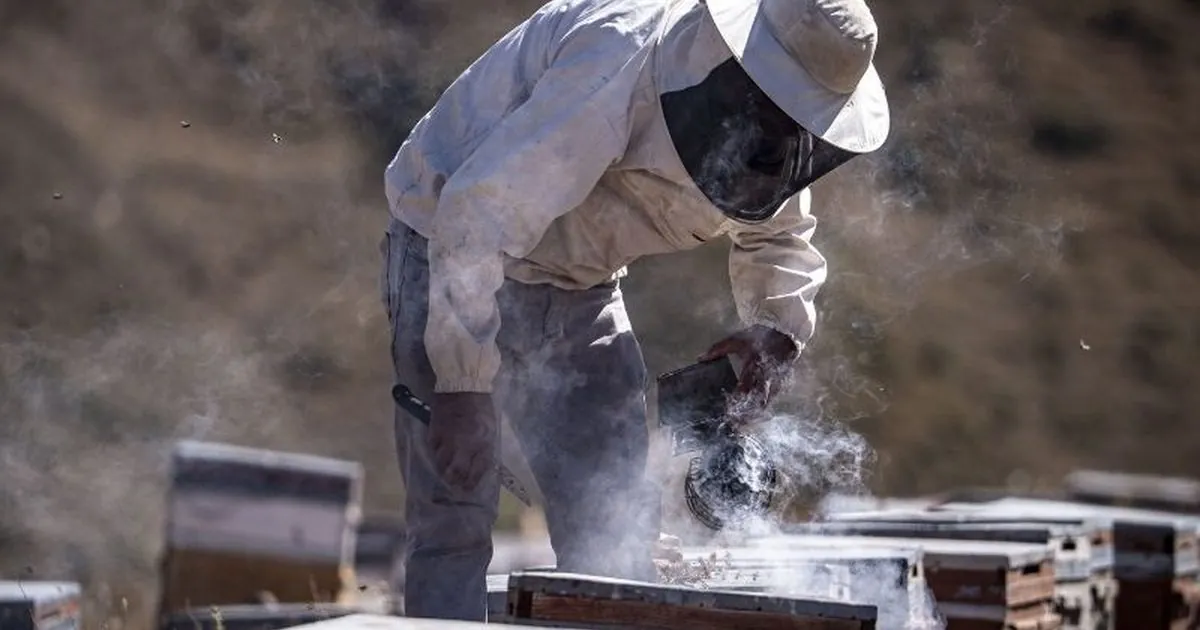
In Erzurum's Çat district, producer Savaş Anıl is producing organic honey from 300 hives, utilizing the region's rich flora with high proline content, supported by the state, and without using chemicals or sugar.
Organic Production in High-Altitude Highlands
Producer Savaş Anıl, who has been continuing his father's beekeeping profession for 15 years in Erzurum's Çat district, is producing organic honey by utilizing the region's rich flora. In the production activities centered in the Kurbanlı neighborhood of the district, the high altitudes reaching up to 2,800 meters and the plant diversity provide a significant advantage. Thanks to the hives located in isolated areas where agricultural spraying is not practiced, high-quality and organically certified honey harvesting is successfully carried out using entirely natural methods.
Analysis Results and State Support
Producer Savaş Anıl stated that when he had his honey analyzed during his conventional beekeeping period, the proline values were between 1200 and 1350, which led him to switch to organic production. Anıl, who applied to the provincial and district directorates of the Ministry of Agriculture and Forestry, benefited from hive and organic production support. After completing the necessary technical training and obtaining his certificate, the producer officially stepped into organic honey production in 2021 and increased his operation's capacity to 300 hives.
Migration Route Following the Bloom
An extensive migratory beekeeping calendar is implemented to ensure the complete natural nectar feeding of the bee colonies. The 300-hive bee population, which spends the winter in Hatay, is brought to the highlands of Erzurum's Çat district in early spring with the start of seasonal flowering, first to Elazığ, and then to Erzurum's Çat district in the first week of June.

Beekeeper Savaş Anıl explained the migration strategy with the following words:
'We undertake a migration that follows the bloom. Our aim here is to keep sugar away from the bees and feed them solely with nature. We come here in the first week of June and benefit from the nature here. We wait for the harvest period for approximately 3.5 months with only routine operations, untouched. These bees are coming from a long journey. Wherever there is a flower, there are bees.'
Bee Breeds Adapted to the Region
To increase productivity in the geography with high altitudes and harsh climate conditions, work is carried out with genotypes adapted to the region's conditions. Artificial insemination applications are utilized to maintain the climate resistance of the colonies.
Beekeeper Savaş Anıl stated the following regarding bee breed improvement and the natural production process:
'In organic honey, sugar and chemical pesticides are absolutely out of the question. We are protected from these by natural methods. This means that the bee works today just as it worked 200 years ago. We have also seen the yield from this. Breeds are also important for beekeepers. First, we had to work with breeds adapted to the region. This was our initial deficiency. We have completed this. We also performed artificial insemination to preserve the breed. We kept breeds that can work with the flowers in our region at an altitude of 2,200 meters. We have no extra costs. Whatever the bee takes from the flower, it brings it to the honeycomb, and we extract it. We produce our honey using natural methods.'
The Value Added to Honey by Rich Flora
The untouched nature of the Çat district provides a long-lasting and uninterrupted nectar flow to the bees due to the gradual altitude difference. After approximately 3.5 months of highland stay, the harvest is completed by extracting the honeycombs.
Beekeeper Savaş Anıl, drawing attention to the richness of the region's flora, completed his assessment as follows:
'This is a rare nature. There are no agricultural pesticide activities here. Our bees benefit from this. One plant finishes, another comes. The altitudes of the mountains can reach up to 2,800 meters. If there is one flower at the bottom, there is a different flower at the top. This adds value to the honey produced manifold.'
| Value | Period | Measure |
|---|---|---|
| 300 units | Current | Number of current hives |
| 1200 units | Analysis period | Lower limit of honey proline value |
| 1350 units | Analysis period | Upper limit of honey proline value |
| 2800 meters | — | Maximum altitude reached by mountains |
| 2200 meters | — | Regional working altitude |
| 15 years | — | Professional experience in beekeeping |
| 3.5 months | Summer season | Production time spent in the plateau |