


Bluefin Tuna Tagged with Tracking Device Caught in Aegean Sea
· Dünya Gazetesi
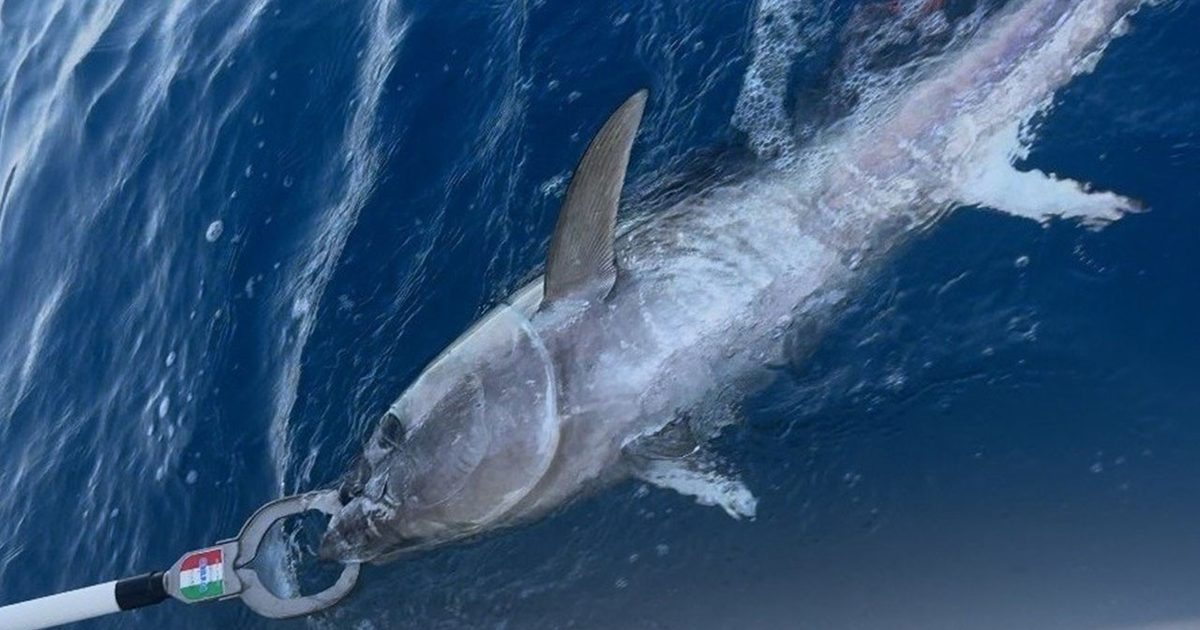
A 133-centimeter bluefin tuna, caught off the coast of Seferihisar, Izmir, and identified as having been tagged by French scientists in the Western Mediterranean, was released back into the sea after necessary resuscitation efforts.
Tuna with Tracking Device in Aegean Waters
Amateur fisherman Halil Alptuğ Önal, who was fishing off the coast of Teos in the Seferihisar district of Izmir, discovered a scientific tracking device on a 133-centimeter bluefin tuna he caught. Önal, who has 20 years of experience in sport fishing, immediately took measures to protect the fish upon noticing the device on its fin. Following the struggle during the catch, immediate precautions were taken on the boat to ensure the tuna's health.
Two-Year Project by French Researchers
After the information on the device was shared with officials from the Ministry of Agriculture and Forestry, the identity of the fish was clarified. Investigations revealed that the bluefin tuna had been tagged by French scientists in the Western Mediterranean basin in 2024.
Businessman and Sport Fisherman Halil Alptuğ Önal shared details of the process, stating:
"I have been engaged in sport fishing for 20 years. For the past 10 years, we have been trying to support the life cycle of these species through catch, tag, and release programs. In our latest catch, off the coast of Sığacık Bay in Izmir, we caught a bluefin tuna tagged for research in the Western Mediterranean region. We took academic measurements of this 133-centimeter tuna and released it back in healthy condition. We shared this data with our Ministry of Agriculture and Forestry and international tuna conservation associations. It was determined that the fish was tagged two years ago in the Western Mediterranean region. Currently, we have a study underway with the Ministry of Agriculture and Forestry through Ege University and Çukurova University. As a result of this research, information was shared that this fish was tagged in the Western Mediterranean region in 2024. Feedback indicated that this research was conducted by a French research team tagging in the Western Mediterranean region. For about 10 years, I have tagged dozens of fish, both swordfish and tuna, in different parts of the world. We even keep some of their data logs for tracking as mementos in our records."
Vital Intervention and Oxygen Support
A special resuscitation technique was applied to the tuna, which had become immobile during the catch, to help it expel the lactic acid accumulated in its muscles.
Businessman and Sport Fisherman Halil Alptuğ Önal further detailed the rescue and release technique, adding:
"When we brought the fish to the surface, we observed a GPRS transmitter on it. We then made the fish swim using the boat's motor on the sea surface to help it breathe again. This is because the lactic acid accumulated in the muscles during the struggle reduces the fish's chances of survival after release. When they are stationary, they cannot pass water through their gills to breathe. Tuna need to swim to breathe. We had to help it expel the lactic acid accumulated in its muscles during the struggle and recover. Therefore, fish to be released need to be swum with the help of a machine beforehand to increase blood oxygen levels and reduce lactic acid. Consequently, the release of a very short struggle actually took longer than the struggle itself. We spent about 15 minutes swimming our fish to prepare it for release. Afterward, we reunited it with the Aegean waters in a healthy state. We were informed that our international federation will share information about this fish with us going forward."
Species Conservation and Catch Quotas
The catch quotas for bluefin tuna need to be meticulously managed to maintain the balance in the marine ecosystem and ensure the species' continuity.
Expressing his emotions and thoughts on species conservation as he released the fish back into its natural habitat, Businessman and Sport Fisherman Halil Alptuğ Önal stated:
"We thank this fish for giving us this experience. I've been doing this for years, and something like this has never happened before. We just caught a fish that had a tracking device attached. The fish is being tracked for academic research, and it's already slightly above the legal limit. Even if we wanted to, we couldn't keep it for ethical reasons. Once it regained its strength, we removed the hook and released it. Setting quotas for these fish is critically important for their survival and the conservation of the species. Perhaps this is our small contribution. May the life of this fish return to all of us, our children, and grandchildren as plenty of bluefin tuna. Go on, grow big, become huge, and spawn abundantly. Maybe we'll meet again someday. Goodbye. I hope it goes on to healthy generations. Yes, its tail is starting to move now. Go, my champion, my lion. You handsome cowboy."
Joint Monitoring by Ministry and Universities
Marine research conducted jointly by the Ministry of Agriculture and Forestry, Ege University, and Çukurova University comprehensively records fish migrations in the region. Monitoring fish mobility between the Aegean and Mediterranean Seas forms the basis for establishing sustainable fishing policies and conservation plans. The data obtained is also shared with international tuna conservation associations, integrating into global marine biodiversity research.
Released Back into Its Natural Habitat
The bluefin tuna, which was kept swimming with the help of the boat for approximately 15 minutes to ensure water flow through its gills, fully regained its vital functions. After all academic measurements were completed, the fish was freed from its hook and released back into the cool waters of the Aegean. Within the scope of international monitoring projects, researchers will continue to track the tuna's migration journey in the Mediterranean via the transmitter.