


Ministry to Map Water Footprint in All Basins by 2030
· AA Tarım & Ekonomi
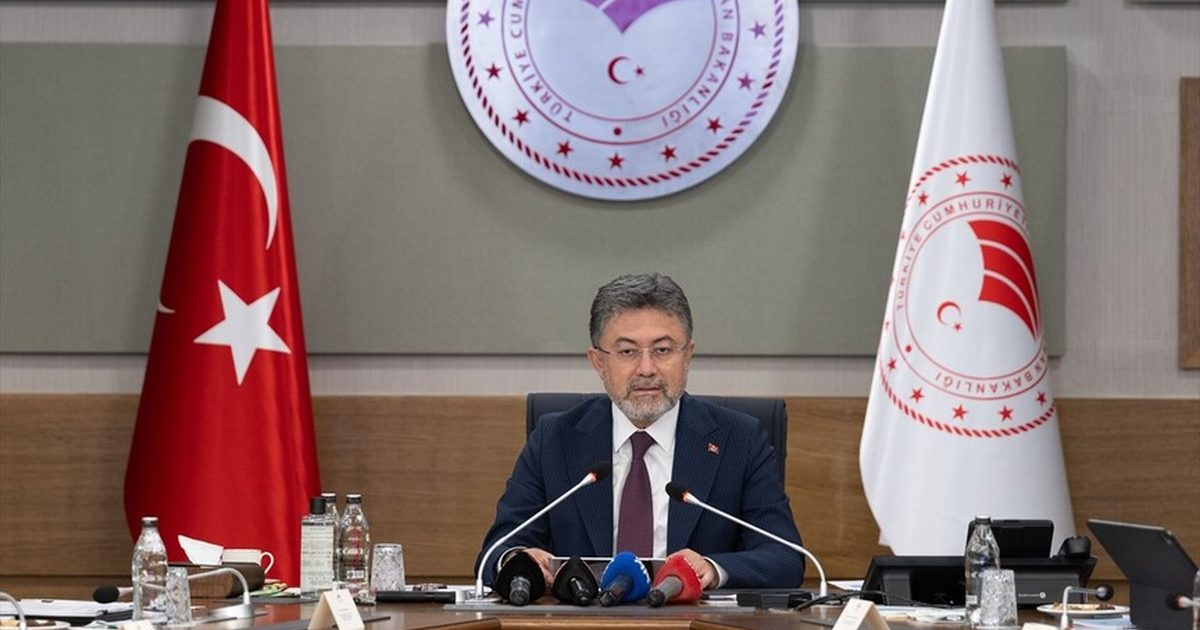
Speaking at the National Water Council meeting, Minister of Agriculture and Forestry İbrahim Yumaklı announced that water footprint studies will be completed in all 25 river basins by 2030, transitioning to artificial intelligence-supported smart water management.
National Water Council Meeting Held
Minister of Agriculture and Forestry İbrahim Yumaklı attended the 6th meeting of the National Water Council, held within the General Directorate of State Hydraulic Works, and made critical evaluations regarding the future of water resources. Emphasizing that the effects of the global climate crisis are being felt much more intensely, Minister Yumaklı stated that drought periods are lengthening and rainfall patterns are fundamentally changing. It was conveyed to the public that 27 out of a total of 37 decisions taken at the Council meeting have been successfully implemented, while the official processes for the remaining 10 decisions are continuing uninterruptedly.
Rainfall and Dam Occupancy Rates
Sharing the Ministry's meteorological data, Minister of Agriculture and Forestry İbrahim Yumaklı drew attention to seasonal rainfall fluctuations and provided the following data:
"The 2025 water year was recorded as the driest year in the last 52 years, with a 26% decrease in rainfall. In the 2026 water year, rainfall across our country is approximately 30% above the long-term average. We are experiencing one of the highest rainfall levels in the last 66 years."
Minister Yumaklı stated that the active dam occupancy rate, which was around 43% in the same period last year, has risen to 72% this year, reporting that this situation is satisfactory for agricultural and urban water supply.
Holistic Water Policies for the Future
Yumaklı noted that the excess rainfall has brought floods and inundation to some cities, stating that they sometimes struggle with extreme drought and sometimes with sudden floods. Minister of Agriculture and Forestry İbrahim Yumaklı summarized the principles of the new era in water management with the following words:
"Therefore, we must base our water policies not on saving the day, but on planning for the future. We will look at scientific data. We will evaluate our basins as a whole. We will manage both drought and flood together."
In this direction, it was announced that water management will be structured with long-term scientific planning instead of immediate solutions, and all basins will be managed in coordination during crisis situations.
Water Law and Digital Efficiency
Stating that the draft Water Law, which has strategic importance, has been opened for discussion after technical preparations, Yumaklı announced that over 2,000 institutional görüş have been submitted for the draft text. Minister of Agriculture and Forestry İbrahim Yumaklı also provided information about the Water Efficiency Information System, launched within the scope of the Water Efficiency Mobilization, and shared the system's usage status:
"In a short time, our user count has exceeded 6,000. We expect over 120,000 certification applications."
Instantaneous monitoring of water consumption will be provided through the digital system, and water efficiency certification steps will be carried out entirely in the digital environment.
Water Footprint in Agricultural Production
Emphasizing the importance of protecting water infrastructure in the face of earthquakes and global conflicts, Minister of Agriculture and Forestry İbrahim Yumaklı made comprehensive evaluations regarding water use in production and supply chains:
"Wars in different parts of the world once again reveal how critical it is to protect water resources and water infrastructure. Another important topic for us is water footprint and virtual water. Water is used in the production of products that our citizens use in their daily lives. When evaluating the true cost of a product, we need to look not only at its economic value but also at how much water was used during its production. Especially at a time when the pressure on our water resources is increasing, it is of great importance to know which product consumes how much water in which basin. Therefore, we are continuing our water footprint studies. To date, we have completed our studies in the Sakarya, Susurluk, North Aegean, West Mediterranean, Büyük Menderes, Aras, Çoruh, and Gediz basins. Our goal is to complete these studies in all our basins by 2030. Thus, we will evaluate water not just as a consumed resource, but as a part of all economic processes from production to trade."
Artificial Intelligence and Wastewater
Explaining the technological transformation goals, Minister of Agriculture and Forestry İbrahim Yumaklı expressed the digital infrastructure vision with the following statements:
"Our goal is to establish a smart water management system where data from different institutions converge, we can foresee risks, provide early warnings, and accelerate decision-making processes."
Yumaklı stated that 1,831 dams and ponds serve in Turkey, and 5 of the 25 river basins are transboundary, adding that investments in advanced treatment facilities will be prioritized to expand the reuse of treated wastewater in agricultural and industrial production.
Flood Management Plans and Measures
Minister of Agriculture and Forestry İbrahim Yumaklı announced comprehensive steps taken within the scope of Flood Management Plans compliant with European Union standards, emphasizing their focus on pre-disaster risk management:
"In this context, over 30,000 flood maps and evacuation plans have been prepared. The Antalya Basin Flood Management Plan has also been updated with this understanding. In 2016, 44 measures were identified in 7 settlements. In the current study, we have identified 482 measures in 196 settlements with flood risk. We aim for a Turkey that foresees risks and takes precautions in advance, rather than intervening after a disaster. In the coming period, pressures on our water resources will increase. We will combat both drought and flood. We will use our water more efficiently, we will protect our resources. We will recover wastewater. We will benefit more from technology and science. Most importantly, we will ensure stronger cooperation between our institutions."