


High Yield Achieved in Saffron Cultivation Through Soilless Farming
· Tarım TV
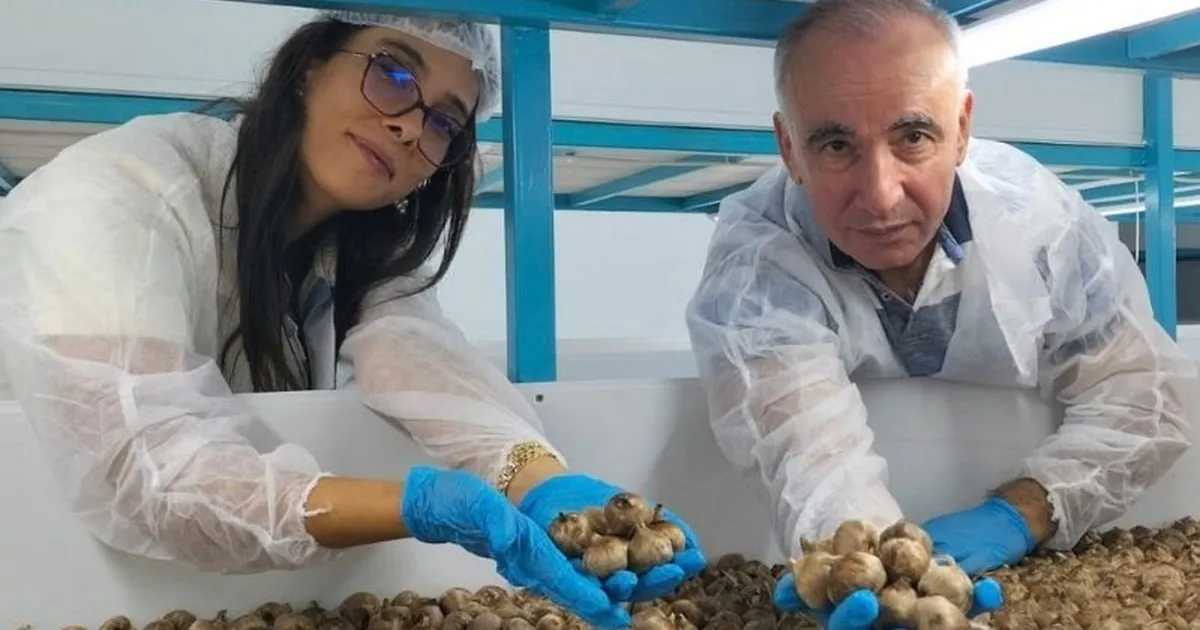
An entrepreneur cultivating saffron using soilless farming in a 100-square-meter indoor facility in Manavgat, Antalya, covered 80% of the investment cost with the 1 kilogram of produce from the first harvest.
Nur Hamit Mayıl, a 61-year-old financial advisor residing in Manavgat district of Antalya, has succeeded in cultivating saffron, a high value-added product, using the soilless farming method. Mayıl, who started production a year ago with the support of the Ministry of Agriculture and Forestry, used 55,000 saffron bulbs in the facility he established in a 100-square-meter indoor area. With 1 kilogram of produce obtained from the first harvest, the producer brought a new breath to the region's agricultural diversity with his innovative production technique.
Nur Hamit Mayıl, who offered his high-quality product at approximately 700 Turkish Lira per gram on the market, achieved significant financial success in his first season. Thanks to sales revenue, the producer covered 80% of his one-year investment amortization target with the first harvest, proving the economic return of saffron farming. Following this economic success, Mayıl began offering professional consultancy services to entrepreneurs looking to enter and invest in the sector.
Explaining the two-stage production model applied at the facility, Mayıl stated that they harvest the spice indoors in November and switch to the bulb multiplication process in the open field at the end of May. Bulbs planted in the soil in December are harvested in May and enter a dormancy period until the end of August. After sterilization and drying, the bulbs are arranged on shelves, and flowering begins in mid-November. The indoor system yields approximately 20% more compared to open fields.
Thanks to production carried out under controlled indoor conditions, risks of pesticide residues and heavy metals in plants are reduced to zero. The quality of the product was certified following detailed tests and analyses conducted in the laboratories of Süleyman Demirel University in Isparta. As a result of the examinations, it was officially documented that the saffron produced at the facility complies fully with first-quality product standards by obtaining the ISO 36-32 certificate.
The high and sustainable quality standard of Turkish saffron is attracting significant interest in the global market. Evaluating demands from abroad, Soilless Saffron Producer Nur Hamit Mayıl shared the process with the following words:
Mayıl emphasized that the total saffron production volume across Turkey is insufficient to meet current market demands and drew attention to the strategic importance of investments in this area. Stating that he has pioneered the establishment of new production facilities in many regions, especially Manisa, Serik, and Manavgat, Mayıl noted that nearly 20 closed-loop saffron facilities have been established across Turkey in the past year and that he continues to provide sectoral consultancy.
| Value | Period | Measure |
|---|---|---|
| 100 square meters | Last year | Facility area |
| 55,000 units | Last year | Saffron bulbs used |
| 1 kg | First harvest period | First harvest yield |
| 700 TL/gram | Sales period | Saffron gram sales price |
| 80% | 1 year | Amortization target realization rate |
| 20% | — | Closed system yield increase |
| 600 units | Last year | Consultation/demand calls received |
| 20 units | Last 1 year | Number of new facilities established |