


Rising Costs Push Farmers into an Planting Dilemma
· GıdaTarım
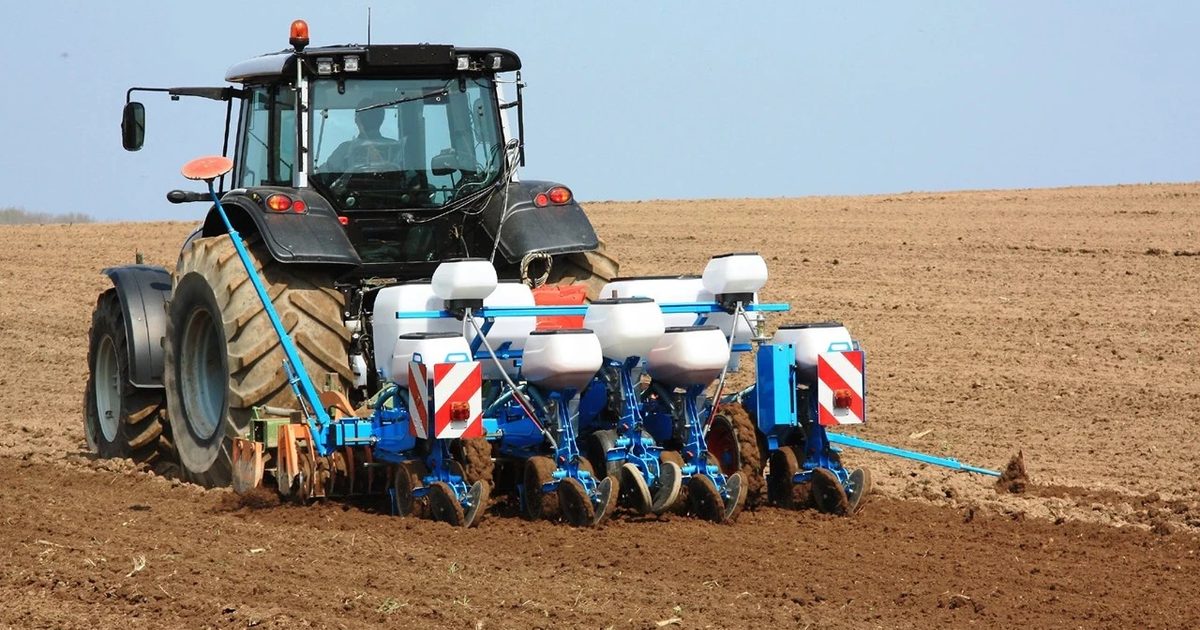
Farmers, facing shrinking profit margins due to escalating input costs, stagnant crop prices, and adverse weather conditions, are preparing for the new planting season amidst financial uncertainty.
Sharp Contraction in Profit Margins
The skyrocketing input costs in the agricultural sector are directly restricting producers' decisions for the new planting period. Despite reaching record production levels in 2026, farmers have been unable to secure the expected revenue from product sales prices for the last two years. Due to increased energy, fertilizer, and irrigation expenses, producers, particularly in the Southeastern Anatolia Region, are rapidly moving away from high-cost irrigated farming practices. The erosion of profit margins in the production process creates a persistent economic uncertainty in the field, pushing producers to seek alternatives.
Expectations Not Met for Alternative Crops
Stating that producers who couldn't find what they expected from standard crops have turned to products like sweet corn, confectionery sunflower, and pumpkin seeds, Prof. Dr. Süleyman Soylu, a faculty member at Selçuk University's Faculty of Agriculture, noted that this shift has led to a price crisis in the open field without contracts. Prof. Dr. Süleyman Soylu evaluated the process with the following words:
'Farmers generally turn to products that are profitable in the market; however, when that product doesn't yield money the following year, the same problem re-emerges. Indeed, this year, prices for 80% of the products farmers turned to did not meet expectations. Only those who planted onions and potatoes in open fields were able to sell at a reasonably good price, while contract growers' prices remained low again. In the vegetable group, eggplant and capia pepper brought some profit to the producer, while for almost all other products, prices remained at break-even or yielded very low profits. The fact that input costs have risen far above product prices and that prices have not increased at the rate of inflation has eroded farmers' profits.'
Climate Calendar Changed Harvest
In addition to cost pressures, changing climate conditions are also significantly transforming the agricultural calendar. Prof. Dr. Süleyman Soylu noted that due to the effects of climate change, planting activities in the Konya Plain have been extending into November for the last 2-3 years. In Central Anatolia, the failure of soil moisture to reach the desired levels is delaying corn harvesting, and similarly, rainfall is slowing down sugar beet harvesting processes. These disruptions in field operations lay the groundwork for producers to be unable to start preparations for the new season on time.
Seed Costs Complicate Planning
Stating that the instability in product prices prevents a radical change in patterns, Hikmet İpar, Chairman of the Provincial Coordination Board of Şanlıurfa Chambers of Agriculture and Chairman of the Hilvan Chamber of Agriculture, emphasized that the support provided to farmers is insufficient. He recalled that the direct support foreseen in the 2027 budget remained at TL 235 billion, while legally this share should correspond to 1% of the national income. Hikmet İpar described the market conditions with the following words:
'Farmers will evaluate the opportunities in the market and plant whatever seeds they have.'
Drawing attention to the price differences in the seed market, Hikmet İpar continued his remarks as follows:
'While normal wheat or barley seeds (without treatment and certification) find buyers at around 20-24 TL in the market, certified seed prices go up to 34-35 TL.'
| Value | Period | Measure |
|---|---|---|
| 80% | 2026 | Rate of products whose price expectation is not met |
| 235 billion TL | 2027 | Direct agricultural support budget |
| 20 TL/kg | 2026 | Uncertified wheat/barley seed price |
| 35 TL/kg | 2026 | Certified seed price |