


FAO Warns Soaring Fertilizer Prices Threaten Harvests in Afghanistan
· FAO Global News
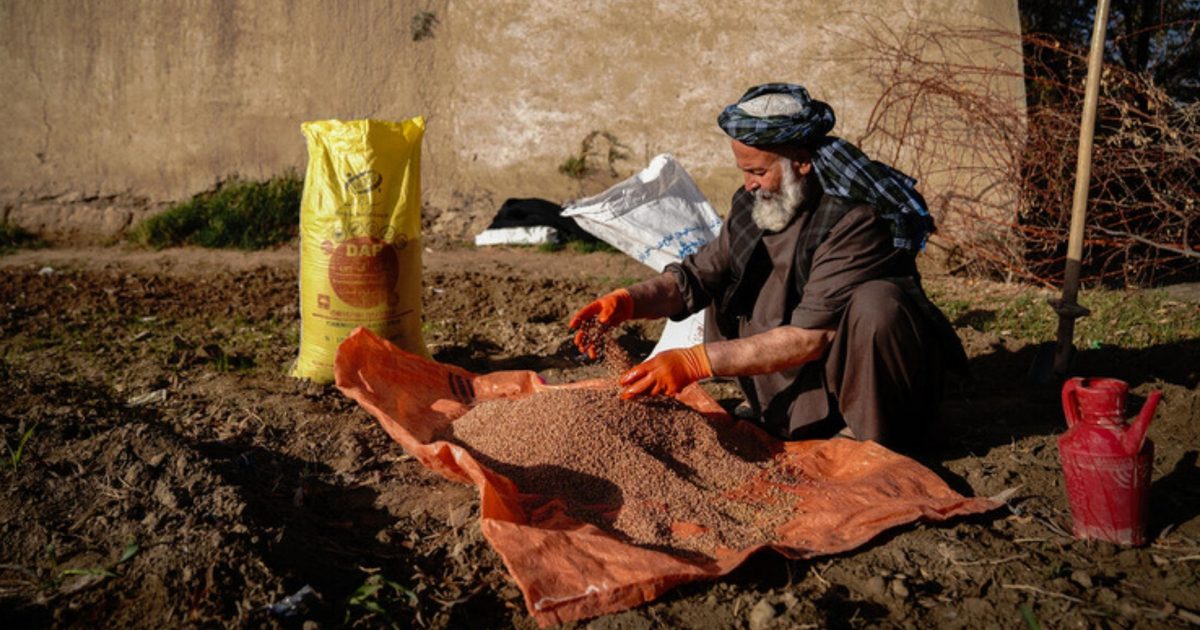
The Food and Agriculture Organization of the United Nations (FAO) announced that the surge in fertilizer prices, triggered by the global crisis, is jeopardizing Afghanistan's 2027 wheat production and the livelihoods of millions of farmers.
Impact of Global Crisis on Afghan Agriculture
According to a statement by the Food and Agriculture Organization of the United Nations (FAO), rising fertilizer prices are hindering Afghan farmers' access to essential inputs, jeopardizing the country's 2027 wheat harvest. This sharp increase in fertilizer prices follows supply disruptions in global markets caused by the 2026 Middle East crisis. Wheat production in Afghanistan, which naturally has low soil fertility, is dependent on the application of sufficient amounts of diammonium phosphate (DAP) and urea.
Fertilizer Cost Pressure on Winter Wheat
Winter wheat constitutes Afghanistan's staple food product and accounts for more than two-thirds of the country's annual fertilizer demand. The FAO states that due to increasing costs, producers may be forced to reduce their fertilizer use or shrink their cultivated areas. This situation is projected to lead to reduced yields, decreased household access to food, and increased debt burdens. The impacts are reported to be felt most severely by vulnerable groups such as female-headed households and returning families.
Input Dilemma Faced by Local Producers
As rising input costs reflect on the ground, Richard Trenchard, FAO Representative in Afghanistan, summarizes the situation with the following words:
"Afghanistan’s farmers have an opportunity to benefit from a stronger agricultural season after a harsh drought year, but rising fertilizer prices threaten to put that opportunity out of reach for many of the families who need it most. This is not a supply crisis; it is an affordability crisis at one of the most important moments in the agricultural calendar. Fertilizer is available, yet too many farmers cannot afford to buy it."
Farmer Din Mohammad from Nimroz province, conveying the scale of the crisis on the ground, states that in the past they could obtain inputs by borrowing, and adds:
"In the past, shopkeepers that we knew used to lend us fertilizers. Now, nobody lends us anything. If I don’t use fertilizers, I will not get any benefit from my land."
Farmer Wakil, who also engages in agricultural production in the same region, expresses his desperation with the following words:
"I don’t know whether to take care of my family or spend money on seed and fertilizer."
Yield Loss and Narrowing Window
Emphasizing that agricultural inputs are directly interconnected and that time is running out for intervention, FAO Afghanistan Representative Richard Trenchard issues the following warning:
"Years of investment by FAO and its partners have helped strengthen Afghanistan’s seed system and expand farmers’ access to quality seed. But seed and fertilizer go hand in hand. Without fertilizer, many farmers will be unable to achieve the yields needed to support their communities. The window for action is narrow. Farmers are making decisions now about how much land they can cultivate and whether they can afford the inputs needed for a successful harvest. Timely support is far more cost-effective than responding to the consequences of lower food production and increased humanitarian needs next year."
Institutional data proves that certified seeds, when combined with adequate fertilization and correct agricultural techniques, increase wheat yields by 32.8 percent.
Subsidized Support Model with IDEA Platform
FAO is implementing a subsidy program through local private sector suppliers to enable producers to access essential inputs such as fertilizers and seeds. The IDEA (Identification, Delivery and Empowerment Application) platform, FAO's biometric registration and electronic voucher system, forms the basic infrastructure for this process. According to the organization's statement, over 100,000 farmers have already been registered in the system for the upcoming planting campaign. Through this mechanism, support is planned to be delivered quickly through a network of specialized seed and fertilizer dealers.
Financing Needs and Food Security
It is stated that financing provided by mid-September will ensure that farmers have timely access to seeds and fertilizers before the planting season. FAO emphasizes that timely support will reduce future humanitarian aid costs and preserve food security gains. In Afghanistan, where a large portion of the population relies on agriculture for their livelihoods, preventing production losses is critical for sustainable rural development and achieving harvest targets.