


Agriculture and Forestry Ministry Unveils Fire and Food Strategies
· TMO
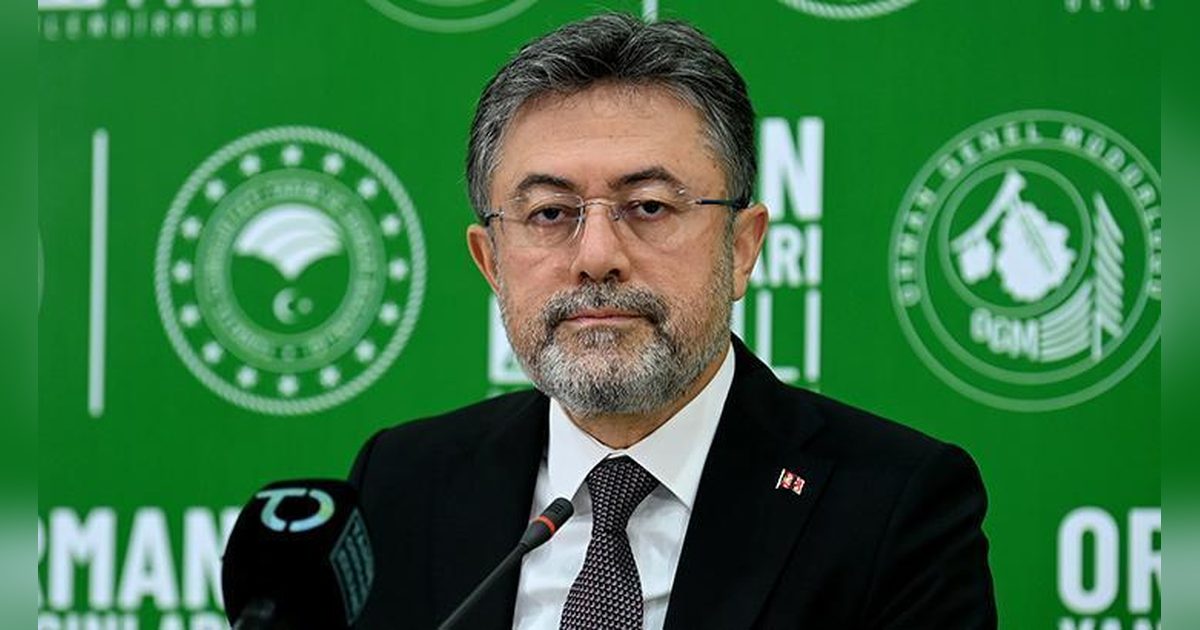
Minister of Agriculture and Forestry İbrahim Yumaklı shared details on artificial intelligence-supported systems for combating forest fires, preparations for the new Wholesale Market Law, an instant disclosure model for food safety, and agricultural production planning.
AI Applications in Fire Management
Minister of Agriculture and Forestry İbrahim Yumaklı announced that advanced technological tools are being deployed in the fight against forest fires. According to the Ministry's statement, the Decision Support System, powered by artificial intelligence infrastructure, models the progression direction of fires in advance. Yumaklı stated that high-risk areas are identified a week ahead, and field personnel are dispatched based on this data. Digital tracking systems have been integrated into existing operational mechanisms during the forest fire preparedness phase, and this integration is continuously being improved.
Ecosystem-Based Reforestation Principles
Minister Yumaklı stated that suggestions for species change in post-fire rehabilitation efforts are being evaluated in scientific workshops, and reforestation is carried out according to the region's native flora. Emphasizing the protection of forest ecosystems as a fundamental rule, Minister of Agriculture and Forestry İbrahim Yumaklı said:
'You cannot change an ecosystem that is millions of years old.'
According to the Ministry's assessments, the unique dynamics of the Mediterranean, Aegean, and Black Sea regions are being preserved. It was noted that interventions should not be made in the natural cycle of pine trees, which store their seeds during fires and release them into the soil afterward, and that work is conducted in line with scientific data.
Fire Education Mobilization in Rural Neighborhoods
Coordinated efforts are underway with educational institutions to increase fire awareness in forest villages. Minister of Agriculture and Forestry İbrahim Yumaklı, who stated that they are visiting high-risk rural settlements individually, conveyed his warnings to villagers with the following words:
'If a fire breaks out here during that risky season, and if 100-year-old trees burn, no one in this village will live to see those trees become the same again.'
According to the Ministry's statement, water tankers have been distributed to forest villages to enable first response until teams arrive, and practical usage training has been provided to the local population.
Legal Sanctions for Arson
Presenting the law enforcement reports on the causes of forest fires, Minister Yumaklı noted that the rate of arson in the records is 3%. Yumaklı gave the example of a firecracker thrown into a forest in Kahramanmaraş, emphasizing that such incidents cannot be considered accidents. According to the Ministry's statement, severe legal penalties are applied to perpetrators who intentionally set forests on fire. All intervention expenses incurred from public resources during firefighting operations are identified through legal units and recovered from the individuals who started the fire.
Carbon Sinks for Emission Reduction
In line with Turkey's 2053 net-zero emission projection, the expansion of carbon sink areas is targeted. Minister Yumaklı stated that all forests absorb carbon, but in newly established areas, special silvicultural treatments will be applied with the selection of coniferous or deciduous saplings. The aim is to increase carbon sequestration capacity through these methods. According to Ministry data, techniques that do not lead to additional carbon emissions into the atmosphere are preferred when establishing afforestation areas, focusing on the goal of zeroing emissions.
Unmanned Aerial Vehicles in Fire Response
Yumaklı stated that Bayraktar TB2 unmanned aerial vehicles are currently being used for fire detection and announced a new project with defense industry firms for direct firefighting. He mentioned that similar applications worldwide are used in flat terrains, while Turkey is working on unmanned platforms capable of dropping water in rugged geographies. Yumaklı thanked BAYKAR for the technical integration of current detection UAVs and announced that economic returns could be achieved internationally with the implementation of water-dropping unmanned aerial vehicles.
Hobby Garden Inspections on Agricultural Lands
Minister Yumaklı recalled that a legal regulation was enacted by the Turkish Grand National Assembly to prevent the fragmentation of agricultural lands and unauthorized construction, emphasizing that the issue of hobby gardens is an urban planning regulation problem. According to the Ministry's statement, authorized structures are not hindered in agricultural production areas, but illegal construction is not permitted. Yumaklı stated that sanctions for the protection of agricultural lands continue after the legal regulation and that legal proceedings will be implemented uncompromisingly within the framework of current legislation for non-compliant structures.
Reducing Intermediary Costs with the Wholesale Market Law
Yumaklı announced that preparations for the Wholesale Market Law are nearing completion in the Food Committee and the AK Party Parliamentary Group, and the regulation will soon be submitted to the commission. The new system envisions producer unions and cooperatives having a more effective role in wholesale markets and being able to open independent sales points outside the markets. Furthermore, large retail outlets will be encouraged to purchase directly from producers. Yumaklı stated that logistics costs will be reduced by expanding contract farming and rapidly delivering products from field to consumer.
Grain and Pulses Board's Hazelnut Purchases
Addressing price differences in the hazelnut market, Minister Yumaklı noted that the Grain and Pulses Board (TMO) continues its purchases without interruption at the price announced at the beginning of the season. According to the Ministry's statement, TMO purchases all hazelnuts that meet the quality and yield criteria from producers. Yumaklı emphasized that the lower prices observed in the free market stem from differences in product quality and yield, and that producers who comply with institutional purchasing conditions find value for their products under state guarantee.
Instant Disclosure Mechanism in Food Inspections
Providing information on inspection processes in the food market, Minister of Agriculture and Forestry İbrahim Yumaklı expressed the policy against those producing in violation of regulations with the following words:
'Food safety has always been our red line. There will be no compromise on this matter.'
Yumaklı explained that administrative fines are imposed on firms engaging in imitation and adulteration, and non-compliant products are withdrawn from the market, emphasizing that the instant disclosure system is the most deterrent penalty. He stated that they are aware of the difficulty in building a brand, but unfair gains cannot be made at the expense of consumer health, and inspections will continue with determination.
Pesticide Use and Fruit Exports
Yumaklı reported that agricultural pesticide residues were discussed in contacts with the European Commission and announced a 74% decrease in RASFF notifications over the last 3 years. According to Ministry data, pesticide use per hectare is 2.3 kilograms in Turkey, compared to 3.2 kilograms in the EU. Yumaklı recalled that as part of agricultural production planning, planting fruit trees on areas with less than a 6% slope has been prohibited since 2023, and stated that through discussions with Russia, truck analysis rates at border crossings have been reduced to 20% and 10% levels. Source: Kolluk kuvvetleri raporları, Tarım ve Orman BakanlığıProminent Ratios in Ministry Data