


Watershed-Based Permit Period Begins for Agricultural Production
· Tarım Dünyası
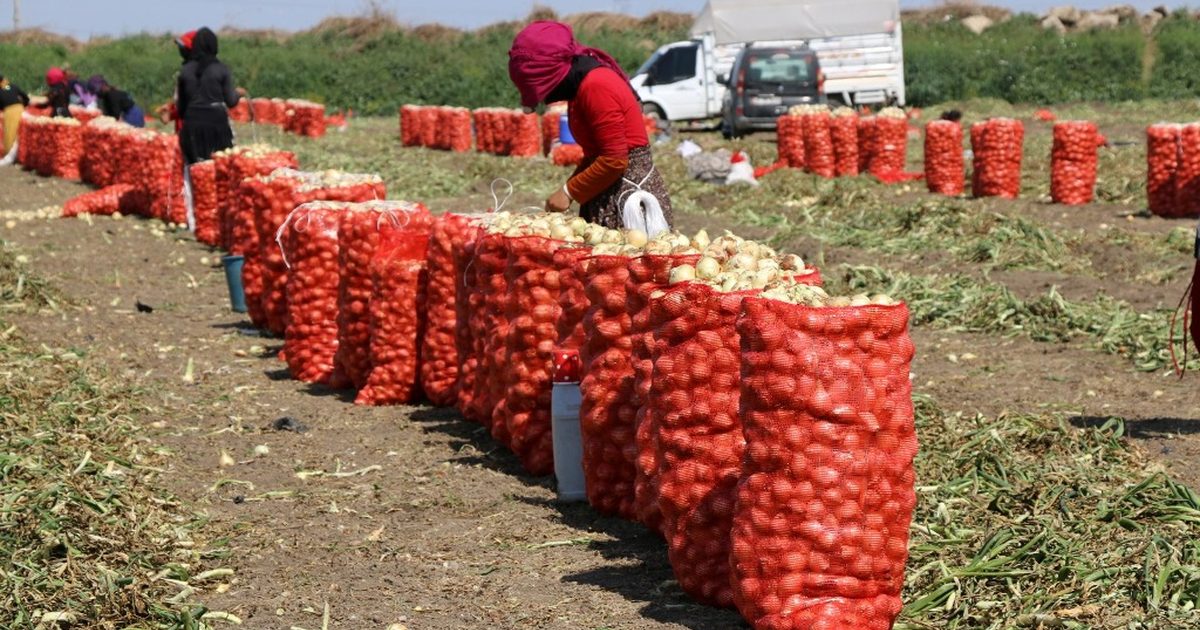
The Agricultural Production Planning Board of the Ministry of Agriculture and Forestry has activated a mandatory permit mechanism tied to watershed product patterns and crop rotation for the 2027-2029 period of plant production planning.
2027 Period Decisions in Production Planning
The Agricultural Production Planning Board, convened under the Ministry of Agriculture and Forestry, has made new decisions regarding plant production planning for the 2027-2029 period. The committee, chaired by Deputy Minister Prof. Dr. Ahmet Gümen, announced that much more binding rules will be introduced for producers starting in 2027. In line with the decisions taken, watershed-based product patterns and production quotas have been linked to an official approval mechanism. Officials aim to increase agricultural discipline within the determined timeline and ensure that field production is carried out in full alignment with central objectives.
Legal Infrastructure and Support Model
The basis for this process lies in the law amendment accepted by the Grand National Assembly of Turkey on March 23, 2023. Subsequently, the Regulation on Agricultural Production Planning was published and entered into force on September 14, 2023. According to data from the Official Gazette, plant production supports have been reorganized based on coefficients in 3-year periods, covering the 2025-2027 period. Furthermore, a formal protocol was signed between the Ministry and TÜİK (Turkish Statistical Institute) to conduct a general agricultural census, which had not been done for 22 years, thereby strengthening the database.
Minimum and Maximum Production Limits
During the board meeting, annual minimum and maximum production quantities for strategic product groups were clarified in line with the targets of the 12th Development Plan and the Medium-Term Program. The General Directorate of Agricultural Reform made an institutional statement on the matter:
"Following evaluations by the Board within the framework of the Twelfth Development Plan (2024-2028), the Medium-Term Program (2026-2028), the 2026 Presidential Annual Program, the Ministry's Strategic Plan (2024-2028), and national needs, of the 3-year plant production plans proposed by Provincial Planning Boards and submitted to the Board; the annual minimum and maximum production quantities of products and product groups within the scope of planning, along with the watershed product pattern, have been determined in line with the Plant Production Planning covering the 2027-2029 period. Within this framework, only products included in the watershed product pattern list and compliant with crop rotation rules within the production planning proposed by provincial planning boards will be granted production permits; operational procedures related to permit processes will be carried out by Provincial and District Agriculture and Forestry Directorates. It was unanimously decided to submit to the Ministry for the implementation of the regulations made with this decision starting from the 2027 production year."
Watershed Product Pattern and Crop Rotation
In the new model, from 2027 onwards, the cultivation of plants not included in the district-based watershed list will not be approved under any circumstances. The cultivation of 13 strategic products, which are within the Ministry's planning scope but not on the watershed list, will be completely prohibited. For example, if barley, wheat, or corn are permitted in a district, but safflower, dry beans, or potatoes are not on the list, these products cannot be planted. Farmers' planting permits will be directly controlled by Provincial and District Agriculture and Forestry Directorates, and the crop rotation condition will be required.
Water-Focused and Climate-Adaptive Model
The new approach adopted by the planning board is structured around a framework that centers on limited water resources and aims for adaptation to changing climate conditions. The institutional statement published by the General Directorate of Agricultural Reform outlined the objectives as follows:
"At this strategic turning point; the aim is to establish a sustainable structure that ensures adequate and balanced nutrition for the country's population, uninterrupted food supply security, meeting critical inputs such as feed raw materials from domestic sources, and protecting human, animal, and environmental health."
Restrictions are planned to be implemented for water-intensive products in basins with a high risk of drought.
Marketing Problems and Industrial Supply
Another primary objective of production planning has been announced as eliminating producers' marketing problems and providing a regular supply to domestic industry. The General Directorate of Agricultural Reform included the following assessments in its institutional statement:
"Along with ensuring the sustainable use of natural resources, the aim is to increase yield and quality in production, utilize resources more effectively, and achieve a lasting increase in agricultural output. Through this planning, it will be resolutely pursued to prevent the marketing problems our producers have faced to date, increase their welfare levels, and ensure complete continuity in the supply of raw materials needed by agriculture-based industry."
On-Field Application and Import Pressure
Despite official statements, producers on the ground face significant marketing difficulties due to rising costs, low purchase prices, and export restrictions. Particularly, the rapid opening of import channels during price fluctuations in products like dry onions, which are on the planning list, negatively affects the income stability of domestic producers. High input costs and trade restrictions weaken the competitiveness of industrialists, while farmers being forced to sell their products below cost raises question marks about the plan's implementation in the field.
Decision-Making Processes and Representation
The composition of the Agricultural Production Planning Board, which includes only ministry general directors and bureaucrats, is being closely monitored by sector stakeholders. The direct absence of farmer representatives, commodity exchanges, industrialists, or exporter unions on the board makes it difficult for decisions made at the desk to align with field realities. The institutional statement shared by the General Directorate of Agricultural Reform states that the objective is to protect the producer:
"In conclusion; all of our country's resources will be transformed into production in the most effective and efficient manner, our producers will be protected and strengthened with the understanding of 'our people first, our farmer first,' while ensuring they receive their rightful share from increasing welfare, and our supply security in strategic products will be fully guaranteed."
However, sector stakeholders demand that the participatory structure within the board be expanded.
Impact Analysis and Future Expectations
Experts argue that the current 2024-2026 implementation period should be subjected to a comprehensive impact analysis before the strict permit processes, set to take effect in 2027, are introduced. It is stated that new restrictions implemented without analyzing past shortcomings, surplus or deficit in supply for certain products, could lead to additional risks in the market. To ensure sustainability in agricultural production and protect food security, it is of great importance that bureaucratic permit mechanisms are carried out in full harmony with on-field production practices.