


Harvest Begins for Waterless Yayla Melons in Menteşe
· muglayenigun.com
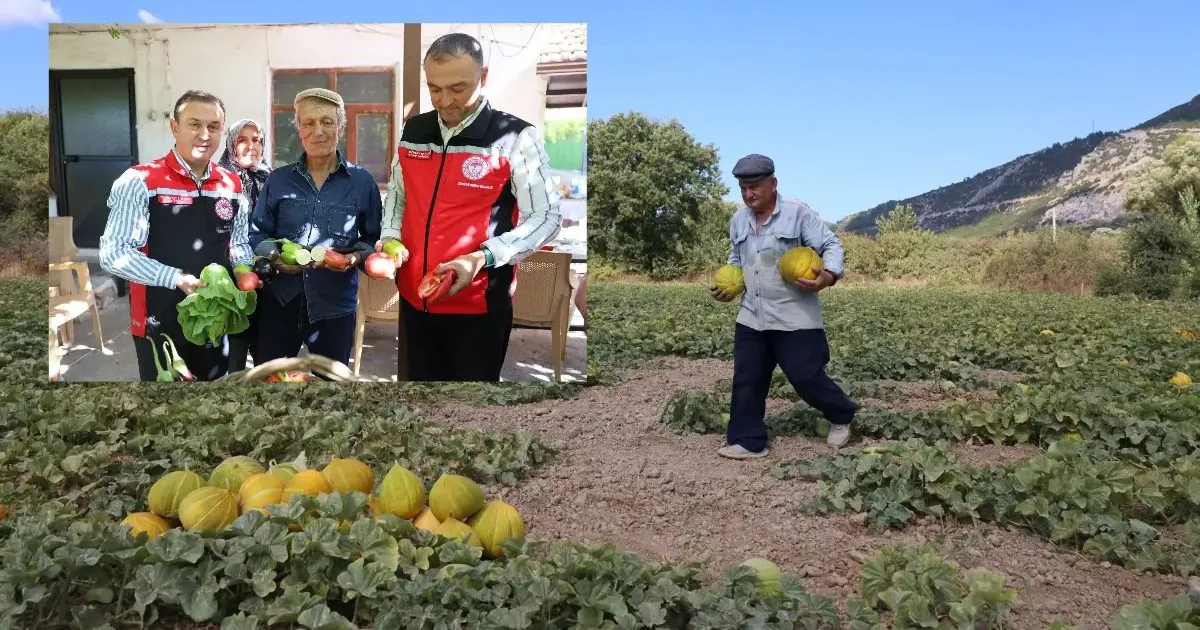
Harvest season has commenced for the traditional Yayla melon, cultivated using age-old methods without any irrigation in Muğla's Menteşe district, alongside heirloom vegetables.
The harvest period for the region's indigenous traditional Yayla melon and heirloom vegetables has begun in Karabağlar Plateau, located in Muğla's Menteşe district. The harvest program was attended by Muğla Provincial Director of Agriculture and Forestry Seyfettin Baydar, Head of Plant Production and Plant Health Branch Süreyya Can, Menteşe District Director of Agriculture and Forestry Eren Kaçmaz, and technical personnel. Within the program, the heirloom vegetable garden of Mehmet Yıldız and the Yayla melon field of Halise Dural were inspected on-site. Provincial Director Seyfettin Baydar emphasized the importance of Karabağlar Plateau's geomorphological structure and traditional drainage channels, known as 'irim,' for regional agriculture.
Yayla melon cultivation, carried out on approximately 400 decares primarily in Karabağlar Plateau and in the Düğerek, Ortaköy, and Orhaniye neighborhoods, is among the region's most significant agricultural activities. Planted in May when the soil is ready, this special product completes its entire growth cycle without any irrigation. After two rounds of hoeing and hilling, it is harvested in late August and early September. Melons, weighing approximately 3 to 4 kilograms, are left in the field for a day, their stems are sealed, and then they are hung for winter storage or offered to the market.
Yayla melons, preserved for centuries in Muğla's agriculture, continue to be produced with local varieties named Paris, Pıtraklı, and Hırsız Almaz. The Paris variety, with its sealed base and rich aroma, can be stored without spoilage until April. Pıtraklı melon, known for its textured and thin-skinned structure unique to Karabağlar Plateau, stands out with its distinctive aroma. The Hırsız Almaz variety, which yields under waterless farming conditions, is cultivated by producers as an indispensable cultural heritage due to its unique internal flavor, despite its irregular external appearance.
Within the scope of projects aimed at Enhancing the Use of Agricultural Lands (TAKE), Kırkağaç melon seeds, with a 75% Ministry subsidy, were delivered to farmers in cooperation with TAGEM Ege Agricultural Research Institute. This seed variety, known for its round, striped form and firm flesh, can yield fruits weighing 7 to 8 kilograms. This heirloom seed, preserved since 1963, allows producers to harvest their own seeds for subsequent seasons. The variety, which can grow in all types of soil due to its resilient nature, strengthens the region's product diversity.
Within the framework of the Heirloom Vegetables Project, launched in 2021 with the support of the General Directorate of Plant Production, 5,560,000 seedlings were distributed by 2025, utilizing 8,255,000 TL in resources. In 2026, with a budget of 2,177,000 TL, 500,000 seedlings and 40 kilograms of seeds, including 200,000 tomato, 210,000 pepper, 90,000 eggplant seedlings, and 20 kilograms of melon, 20 kilograms of okra, and 1 kilogram of lettuce seeds, were delivered to 500 producers.
To meet the roughage needs of livestock, corn for silage was provided to 100 producers for use on 1,000 decares, and sorghum seeds were supplied to 94 producers for 2,000 decares in 2026. Drip irrigation was preferred for over 50% of the corn for silage plantings. The Muğla Provincial Directorate of Agriculture and Forestry stated the following in its institutional announcement:
| Value | Period | Measure |
|---|---|---|
| 400 decares | — | Yayla melon planting area |
| 3 kilograms | — | Yayla melon average weight |
| 7 kilograms | — | Kırkağaç melon weight |
| 5,560,000 units | 2021-2025 | Total number of seedlings distributed |
| 8,255,000 TL | 2021-2025 | Total budget for Heritage Vegetables Projects |
| 2,177,000 TL | 2026 | Project budget for 2026 |
| 500,000 units | 2026 | Heritage vegetable seedlings distributed in 2026 |
| 40 kilograms | 2026 | Heritage seeds distributed in 2026 |
| 500 people | 2026 | Number of producers receiving seedling and seed support |
| 1000 decares | 2026 | Silage corn planting area |
| 2000 decares | 2026 | Sorghum seed planting area |