


Strengthening El Nino Threatens Global Agricultural Production
· Anadolu Ajansı
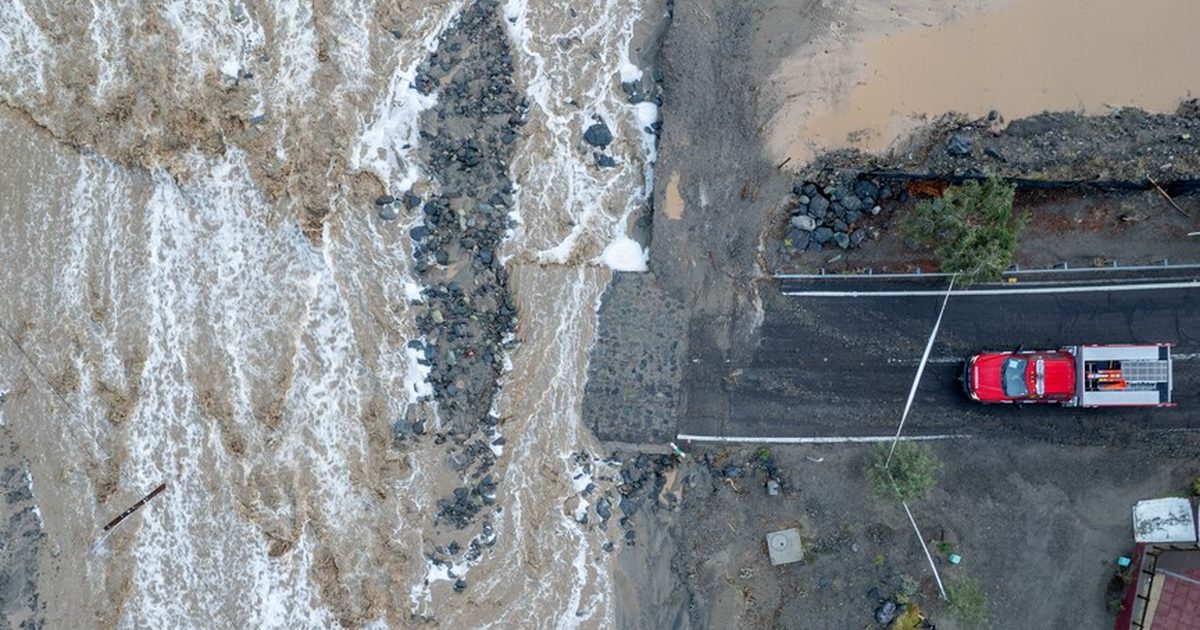
Record sea surface temperatures in the equatorial Pacific indicate a strong Super El Nino phase, posing significant risks to global food supply and agricultural yields.
Super El Nino Alert Issued
The El Nino weather phenomenon, developing over the equatorial Pacific Ocean and disrupting global climate dynamics, has reached critical levels again. The American National Oceanic and Atmospheric Administration (NOAA) announced that sea surface temperatures officially began to rise in June. According to the institution's analysis, the process is confirmed by sea water temperatures remaining above the normal by 0.5 degrees Celsius for five consecutive periods. NOAA experts predict that the current atmospheric mobility will, with over 90% probability, transform into a very strong Super El Nino phase during the autumn and winter months, lasting until the spring of 2027.
Expectation of Record Temperature Anomaly
Measurements in the Pacific Ocean waters officially confirmed that temperatures in July were running 2 degrees Celsius above seasonal norms. According to NOAA modeling, this anomaly is expected to accelerate further in October-November-December, climbing above 2.5 degrees Celsius. The data obtained indicates that the current El Nino scenario has a 69% probability of being the most severe natural event on record. While a 2-degree warming of the sea surface is termed 'Super El Nino,' similar processes in 1982-1983, 1997-1998, and 2015-2016 caused severe devastation worldwide.
Global Climate and Atmospheric Change
As the Pacific Ocean covers approximately one-third of the Earth's surface, this warming creates a massive energy transfer for the atmosphere. According to scientific analyses, a strong El Nino directly increases the global average air temperature by 0.2 degrees Celsius. The resulting increased evaporation causes jet streams to shift direction, moving the normally heavy rainfall belt of the Western Pacific eastward. A recent study conducted by Imperial College London in the UK reveals that, with the impact of the climate crisis, sea surface temperature anomalies have intensified by about 10% compared to the pre-1960 period.
Threat to Agriculture and Food Security
Agricultural production and global food stocks are among the areas most severely affected by climatic oscillations. The United Nations Food and Agriculture Organization (FAO) warned that the probability of drought in agricultural lands in South and Southeast Asia, Central America, the Caribbean, the Sahel, and Southern Africa has exceeded 50%. Furthermore, the World Food Programme (WFP) announced that strengthening atmospheric imbalances will push at least 49 million people to the brink of acute food insecurity by the end of 2027. While floods and landslides are expected in Peru and Ecuador, drought threatens harvests in Australia and India.
Trillion-Dollar Economic Risk
Droughts and extreme rainfall caused by El Nino not only lead to agricultural yield losses but also shake global macroeconomic balances. According to an academic study by Dartmouth College researchers in the US, published in the prestigious journal Science in 2023, a similar El Nino wave in 1997-1998 caused a massive global income loss of approximately $5.7 trillion in the following 5-year period. Considering the current fragility of supply in food markets and energy costs, a similar super cycle is expected to exert much stronger pressure on commodity prices.
Mediterranean Basin and Turkey Impact
Although Turkey is not directly at the epicenter of El Nino as it is not located in the tropical belt, it faces indirect consequences of atmospheric oscillations. According to general meteorological trends, El Nino years typically experience warmer and drier autumn and winter seasons in the Mediterranean basin. This situation increases the risk of agricultural drought and can negatively affect the occupancy rates of irrigation dams. Additionally, the prolonged fire season due to sustained temperature anomalies threatens forest resources. The potential subsequent cooling La Nina phase remains uncertain.