


Ocean Degradation Costs Could Exceed $400 Billion
· Sabah Ekonomi
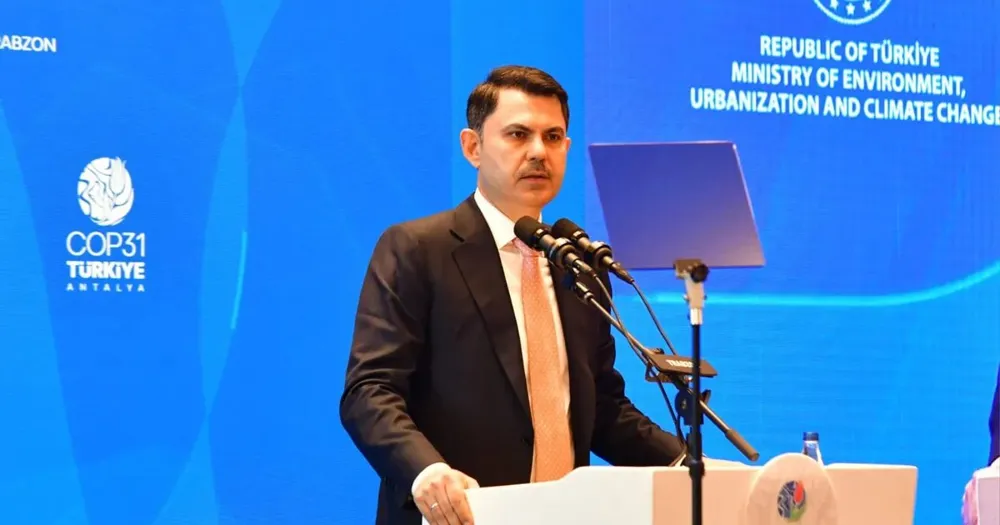
At a summit held in Trabzon, it was stated that the damage to marine ecosystems could cost the global economy over $400 billion, while green port and decarbonization targets were announced.
Climate and Ocean Summit in Trabzon
The Blue Dialogue - Climate Change and Resilience Program in Oceans and Seas, and the High-Level Ministerial Session on Oceans, Climate, and Blue Economy, were held with broad participation in Trabzon. The summit was attended by the COP31 President and Minister of Environment, Urbanization and Climate Change Murat Kurum, Minister of Transport and Infrastructure Abdulkadir Uraloğlu, Trabzon Governor Tahir Şahin, AK Party Trabzon deputies Adil Karaismailoğlu, Yılmaz Büyükaydın, Vehbi Koç, Metropolitan Municipality Mayor Ahmet Metin Genç, and numerous international representatives. The meeting comprehensively discussed the impacts of the global climate crisis on marine life and the blue economy.
Blue Homeland and Marine Ecosystem
At the opening of the summit, Minister of Transport and Infrastructure Abdulkadir Uraloğlu touched upon the cultural and economic dimensions of the seas, stating:
'I am very pleased to be with you on the occasion of the Blue Dialogue program, where we will listen to the cry of the oceans. As a nation that best understands the language of the sea and speaks the same language as the sea among the Mediterranean basin countries, our viewing our seas as our blue homeland is a natural consequence of this. We are so passionate about our blue homeland that we are a nation that names their children 'Deniz, Ege, Derya, Bahri.' Some of our surnames are 'Karadeniz' (Black Sea), some are 'Akdeniz' (Mediterranean). Therefore, while taking steps that will increase our country's global competitiveness, we cannot overlook regulations and infrastructure facilities for the cleanliness of our seas and coasts, and the protection of their flora and fauna. Holding this program in Trabzon, one of the strongest gateways to the seas, means taking the pulse of all our seas, especially the Black Sea.'
Climate Change and Daily Risks
Emphasizing that the climate crisis has moved beyond theoretical discussion to become central to daily life, Minister of Transport and Infrastructure Abdulkadir Uraloğlu made the following assessment:
'Coastal erosion, rising seawater temperatures, extreme weather events, and ecosystem pressure are not theoretical issues here; they are daily realities. As we saw in the recent flood disaster in Nepal, climate change, in particular, not only affects our daily lives but also causes significant loss of life and adverse economic consequences. Today, this change is human-induced, linked to reasons such as the use of fossil fuels, forest fires, rising carbon footprint rates, and excessive consumption habits. As global production continues and energy demand increases, country administrations and the business world need to be bold and coordinated to meet climate change targets. Today, we have gathered for the future of our oceans and seas. As a ministry, in all our activities, we focus on increasing the use of renewable energy, reducing transport-related greenhouse gas emissions, promoting low-emission transportation modes, and creating the necessary infrastructure. Our vision shares many common grounds with the fundamental approaches of the European Union, such as the European Green Deal, the Paris Climate Agreement, and the European Climate Law.'
Green Transformation Steps in Maritime Transport
Minister of Transport and Infrastructure Abdulkadir Uraloğlu made the following statements regarding the green transformation in the maritime sector and fleet capacity:
'As in every mode of the transport sector, we continue to take concrete steps for greenhouse gas monitoring and reduction in maritime transport. 88% of global cargo transport and 85% of Turkey's foreign trade are carried out by sea. With 218 port facilities, 85 active shipyards, our Turkish-owned merchant fleet, one of the world's largest, and over 144,000 seafarers, maritime transport is a backbone of both our economy and our climate policy. Our shipbuilding industry ranks 7th globally in orders, 2nd in mega yachts, and is a leader in Europe in ship recycling. Transforming this capacity into green and smart logistics means combining the second century of cabotage with the Turkish Century. Reducing ship-based emissions, next-generation fuels, energy efficiency, green transformation in ports, and protecting blue carbon ecosystems are priorities for our ministry. We currently have 4 ports with Green Port Certification. With our legislation, we have made it mandatory for certain coastal facilities that will be newly built or expand their existing area by more than 25% to comply with green port criteria. This means we will see a green cruise port by the end of 2028 and a green container port by 2030 in our country. With our project 'Decarbonization in Maritime and Support for Green Maritime Transport' accepted by the EU, we are receiving grant and long-term low-interest loan support from the European Bank for Reconstruction and Development for our sector. Recently, 2 of our ports will establish electricity supply systems for their ports with grants received from this source. We invite all our seafarers to benefit from the grants in this project. The hosting role undertaken by Turkey during Minister Murat Kurum's COP31 Presidency provides a concrete opportunity to bring our maritime policies to the implementation ground of global climate negotiations.'
The Enormous Economic Cost of Ocean Degradation
Minister of Environment, Urbanization and Climate Change Murat Kurum conveyed the enormous risks facing ocean and marine ecosystems with the following words:
'In our paradise homeland, surrounded by seas on three sides, the Black Sea is our most precious asset. In this regard, our important meeting here in Trabzon is one of the most meaningful stops on our COP31 journey. Because both the Black Sea and all our seas are negatively affected by climate change; the blue lungs of our common home, the world, are practically sounding the alarm. I say it clearly and openly. The future of our oceans, which are the source of livelihood for over three billion people and produce half of the air we breathe, is under enormous risk. According to research, 'the economic cost of degradation in ocean ecosystems could exceed $400 billion by 2050.' If the necessary measures are not taken, our world will face serious risks both environmentally and economically, socially, and geopolitically. At the current point, the existing efforts are insufficient to solve the multidimensional problems facing the oceans. On the other hand, we are also seeing progress. A 15% improvement in fish stocks has been recorded in the Mediterranean and Black Seas. Technological studies like digital twin applications are advancing, and blue economy applications are becoming increasingly widespread. However, these positive developments remain limited in solving the major problem we face.'
15% Improvement in Fish Stocks
According to data announced by the Ministry, a 15% recovery in fish stocks has been detected in the Mediterranean and Black Sea basins as a result of implemented regional conservation policies. This development is considered a critical gain for the fishing sector and marine biological resources. However, rising seawater temperatures above the global average continue to pressure species' migration routes and breeding cycles. Officials stated that conservation inspections will continue uninterrupted to ensure the sustainability of the improvement achieved.
Sustainable Development and Blue Economy
Turkey's marine conservation strategies are structured in line with Goal 14 of the United Nations Sustainable Development Goals, 'Life Below Water.' Minister of Environment, Urbanization and Climate Change Murat Kurum made the following call regarding the implementation of the process:
'Let's overcome the barriers to the solution, let's look at the issue holistically, and let's overcome every problem with a common and determined will.'
Within this vision, the area of marine protected areas is being increased, digital twin decision support models are being implemented, and blue economy applications are being integrated with regional development plans.
Coastal and Marine Conservation Projects
Innovative systems are being implemented to protect the ecological balance of the seabed. According to data from the Ministry of Environment, Urbanization and Climate Change, the Buoy System, which will serve 856 boats in 17 bays in the Fethiye-Göcek region, was introduced on September 8. This mechanism prevents boats from damaging seagrass meadows and fish spawning grounds by dropping anchors. Lakes and coastlines are scanned with real-time digital systems, and deterrent administrative sanctions are applied against pollution sources.
Global Call to Action within COP31 Framework
Turkey established the Mediterranean Climate Adaptation Capacity Center, proposed in 2021, to become operational with international consensus by 2026. The data obtained at the Trabzon meeting and the 'Blue COP' approach will be brought to the implementation ground of the COP31 global climate negotiations. The aim is to strengthen multilateral cooperation in blue finance, data sharing, and marine conservation policies with all international partners, especially Australia and Pacific island nations.
| Value | Period | Measure |
|---|---|---|
| 88% | — | Share of sea route in global cargo transportation |
| 85% | — | Share of sea route in Turkey's foreign trade |
| 218 units | — | Number of port facilities |
| 85 units | — | Number of active shipyards |
| 144 thousand | — | Number of seafarers |
| 7th rank | — | Global order rank in shipbuilding industry |
| 2nd rank | — | World rank in mega yacht orders |
| 4 units | — | Number of Green Port Certified ports |
| 3 billion people | — | Global population living off oceans |
| 400 billion dollars | By 2050 | Estimated economic cost of ocean ecosystem degradation |
| 15% | — | Improvement in fish stocks in the Mediterranean and Black Seas |
| 17 bays | 8 September 2026 | Number of bays in Fethiye-Göcek Buoy System |
| 856 boats | 8 September 2026 | Boat capacity in Fethiye-Göcek Buoy System |