


Seymen Melon Preserves High Aroma With Waterless Farming
· NTV Ekonomi
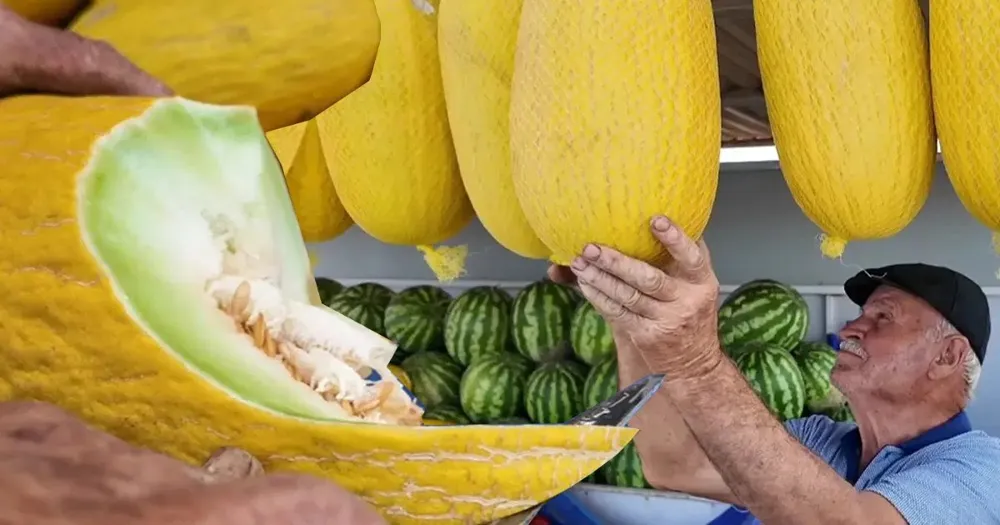
In Çorlu, Tekirdağ, the geographically indicated Seymen melon is produced with zero irrigation and traditional farming practices, sacrificing tonnage for high aroma and a long shelf life.
Special Aroma Achieved Through Waterless Farming
The Seymen melon, registered with geographical indication in the Seymen neighborhood of Çorlu district in Tekirdağ, stands out with its unique aroma and traditional production method. Producers, continuing their ancestral profession, emphasize that the product gains flavor under arid conditions. Evaluating the production conditions, Melon Producer Serhat Civan stated:
'The market value is a bit lower because we practice zero irrigation. Why Seymen melon? One of the factors is actually the meteorological conditions; we receive very little summer rainfall. Our yellow melon doesn't really like a lot of rain either. Even when over-watered, you won't find this aromatic taste.'
Quality Over Yield Preference
In Seymen melon cultivation, producers prioritize preserving product quality and flavor over high tonnage. Melon Producer Serhat Civan explained that while irrigation would increase yield, it would also diminish the aroma:
'The tonnage is almost a quarter less than other irrigated melons. If we irrigated, the tonnage could be higher, but I don't want to spoil the aroma.'
It is reported that melon is not planted on the same field for five to six years to maintain soil health and productivity.
Growth Process and Physical Characteristics
Seeds planted in early May, depending on meteorological conditions, mature within 115 to 125 days based on the field's productivity. Describing the melon's structural qualities, Melon Producer Serhat Civan made the following statement:
'It's generally around four to five kilos and is yellow. Along with being yellow, it needs to have certain characteristics. As we show here, this is a very good example we can give because it has developed a nice outer crispness, its underside has yellowed, its weight is very good, it's a prime example of a Seymen Melon. We can actually call our melon semi-winter, semi-summer.'
Suspended Storage and High Demand
The product, notable for its fiberless texture, increases in flavor and sugar content as it ages. Describing the sales process, Melon Producer Serhat Civan said:
'When you cut it, the fibrous structure you get with other melons is not present in our melon; it develops a taste as it ages. We sell our melons as fast as they are produced. Some people want it via cargo, and there's no need to even take it to the wholesale market. If we can keep it like this after cutting it here and hang it at home, there have been years it lasted until the end of March.'
Civan noted that the melon should be stored in an environment with air circulation.
| Value | Period | Measure |
|---|---|---|
| 4-5 kg | 2026 | Seymen melon average weight |
| 115-125 days | 2026 | Melon growing period |
| 1/4 less | 2026 | Tonage loss in dry farming compared to irrigated farming |
| 5-6 years | 2026 | Crop rotation period |