


FAO Assesses State of Arable Land in Gaza
· FAO
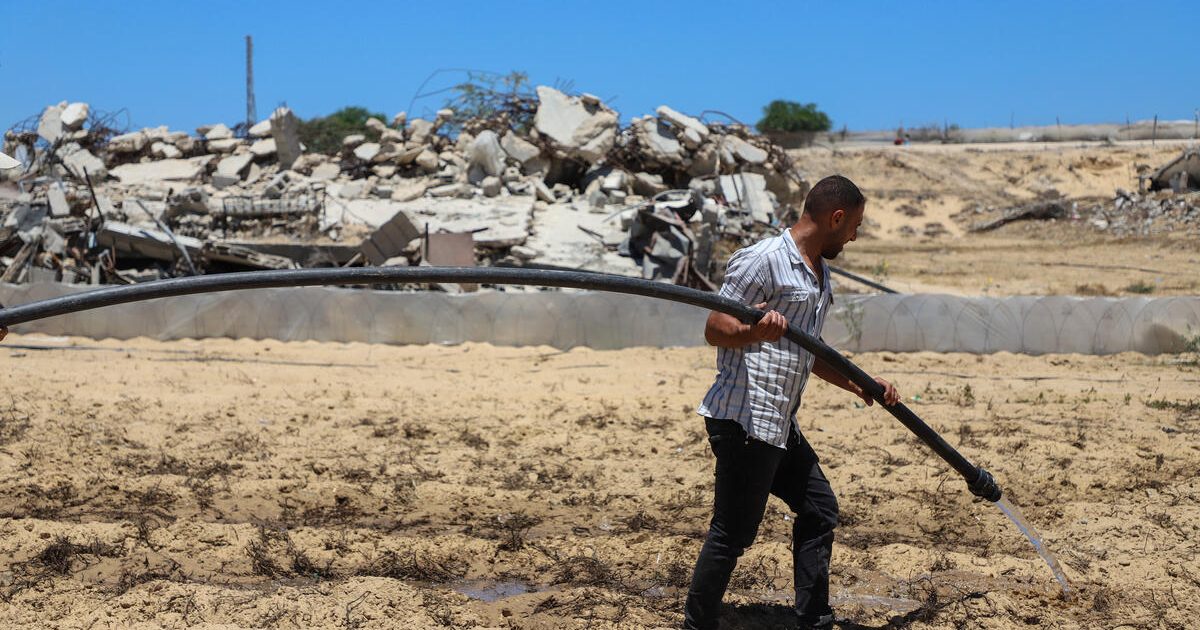
According to FAO and UNOSAT data, only 3% of arable agricultural land in the Gaza Strip is both accessible and undamaged.
Geospatial Findings in Gaza's Agriculture
According to a joint geospatial assessment published by the Food and Agriculture Organization of the United Nations (FAO) and the UN Satellite Centre (UNOSAT), only 3% of arable agricultural land in the Gaza Strip is both accessible and undamaged. As of June 24, 2026, 4,091 hectares, equivalent to 27% of the region's agricultural land, remained accessible. However, only 448 hectares of this area were determined to be undamaged. The remaining 3,643 hectares of accessible land reportedly require extensive rehabilitation to be replanted. According to FAO and UNOSAT data, accessible and undamaged areas have decreased from 601 hectares to 448 hectares since October 2025, representing a loss of 153 hectares, or 25.5%.
Impact of Access Restrictions on Land
According to FAO and UNOSAT data, the primary reason for the reduction in agricultural land is not physical destruction but rather restricted access to the land. The westward expansion of the 'Yellow Line' buffer zone, separating areas under military control, has severely limited farmers' access to their fields since the ceasefire in October 2025. The most significant drops in land access were reported in the Deir al-Balah and Khan Yunis regions.
Rein Paulsen, Director of FAO's Emergency and Resilience Office, commented on the situation:
"This latest assessment paints a stark picture of the continued deterioration of Gaza’s agriculture sector. The loss of access to farmland is further shrinking the space available for farmers to produce food, even where agricultural assets remain physically intact. Farmers in Gaza have shown time and again that when land and inputs are available, production is possible. But without urgent action to restore safe access and provide farmers with the support they need, opportunities to restore local food production will continue to diminish."
Greenhouse Presence and Regional Distribution
The report also shared the latest status of protected cultivation areas in Gaza. According to the data obtained, only 224 hectares, equivalent to 16.6% of greenhouse areas, remained accessible and undamaged. This figure was 226 hectares, or 17.3%, in the October 2025 assessment. The most significant loss in greenhouses occurred in the Deir al-Balah region. Examining the geographical distribution, the access crisis peaked in the Rafah region, where 97.2% of agricultural land and 98.4% of greenhouses are inaccessible. In contrast, the most intense physical destruction was reported to be concentrated in the North Gaza and Gaza governorates.
Agricultural Inputs and Livestock Crisis
In addition to land loss, restrictions on the import and distribution of essential inputs such as seeds, fertilizers, irrigation equipment, and fuel have brought agricultural production to a standstill. Livestock producers in Gaza are also facing significant difficulties in accessing feed, veterinary supplies, and animal health services. FAO's efforts to import necessary feed and materials to protect herds can only be sustained irregularly. It is stated that the quality of limited inputs available in the market has declined, and prices have exceeded the purchasing power of farming families. Before the conflicts, the agriculture sector constituted 10% of Gaza's economy and provided livelihoods for over 560,000 people.
FAO Calls for Urgent Action
The Food and Agriculture Organization of the United Nations has called for urgent and sustainable action from the international community to revive local agricultural production in Gaza. The organization emphasized the immediate need to ensure safe access for farmers to their land and to facilitate the entry of essential agricultural inputs, including non-dual-use commercial imports. Furthermore, it was stated that resources must be provided for the rehabilitation of the 3,643 hectares of damaged agricultural land. FAO indicated that a continuous flow of inputs and sustained investment are essential to rebuild Gaza's agri-food system and ensure food security.